

Best Things to do in Mount Rainier National Park
 Chantelle Kincy
About Mount Rainier National Park
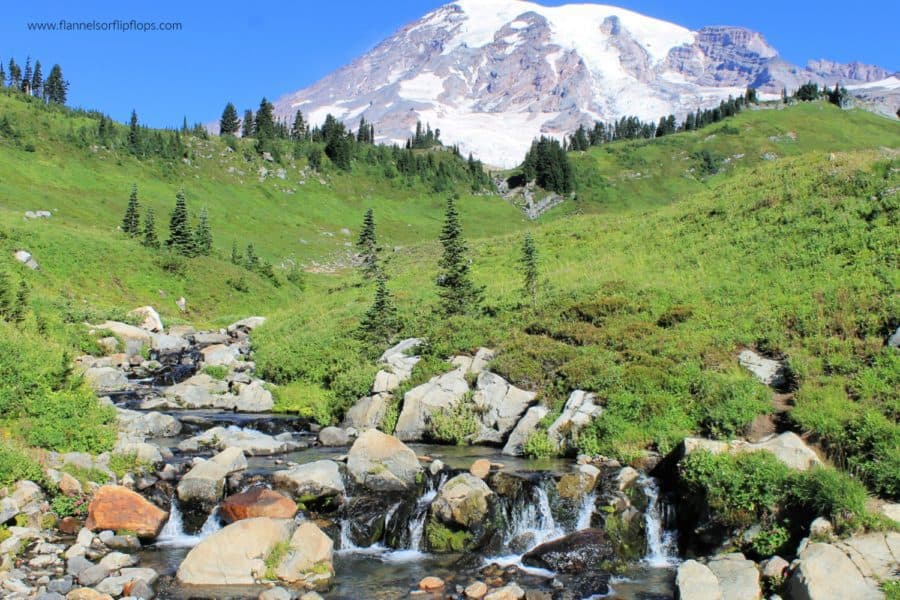
At 14,441 feet in elevation, Mount Rainier is the tallest peak in the Cascade mountain range. It is an active stratovolcano.
Mount Rainier National Park is one of 3 incredible National Parks in Washington State. The Park is 369 sq miles and has over 240 miles of maintained hiking trails! Mount Rainier is also home to numerous incredible waterfalls that you’ll want to explore when you visit the park. In addition to incredible landscapes, Mount Rainier National Park is home to over 280 species of animals.
Mount Rainier Frequently Asked Questions
- How many days do you need in Mt. Rainier National Park? We recommend 3 days! This gives you a chance to see each section of the park more completely and do a few hikes too.
- Is Mt. Rainier National Park worth visiting? Definitely! We may be biased since Mount Rainier is our “home park”, but it is beautiful with so much to do and see, you should visit and see for yourself why it’s one of our favorite National Parks.
- When is the best time to visit Mount Rainier? Late summer if you want to see wildflowers and have the best weather. Winter is beautiful, but you won’t have access to the full park. Read on to see more information on the weather in Mount Rainier National Park.
Best Things to do in Mount Rainier National Park
If you’re looking for an outdoor adventure, look no further than Mount Rainier National Park. With its rugged scenery and abundance of activities, the park is a nature lover’s paradise. Here are some of the best things to do in Mount Rainier National Park

1. Visit Paradise
Paradise is the most popular and most easily accessed region of Mount Rainier National Park. Most of the popular hikes including the Skyline Trail begin in Paradise. Paradise is where you’ll start if you want to see the highly photogenic Myrtle Falls too! You can also check out the Mount Rainier Visitor Center while in Paradise. The Paradise Inn is a fantastic place to stay and allows you to be right at the doorstep to all the action.
In the summer you can see wonderful blooms of wildflowers and incredible waterfalls from Paradise.
In the Winter, Paradise will be the only open part of Mount Rainier National Park. You’ll find sledding and snowshoeing available in Paradise.
Tip: Get to Paradise Early! The parking lot will fill up quickly in the summer!
2. Visit Sunrise
Sunrise is the highest point in Mount Rainier National Park. One of my favorite places for wildflowers is Berkely Park and you’ll start the hike from the Sunrise area. The very popular Freemont Lookout Tower is one of the best places in a National Park to watch the sunrise, and also begins in (you guessed it) Sunrise.
Sunrise offers some of the most magnificent views of Mount Rainier and the Cascade Mountain Range available from within the park.
Tip: Sunrise isn’t accessible in the winter, be sure and check road conditions before you head out.
3. Go to the Summit of Mount Rainier
Ok guys, before you grab your hiking boots and get too excited, this hike isn’t for everyone. Getting to the summit of Mount Rainier is no easy task and is only for those with experience, skill, and the proper training. The weather and altitude make this a dangerous hike that takes a few days to complete. All that being said, wouldn’t it be incredible?
Tip: You’ll need a permit to summit Mount Rainier and should never attempt this alone or without training
4. Visit the Grove of Patriarchs
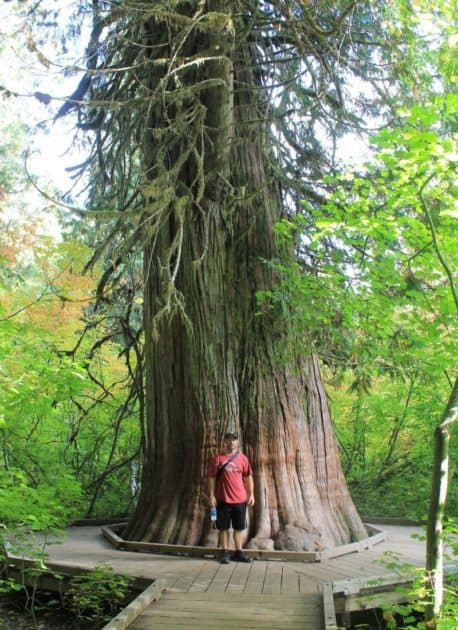
Grove of the Patriarchs is one of the most special areas in Mount Rainier, as well as one of the prettiest. To get to Grove of the Patriarchs, use the Stevens Pass entrance to access the Ohanapecosh Area. Here, you’ll walk about 1.5 miles through an easy trail that combines dirt, a boardwalk, and a suspension bridge! (it is not very high, don’t panic). You’ll be in the presence of some of the oldest and largest trees in the area. Douglas firs, western hemlocks, and western red cedars with circumferences of 25-50 feet and an age of 1000 years old will impress and humble you. You’ll love it here!
Tip: Check the NPS site before you go, this area is closed due to flooding as of 7/22
5. Explore Longmire
Longmire is the historic area of Mount Rainier and the first area you will come to if you enter through the Nisqually entrance on the way to Paradise. You’ll find the National Park Inn here, as well as the office to obtain any permits you might need in Mount Rainier National Park. Be sure and check out the Longmire Museum while you are here.
Tip: Longmire is open year-round
6. Look for Waterfalls
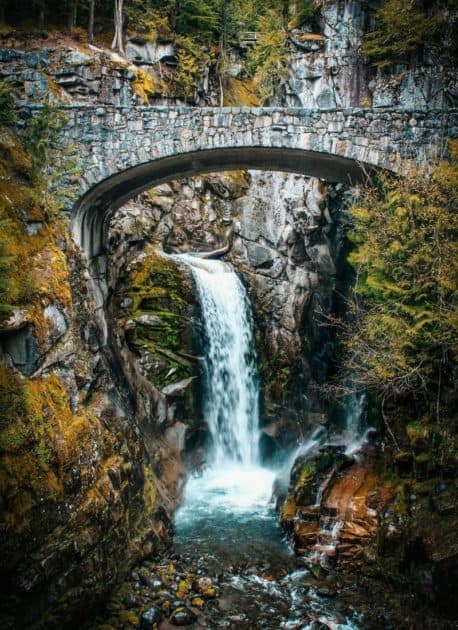
Did you know there are over 150 waterfalls in Mount Rainier National Park? Some of the most famous are Christine Falls, Myrtle Falls, and Narada Falls. The good news is most of the waterfalls in Mt Rainier are easy to find and don’t require a long hike.
Myrtle Falls is less than half a mile from the Paradise Parking lot and is one of the most photographed areas in the park. This beautiful cascading waterfall is in the foreground with wildflowers flanking it and Mount Rainier as the backdrop. It is truly stunning.
Christine Falls is my favorite waterfall in the park. There is a parking lot just past the falls that provides the best view of this waterfall named after the daughter of one of the original explorers at Mount Rainier.
You’ll also be treated to roadside waterfalls along your drive if you go in the early summer as the snow is melting.
Tip: Read this post on 6 Easy to See Waterfalls in Mount Rainier National Park
7. Scenic Drives and overlooks
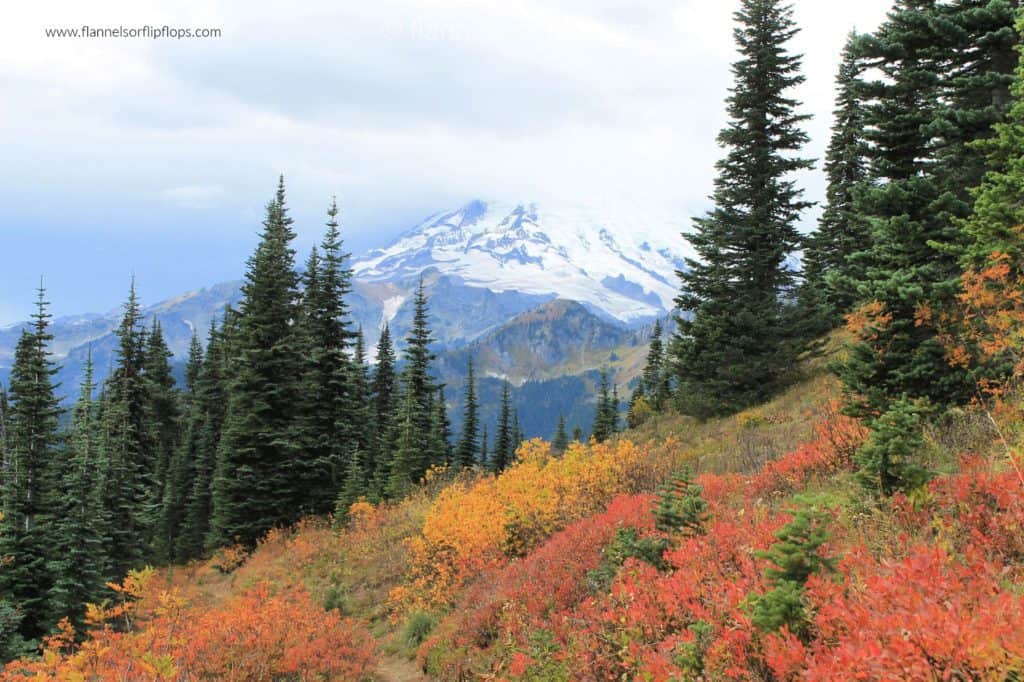
Most National Parks have beautiful scenic drives and Mount Rainier is no exception. Try driving Chinook Pass, especially in the fall, and you will be treated to glorious views. This drive also leads to one of my favorite fall hikes, Naches Peak, if you have time check that out, part of it is on the famous Pacific Crest Trail!
The drive between Paradise and Sunrise is an absolute stunner, so be sure and budget time on your itinerary for that.
There are a few pull-outs along the drive to Sunrise that you should watch out for so you can stop. The first is Ricksecker Point which is near Paradise. The second pull-out is Sunrise Point which is right before you get to Sunrise.
Tip: Chinook Pass is only open from late May to mid-November, check road conditions ahead of time.
8. See Incredible Wildflower Displays
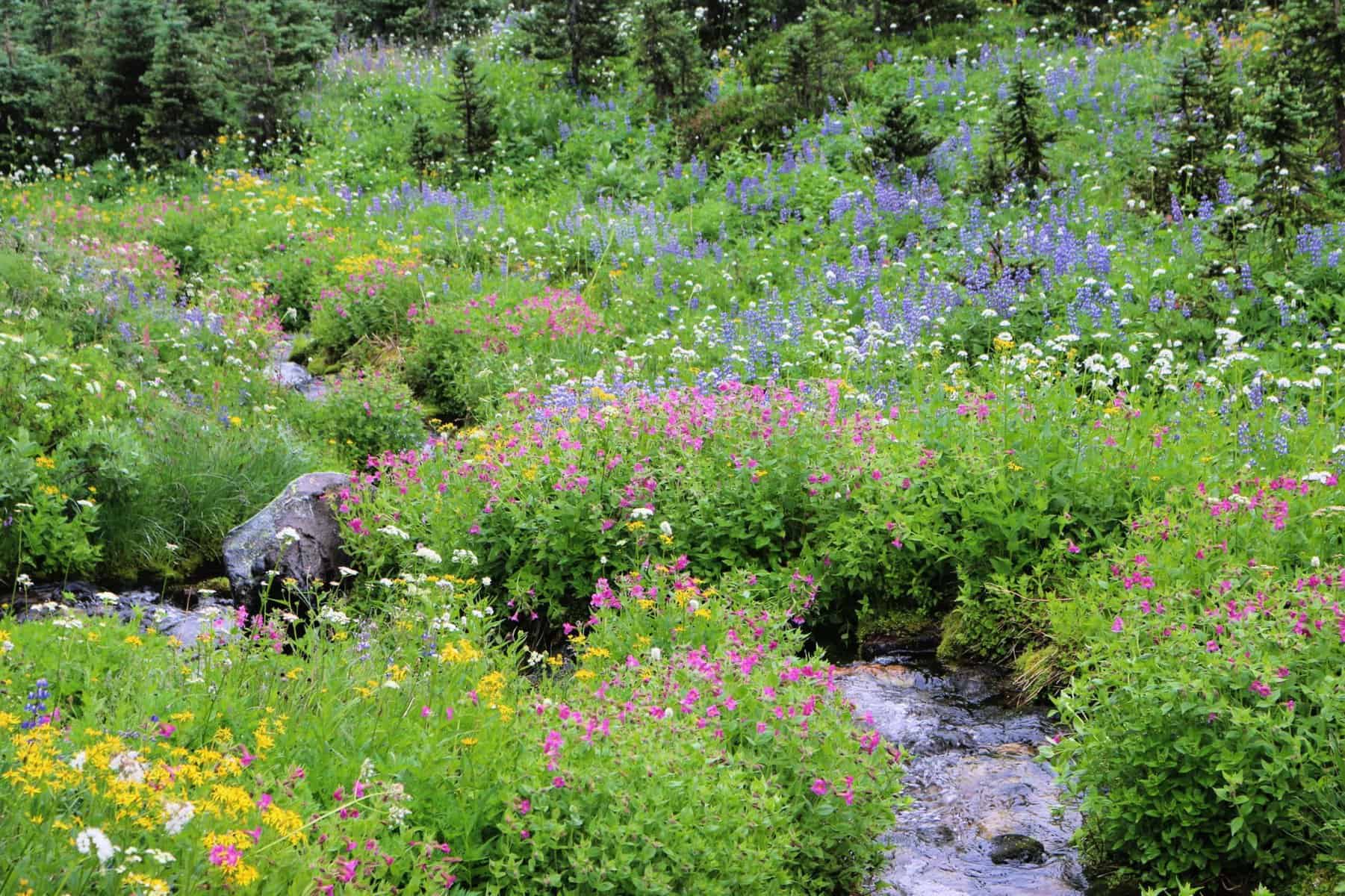
Wildflower season is different every year in Mount Rainier National Park because it’s all based on the incredibly moody weather we have here in Western Washington. The “usual” time for wildflowers is in late July- early August.
Mount Rainier NPS website has a great resource that shows you what is blooming at any given time. You can also check on All-Trails to see what people say in their recent trip reports.
You can see wildflowers throughout the park but the best displays are the meadows around Paradise and Spray Park on the Carbon River side. The above photo is from early August in Berkley Park which we hiked to from Sunrise.
Tip: Just because it’s sunny, doesn’t mean it will stay that way! It’s green and pretty here for a reason, and that reason is RAIN. Always pack a light jacket and be prepared for quick weather changes.
9. Hike
I think I could hike Mount Rainier every day and not get tired of it. There are hikes at Mount Rainier for everyone and every ability. To see my favorites, check out “The best hikes at Mount Rainier“.
Be sure and do a few hikes while you are in the park. The most popular is Skyline Loop, which is 6 miles and pretty strenuous. You can do pieces of the loop though if you aren’t up for the whole thing. Try just going to Myrtle Falls from Paradise for a small taste of hiking in the park.
Other popular hikes are Sourdough Ridge, Bench and Snow Lakes (bring bug spray), Tipsoo Lake (do it in the fall), and Moraine Lake.
Always practice the Leave No Trace Principles when hiking. Look for bears foraging for berries in the meadows, and listen for the Marmots whistling away or basking in the sun on rocks.
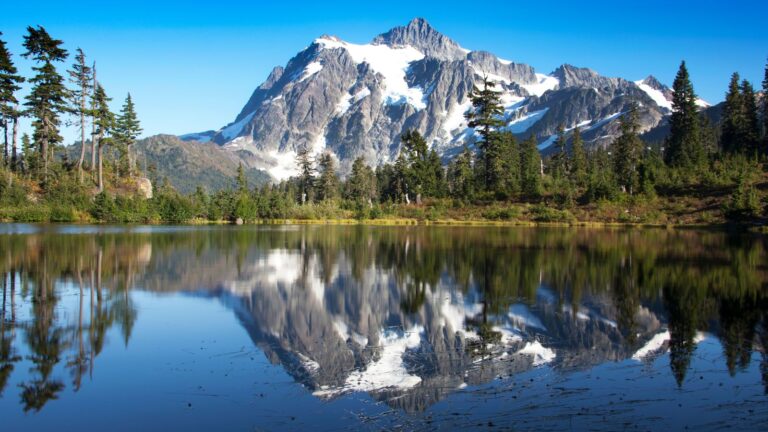
10. See Reflection Lake
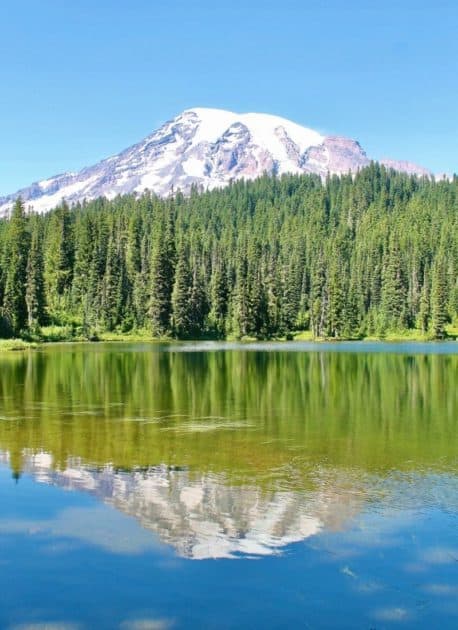
This is one of my favorite photo stops within Mount Rainier National Park. Keep heading past Paradise on Stevens Canyon Road to find Reflection Lake. This spot is the prettiest on a bright sunny day with little wind.
11. Stargaze
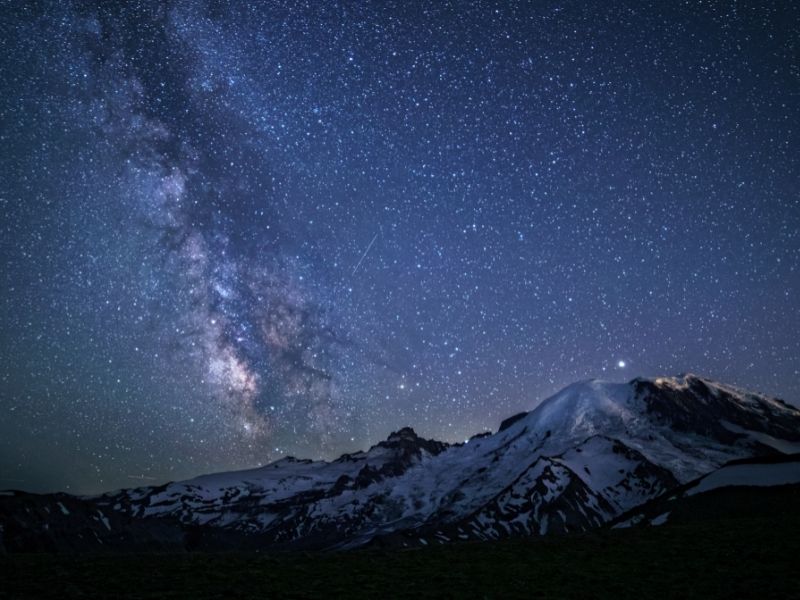
Mount Rainier National Park can be an incredible place to stargaze. On a clear night, you can see the milky way above the mountain, and its pretty magical.
The best place to see the night sky is from the Sunrise Parking lot. There is not light pollution here, so its very dark and beautiful.
When stargazing, you need to give your eyes time to adjust to the dark. Any headlights, or cellphone lights will quickly ruin this process for you (and everyone else there) and you wont have as a good of an experience. Using a red light can help you see in the dark, but not ruin the experience. You can buy a redlight, or tape red cellophane over your phone or flashlight. The flashlight is pretty cheap and you can just throw it in your hiking bag.
Check the weather before you go to make sure it’s a clear night. We don’t want those pesky clouds ruining our magic! If you can time your visit with a meteor shower, even better!
Tip: The bathrooms at Sunrise have automatic light sensors, so if you go in the bathroom, you’ll have to start the eye adjusting process again!
Tips for Visiting Mount Rainier National Park
There are 5 areas of Mount Rainier National Park. During winter, you will only have access to Longmire and Paradise.
Mount Rainier National Park Entrances
Which entrance to Mount Rainier is the best? That depends on what you want to do inside the park. Here’s a cheat sheet to help you decide which entrance to use when visiting Mount Rainier.
- Longmire is the historic area of the park. There is a museum, and 4 structures listed on the National Register of Historic Places. Longmire is open year-round, as is the Nisqually Entrance.
- Paradise is used for cross-country skiing, snowshoeing, and tubing during the winter. During the summer, many of the park’s most popular hikes start from the Paradise Visitor Center Parking lot.
- Carbon River area features a temperate rainforest and the largest and deepest lake in the park (Mowich).
- Ohanapecosh this area is dryer and warmer than Paradise and features amazing old-growth forests.
- Sunrise is the highest drivable point in the park, and my favorite place to see wildflowers.
Things to know for your Mt Rainier visit
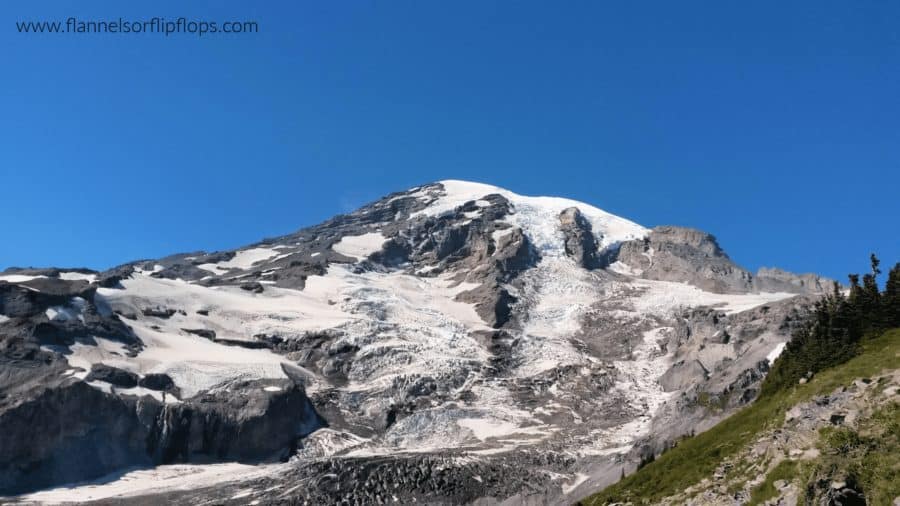
- You’ll want to get to the park early in the summer, as wait times at the gates will be super long. There is also limited parking in the popular areas that will fill up quickly. Aim for getting to the park before 10 am to avoid the busiest times. Mid-week visits will also help you avoid the crowds.
- While Mount Rainier is technically open year-round, the only entrance you can access during the winter is the Nisqually entrance. Always check the NPS site for road closures for the times of your visit.
- Bring bug spray! Especially in the summer. There are so many flies and mosquitos!
- Make sure your camera is fully charged and has a memory card, you’re about to fill that baby up!
- Stay on the trail. Stepping off-trail for even a second can damage the fragile ecosystem
- Be bear aware. There is a definite possibility that you will see a black bear or 2 on your visit to Mount Rainier. Give them space, make your presence known and you will be ok.
- Don’t touch, chase or harass any wildlife. Don’t feed wildlife. You may see birds, chipmunks, and marmots that are tempting to interact with. Leave them alone, for their safety and yours.
- Don’t count on cell service, tell someone where you are going and when you should be back. Get the NPS app before you go, and download the Mount Rainier information so that it’s available even without service.
- Leave your dog at home. Dogs aren’t allowed on trails in Mount Rainier National Park.
When to visit Mount Rainier National Park
The weather at Mount Rainier National Park can vary wildly from season to season. Sometimes the mountain creates its own weather and the weather in the park can be different than in surrounding areas, so be sure to always check Mount Rainier NPS for weather updates before you go.
| Temperature | Jan | Feb | Mar | Apr | May | Jun | Jul | Aug | Sep | Oct | Nov | Dec |
| High | 44 | 48 | 57 | 67 | 76 | 84 | 88 | 86 | 79 | 68 | 58 | 48 |
| Low | 29 | 31 | 38 | 47 | 58 | 65 | 70 | 68 | 61 | 49 | 40 | 33 |
Roads may be closed for snow well into the summer months, and snow remains at higher elevations year-round. July and August are the warmest, driest months at Mount Rainier National Park but you should still come prepared for cold wet weather.
No matter what time of year you visit, you should come prepared with the 10 essentials of hiking as well as bring extra layers of clothes, water, and snacks. Always tell someone where you are hiking and when they should expect you back. You can shop all of my favorite hiking supplies for Mount Rainier.
There isn’t a “bad” time to visit Mount Rainier but the time of year will definitely dictate what you are able to see and do while in the park. To do the best hiking plan on visiting in late spring and through the fall. In late summer you will be able to see incredible wildflower displays. The fall in the PNW is beautiful and offers great weather and incredible fall colors. Personally, Fall is my favorite time to visit Mount Rainier. If you go during the winter, you won’t have access to the whole park, but there is snowshoeing and sledding in the Paradise area of the park.
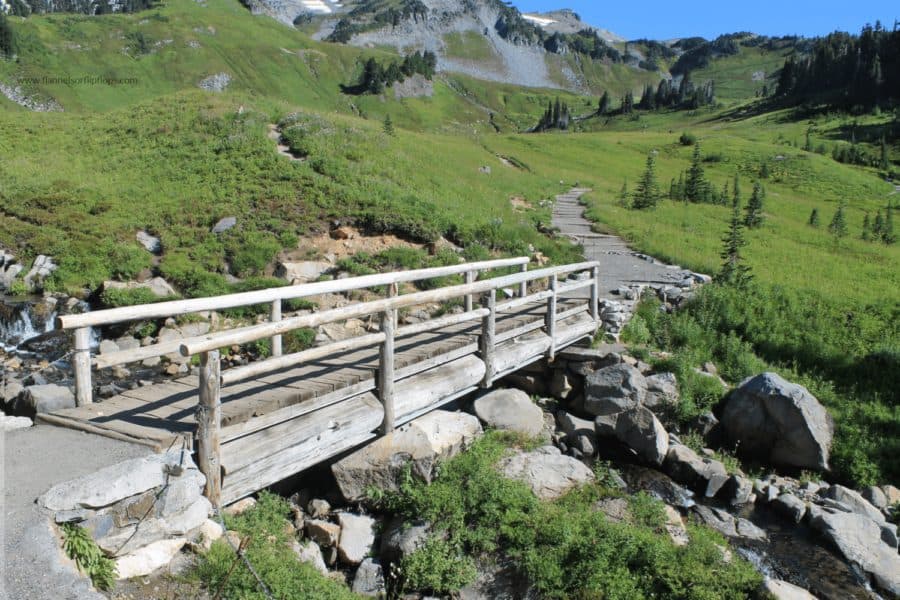
How to get to Mount Rainier National Park
Mount Rainier National Park is located in Washington State. The park is located 54 miles SE from Seattle. Although there are 3 National Parks in Washington, they aren’t close together so grouping them into one vacation will take some intricate planning. If your goal is to visit all 3 parks, you ideally would need more than a week of time set aside for driving and exploring. Mount Rainier National Park is located 3.5 hours from North Cascades National Park, 2.5 hours from Olympic National Park, and 6.5 hours from Crater Lake National Park in Oregon.
There are 4 entrances to Mount Rainier National Park, and depending on what area you would like to explore you’ll need to choose which entrance is best for you. Nisqually and White River entrances are the busiest and wait times can be long in the summer. The only entrance open in the winter is Nisqually.
South West
- Nisqually entrance. This is access to Longmire and Paradise. The road will be plowed in the winter.
North West
- Carbon River/Mowich is the NW part of Mount Rainier National Park. Accessible via SR 165. Note: Vehicle access is only permitted to the park entrance, bike, and pedestrian traffic is allowed past that.
South East
- Ohanapecosh (say that 3 times fast) is the SE corner and accessed through the Stevens Canyon Entrance via Hwy 12. The area is not accessible during the winter.
North East
- Sunrise/White River entrance is the NE portion of Mount Rainier National Park. It is located off SR 410, the Chinook Scenic Byway. It is not accessible during the winter.
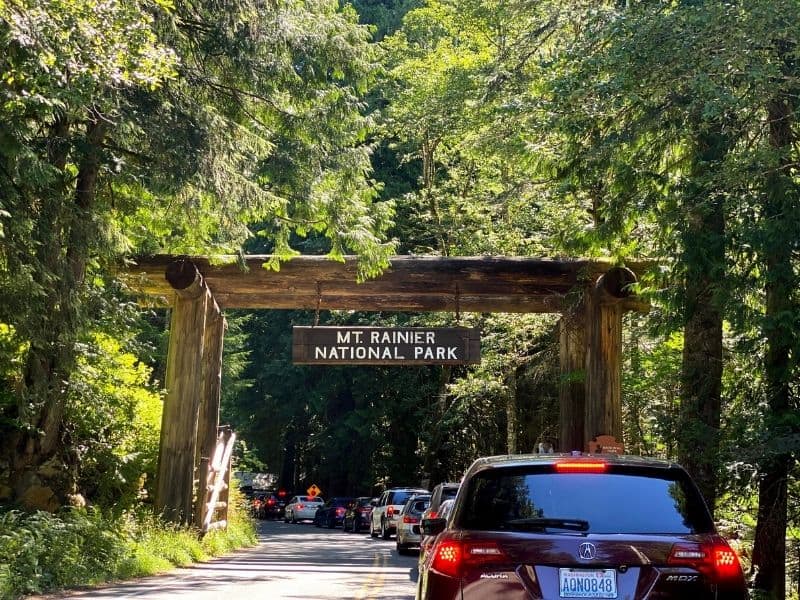
Where to stay at Mount Rainier National Park
Park Hotels
There are 2 hotels inside Mount Rainier National Park. Both are located near the Longmire entrance. Both require advanced reservations and fill up very quickly. Reserve as soon as possible if you want to stay inside the park. To reserve either of the 2 lodgings inside Mount Rainier National Park contact Rainier Guest Services
- National Park Inn – Open year round. Located in Longmire. 25 guest rooms, a restaurant, and a gift shop.
- Paradise Inn- this historic charming inn is located in Paradise and is a fantastic location for most of the park’s popular hikes. Due to snow, the Inn is usually open between May and October. There are 121 guest rooms, a dining room, a cafe, and a gift shop.
Park Camping
There are 4 campgrounds in Mount Rainier National Park. Reservations can be made at recreation.gov and fill up quickly. All campsites are closed during the winter.
Staying outside the park
You can look for hotels in Eatonville, Ashford, Cougar, or Enumclaw. There are also some great cabins on VRBO in the Mount Rainier area.

How much does it cost to visit Mount Rainier National Park?
If you plan to visit multiple National Parks I highly recommend the America the Beautiful Pass. It is valid for 12 months and gets you access to all NPS sites (parks, monuments, battlefields, etc) as well as federal forests and lands. You can purchase these passes at the gates of National Parks or online here. Entrance is free to families of 4th-grade students, military members, and US citizens with permanent disabilities.
| Type | Current Fee |
| Mount Rainier Annual PassGrants unlimited entry for one year to pass owner and passengers in the same car | $55 |
| Mount Rainier Single Vehicle FeeGrants unlimited entry for one vehicle and passengers for seven consecutive days vehicle must be private, noncommercial, and with a seating capacity of 15 or less | $30 |
| Mount Rainier “Per Person” FeeWalk-up or single bicycle feeGrants unlimited entry for seven consecutive days | $15 |
| Mount Rainier Motorcycle FeeGrants unlimited entry for one motorcycle and passenger for seven consecutive days | $25 |
| Campground Fees Per site, nightly | $20 |
| Campground Fees – GroupsGroups sites, nightlyAccommodates 25 to 40 people | $60 |
Mount Rainier History
There is evidence of the area of Mount Rainier National Park being used by First Nations Tribes for over 9000 years. Indigenous tribes to the area are Cowlitz, Muckleshoot, Nisqually, Puyallup, Squaxin Island, and Yakama tribes. The name the tribes gave the mountain was “Tahoma” which means “the source of nourishment from the many streams coming from the slopes.”
Captain George Vancouver spotted the mountain in 1792 while exploring for the British Royal Navy. He named the mountain after his friend Admiral Peter Rainier. In 1870 P.B. Van Trump summited the mountain for the first recorded time in history. In 1883 James Longmire found a mineral spring and opened a hotel and spa there.
Mount Rainier was designated a park 17 years before the National Park Service was formed. Naturalist John Muir helped push for the park to become a National Park to protect its unique beauty and it became the 5th National Park in the US.
I’d love to hear what your favorite thing to do at Mount Rainier is. Please pin or share this post!


Getting out of Seattle, and seeing the “real PNW” is such a great tip! Thanks for reading.
Sunrise is beautiful, next time try the Paradise area, you will love it!
Thank you Anita, Mt Rainier is a gorgeous park.
Thank you, Christine Falls is gorgeous for sure.
Christine Waterfalls looks so surreal. Loved your post.
I hope you can make it up here, it’s so pretty!
Yes!! It’s an incredible fall destination! The colors are incredible. Especially around Tipsoo Lake
Waterfalls make every hike better!
That’s ok, now you have a reason to come back! You’ll love it!
Beautiful pics! We did a road trip to WA last year but ended up not having time for Mt Ranier, it was such a bummer!
I love hunting for waterfalls when I hike the parks on the East Coast, esp NC! This is going on my must see West Coast parks.
Great photos. I am trying to convince my husband that this would be a great place or a Fall trip with lots of color, hiking, and waterfalls.
Mt. Rainier is on my bucket list! I’ve only been to the Seattle Airport, so I’m dying to get back to Washington to actually explore. Thanks for sharing this helpful guide for when I get the chance to visit!
Mt. Rainier National Park looks just incredible. I would love to visit someday. Your pictures are amazing and so colorful. The practical information you have provided is very valuable when planning a trip to this awesome place. Thanks for sharing!
Mount Rainier National Park is so scenic! We would love to hike and camp here and see the wildflowers. Definitely on my list when we visit the US.
Absolutely stunning! It reminds me of a lot of hiking spots across Europe, although much smaller I’d say.
I’ve been to Olympic and still want to check out Rainier! Great info in here, Pinned this for later.
Love National park, this will be on my list! Awesome post and the reflection lake looks amazing!! Hope to visit one day 🙂
Wow! This is such an informative post. I’m planning to go very soon to the park and this will be very useful. Thank you!
Wow! I didn’t realize that there were waterfalls at Mt Rainier too – we hiked near Sunrise a few years ago just before it closed for the season and it was gorgeous, but we didn’t see much else. Definitely adding this to our next trip.
I love this park! Can’t wait to go back. Great suggestions.
Mount Rainier is my “backyard park” too and you did a fantastic job sharing what makes it so amazing and how to best enjoy it! My best tip for anyone visiting Seattle is to spend some time outside of the city at one of our nearby national parks and this article is a great resource to share with visitors. Thanks!
It looks like a wonderful national park. Climbing rainier is on my bucket list but I still need some time to acquire more mountaineering skills. Thanks for this great guide.
I don’t go in the winter too often, more early spring so I still see the snow, but don’t have to deal with the cold!
I do the same!
Paradise to Sunrise is such a pretty drive! Now that you mention it, it does sound as awesome as it looks!
You’ll love spending time there.
You’ll love it
Such a beautiful park and mountain! Seattle is on my Adventure List. This would be a must see.
We went maybe a decade ago and just did one hike in a day, but I remember how pretty all the foliage was, just like you’ve captured in your photos. I’d love to check out Mowich Lake next time I’m there!
I visited Mt Rainier NP probably 20 years ago and, after reading your post, I remembered the 50mile or so drive from Paradise to Sunrise. I just liked the way it sounds and that’s why I could not resist.
I was there in summer and I remember all the pretty wildflower blooming at that time.
When we travel and see the beautiful sights, I can’t help but imagine what it must have been like to be the first people to happen upon them.
I’ve only been to Ranier once, years ago. This post is really making me want to visit again. I’ve loved to do a waterfall or wildflower viewing hike. Do you visit in the winter frequently? I don’t think that would be for me, summer and fall all the way!
Mt. Rainier is impressive! This is great information about the park.
Wow! Mount Rainier NP looks so beautiful! Another add to the bucket list!
Thats right! What a great deal to take advantage of if you qualify for the Lifetime Senior Pass!
There are such great hikes here!
Mount Rainier is one of the best!
Another beautiful national park!! Can’t wait to see it one day!
We love hiking! This place look fantastic.
Mt. Rainier is on our bucket list. Don’t forget that there is a Lifetime Senior National Parks Pass for a very reasonable fee. Great deal for the Boomer travelers.
That’s awesome, I’m so glad you got to visit!
There is so many incredible waterfalls.
You’d love it!
I love learning the history of things around us, I think it makes it so much more meaningful!
What a beautiful and big park. I loved learning that it was first named “”Tahoma” which means “the source of nourishment from the many streams coming from the slopes.””. Such a wonderful appreciation for nature and the environment 🙌💜 thanks for sharing.
I would love to visit my Rainer National Park! It looks beautiful!
Wow. That place looks fantastic. My husband and I like hiking. I especially like to hike to waterfalls. We might need to plan a trip there someday.
We just visited Mt Rainier a couple months ago and had SUCH a great time! There is so much to see! Luckily we made it in just before the various entrances closed, so we were able to see quite a bit.