When is the Best time to visit Alaska?

If you’re planning a trip to The Last Frontier, asking the question, when is the best time to visit Alaska is important!
There’s much to consider, including weather, costs, when certain activities are available, and when wildlife is active.
And depending on what you’re hoping to do, booking at the right time will make or break your trip.
From the sparkling northern lights to the majestic grizzly bears at Brooks Falls, visiting Alaska will be unforgettable, especially if you visit at the perfect time of year.
Here are the best times to travel to Alaska, no matter what you hope to see.
When is the Best Time to visit Alaska to see the Northern Lights?
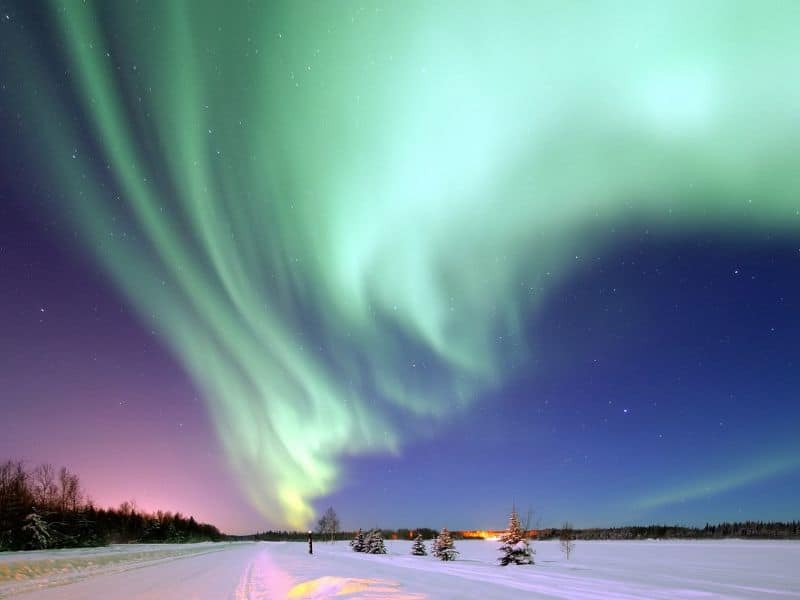
If you’re planning a vacation to Alaska with the hopes of seeing the northern lights, it’s important to know the best time to see them.
Northern lights are best seen under a dark, clear sky with little light pollution.
The best time to see the northern lights in Alaska is between the months of August and April.
This is because the skies are the darkest, and you’ll no longer have to worry about the long daylight hours blocking your view.
➡️ Click Here to Book a Northern Lights and Hot Springs Tour
When is the Best Time for Alaskan Wildlife Viewing?
One of the top reasons that people visit Alaska is to admire the incredible wildlife that calls The Last Frontier home.
There are plenty of animals to see, from brown bears and grizzlies to whales and moose. Viewing these incredible animals really showcases the Alaskan Experience.
The best time to visit Alaska to see these creatures varies depending on which animal you hope to see.
Generally speaking, however, the best time for wildlife viewing is in the summer season, from May to August.
The Best time to see Humpback Whales in Alaska

Humpback whales typically begin arriving in Alaska around June along the state’s coast.
You can see them everywhere, from the Gulf of Alaska to the Bering Sea. To see the humpbacks at their best, you should book a tour, and the crew will guide you to the best viewing spots.
Best time to see Gray Whales in Alaska
Gray whales migrating off the coast of Alaska have made nearly an 11,000-mile trip to get here. Taking a guided boat tour between the months of April and June will give you the best chance to spot these majestic sea creatures. Tours operate from many towns along the coast, including Anchorage.
➡️ Book an Alaskan Whale Watching Tour Here
The Best time to see Grizzly Bears
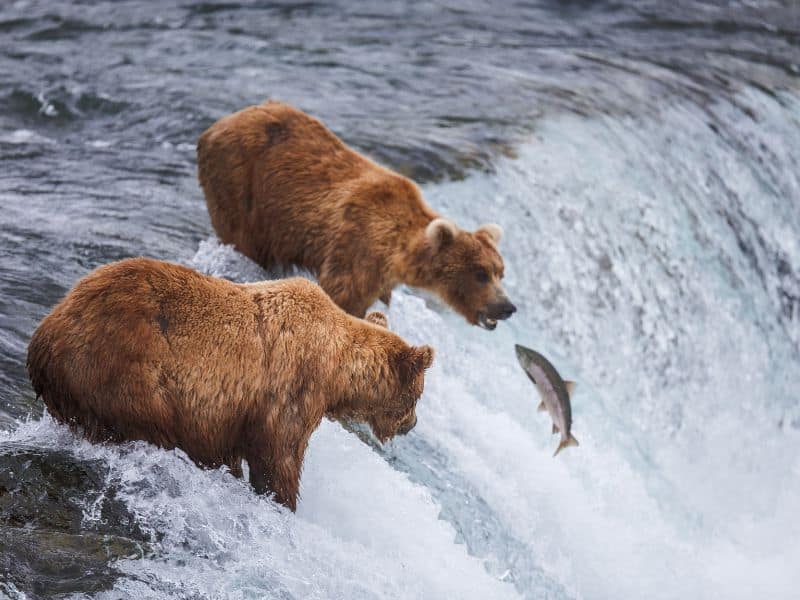
Bears are among the most sought-after animals to see on an Alaskan vacation. If you’d like to spot one of these powerful animals, plan your visit between July and September.
Brooks Falls in Katmai National Park is one of the most popular places to spot Grizzlies, although it’s hard to reach.
Other places to see grizzlies include Lake Clarke National Park, Kodiak, and areas around Anchorage. There are tours to see bears, but you could most definitely do it on your own!
We saw a brown bear fishing in the river while hiking through the Tongass National Forest in Ketchikan while on a cruise excursion in August, even though she wasn’t a Grizzly Bear, it was so fun to watch her fish!
➡️ Alaska Wildlife Viewing Tour
The Best time to see Bald Eagles
Bald eagles are best spotted in Alaska during the fall and early winter months. The Chilkat River Valley, where hundreds gather yearly, is the best place to see them.
There’s no need to take a tour to see bald eagles, however, if you want to get a little closer and learn more you can visit the Raptor Center in Sitka or Ketchikan.
This Eagle was screaming at us at the Raptor Center in Ketchikan; he is being rehabilitated after being hit by a car.

When is the Best Time to Visit the National Parks in Alaska?
With eight national parks in the state, there’s no question why so many people love to visit Alaska for nature. Here are the best times to visit Alaska’s parks.
Denali National Park
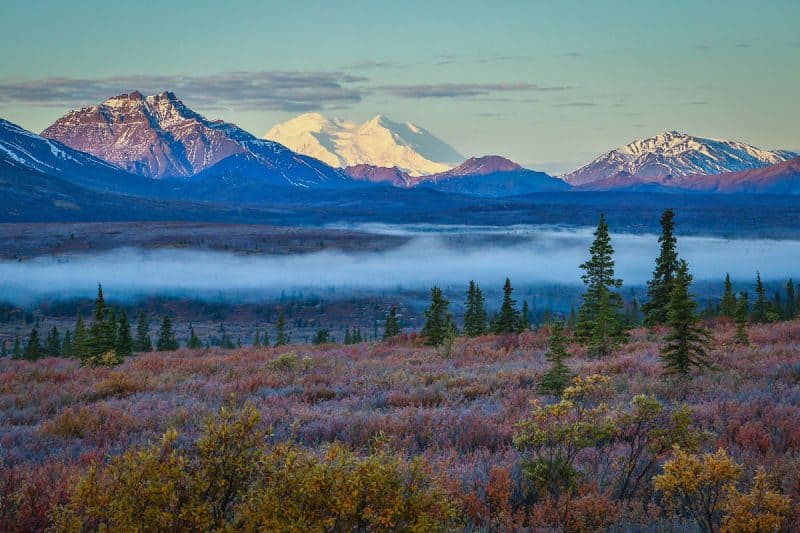
Summer is the best time to visit Alaska and Denali National Park, home to the tallest peak in North America.
Because of its mountainous location, much of the park is closed in the winter. But in summer, facilities are open, many hikes are clear of snow, and the weather is beautiful.
Kenai Fjords National Park
Kenai Fjords National Park on the Kenai Peninsula is open year-round, but to get the best experience, plan your visit between June and August. Because of its location on the Gulf of Alaska, winter brings rough seas and a lot of snow, closing many facilities and activities.
Katmai National Park
One of the most popular reasons to visit Katmai National Park is to see the grizzlies at Brooks Falls. Plan your visit for the best chance at spotting them in either July or September. You may see them during other seasons, but it’s much less likely.
Glacier Bay National Park

Like all of Alaska’s other national parks, Glacier Bay is best visited from late May to September. During this time, you’ll see the least amount of rain and snow, and the temperatures are the warmest.
Although it never gets too warm, with average highs around 60°F all summer.
One of the best ways to experience Glacier Bay National Park is by taking an Alaskan Cruise. Not all ships offer permits to this pristine park, though, so choose your itinerary wisely. We sailed on Princess and had an incredible day in Glacier Bay.
Lake Clarke National Park
Lake Clarke National Park is best visited in the summer months. Because of the difficulty of getting here, these months make for the easiest travel. Plus, trails are mostly clear of snow, and the bears are out and about.
Gates of the Arctic National Park
Due to its remote location, Gates of the Arctic is the United States’s least visited national park. Unspoiled and mesmerizing, it nearly shuts down in the winter, making summer the best time to visit.
Kobuk National Park
June and July are the best months for visiting Kobuk National Park. For warmer weather and access to backpacking and hiking trails, avoid the winter months. Since it’s beyond the Arctic Circle, Kobuk National Park never gets very warm.
Wrangel-St. Elias National Park
Like the other 7 Alaskan national parks, Wrangel-St. Elias National Park is best visited from June through August. Outside of these months, the days are cold, and the nights are colder. Snow may even begin to fall in September.
When is the Best Time to take an Alaskan Cruise?
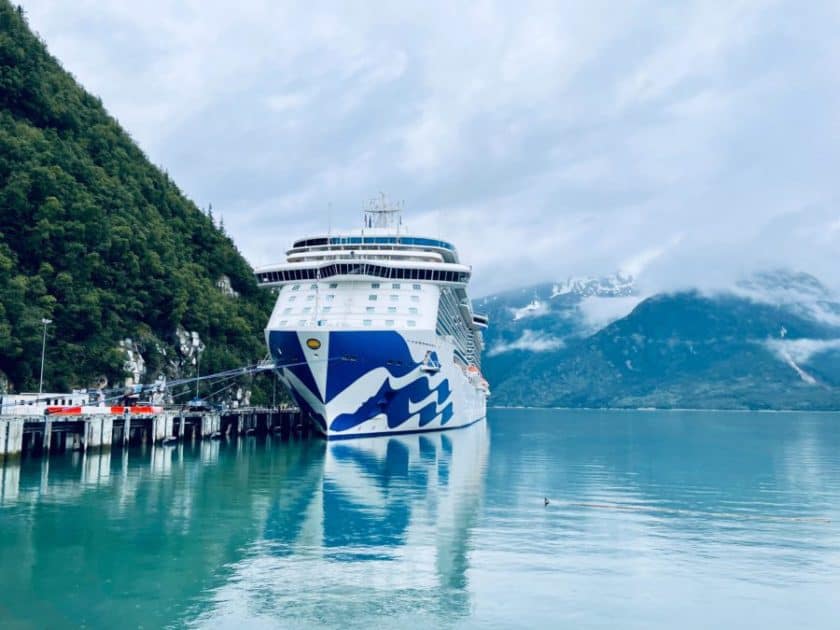
The best times to cruise in Alaska are in July and August because of the warm temperatures and high probability of sun. Most activities, including wildlife viewing, hiking, and sightseeing, are also available during this time.
Although this is peak season, the cost of a cruise and the number of crowds are often higher.
If you’re hoping to avoid crowds and save money, consider traveling during the shoulder seasons, May or September. You can expect to see fewer people, but the temperatures will be a bit colder.
✅ Click Here to Check Deals on Alaskan Cruises
Visiting Alaska in the Summer

As the best time to visit Alaska, the summer season is beautiful. The days are long, you’ll have the best weather, the wildlife is out, and everything is accessible. Alaska makes the perfect summer vacation destination.
Amount of Daylight in Alaska in the Summer
During June, July, and parts of May and August, Alaska sees 24 hours of sunlight. This is called the Midnight Sun.
Weather in Alaska in the Summer
June, July, and August all have highs around 65°F, with lows in the mid-40s to low 50s.
August is one of the wettest months of the year, with an average of 15 rainy days. June and July see an average of 8 to 10 rainy days.
Top Things to Do in Alaska in the Summer
- Visit the eight national parks
- Take a whale-watching tour through the fjords
- Go on a guided glacier hike
- Stay up for the Midnight Sun
- Take a flightseeing tour of Denali
Visiting Alaska in the Fall
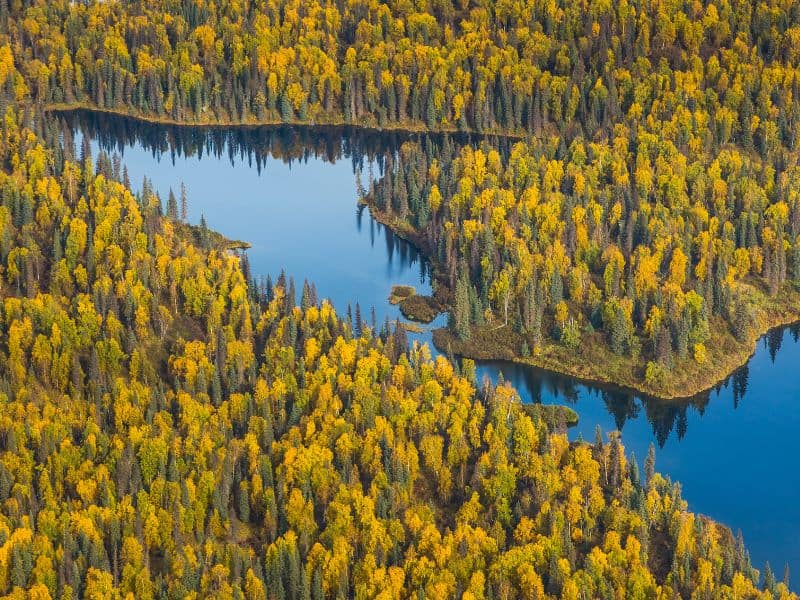
The fall time in Alaska is very short, lasting only about one month. But during that month, you’ll be blown away by the beauty surrounding every corner.
Deep orange and bright red fill the mountainsides and contrast with the dusting of snow. As it is the shoulder season, expect fewer crowds wherever you go.
Amount of Daylight in Alaska in the Fall
While not as much as during the summer, Alaska still sees around 12-14 hours of daylight during September.
Weather in Alaska in the Fall
The fall season brings chilly weather to Alaska. Average high temperatures are around 50°F, while lows hover around 40°F. You might see around 15 rainy days in September.
Top Things to Do in Alaska in the Fall
- Enjoy the fall foliage
- Visit the Alaska State Fair
- See wildlife before the snow falls
- Ride the Alaska Railroad
- Visit the national parks with fewer crowds
Visiting Alaska in the Winter
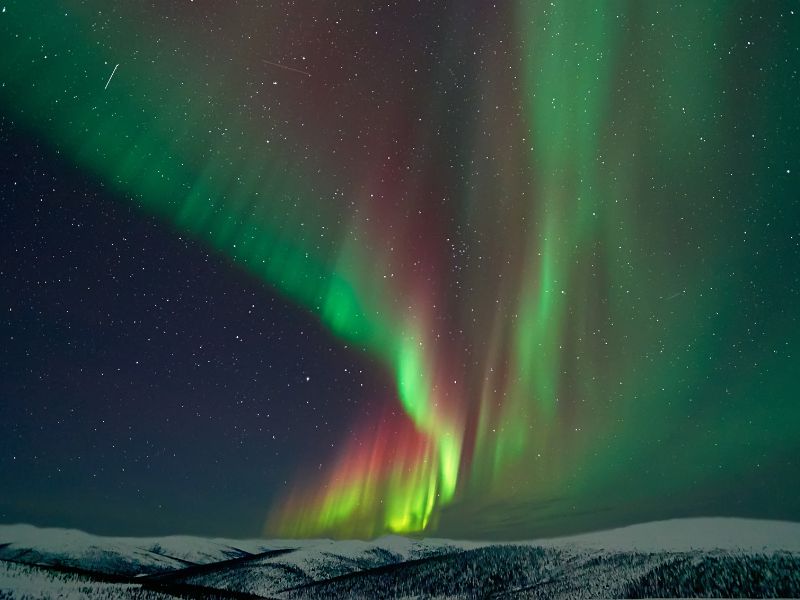
As the coldest state in the country, Alaska has some pretty rough winters. Although it’s beautiful, with towering snow-capped mountains, it is a tough time to visit. But if you’re willing to brave the cold, there are many great winter sports to check out.
Amount of Daylight in Alaska in the Winter
Long, dark winters are common in Alaska. Once winter has hit, it isn’t uncommon to only have about 5-10 hours of daylight each day.
Weather in Alaska in the Winter
Winter in Alaska typically lasts from October to May and can sometimes be even longer. The average highs are around 20-30°F, with lows around 0°F.
It can get much colder, though, depending on where you are! Alaska also sees about 250 inches of snow in a year.
Top Things to Do in Alaska in the Winter
- Watch the northern lights
- Ski or snowboard at a resort
- Try out dog sledding
- Take a snowmobile tour
- Give ice fishing a try
Visiting Alaska in the Spring
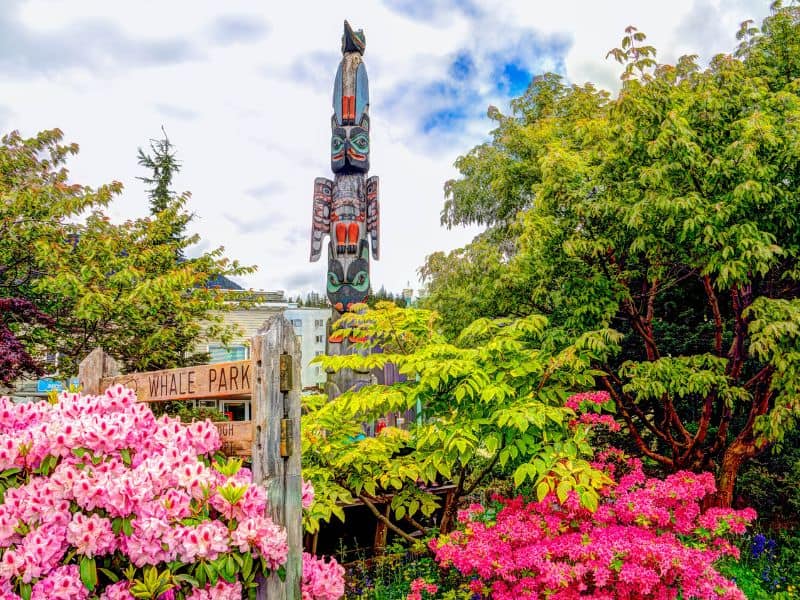
As the snow melts, the days get longer, and wildlife emerges, spring finally arrives in Alaska. Locals wait for this moment all winter long. Visiting during spring means cheaper prices, fewer crowds, and cool temperatures.
Amount of Daylight in Alaska in the Spring
Alaska is starting to brighten up in spring and typically sees about 14-16 hours of daylight.
Weather in Alaska in the Spring
While it is starting to warm up, spring can still be chilly in Alaska. Average highs are around 50°F, while lows are around 30°F.
Top Things to Do in Alaska in the Spring
- Go on a whale-watching tour
- Keep an eye out for baby wildlife
- View the northern lights
- Take advantage of last-minute skiing
- Hike on the snow-free trails
When is the Cheapest Time to Visit Alaska
The shoulder seasons tend to be much less expensive than the peak season. Shoulder season in Alaska is April-May and September-October.
During these times, you’ll find cheaper lodging options, flights are typically less costly, and you can likely get a rental car for a lower price.
The cheapest time to book a flight to Alaska is during January and February. So, if the flight costs are scary, consider booking during those months.
Best Time to Visit Alaska Frequently Asked Questions
What is the best month to go to Alaska?
The best time to visit Alaska varies on what you want to do. If you’re hoping to visit the national parks, June, July, and August are the best months.
Wildlife is best spotted between May and August. The northern lights are best seen between August and April.
And if you’re taking a cruise ship, plan it in either July or August.
Overall, summer is the best time to plan an Alaska vacation.
What is the cheapest time to visit Alaska?
The months of April, May, September, and October are the cheapest times to visit Alaska since it is shoulder season.
What are the cheapest months to fly to Alaska?
Because they’re out of season, January and February are the cheapest months to fly to Alaska.
What month is best to see northern lights in Alaska?
While they happen anytime, the best time to see the northern lights in Alaska is between August and April.
Do the northern lights happen every night in Alaska?
While the northern lights might happen every night in Alaska, we can’t always see them.
Aurora Borealis season is between late August and April, when you can see them more than half of the nights in a week.
How many days do you need in Alaska?
Alaska is a huge location with a lot to do. There’s no way to cover it all in just one trip, but having at least 7 to 10 days seems to give the best chances to see the best things.
What is the coldest month in Alaska?
Generally, the coldest month in Alaska is January, with average temperatures hovering between 0°F and 30°F.
You can also expect to see a decent amount of snow during these months.
Do you need a passport to go to Alaska?
If you’re a citizen of the United States, you do not need a passport to go to Alaska unless you’re driving through Canada.
In this case, you will need one. Citizens of other countries will need a passport.
If you are taking a cruise, you will not need a passport.
How far in advance should I book Alaska?
If you’re planning an Alaskan vacation, give yourself at least 3-4 months of time to get everything booked. Start booking things closer to 6-8 months in advance to save money.
What month is always light in Alaska?
Alaska has a phenomenon called the ‘Midnight Sun’ that happens between late April and late August every year. During this time, there are 24 hours of daylight in Alaska.
What is the darkest month in Alaska?
December and January are the darkest months in Alaska, with the least amount of sunlight.
However, in far northern Alaska, the small town of Utqiaġvik experiences total darkness from November to January.