Pop Quiz: Do You Know What These Beach Flags Mean?

Beach warning flags are an essential part of beach safety. They are used to communicate important information about the water and beach conditions. There are a variety of different beach flags, and each one has a specific meaning.
Beachgoers must know these meanings to stay safe while enjoying the beach. Every year, people lose their lives needlessly by not following posted signs and flags at the beach.
Most beach flags have universal meanings, so they should be the same when you travel. However, if you are in doubt, always ask the lifeguard or a local.
So, what do the different flags mean at the beach?
Red Flag At The Beach

High Danger, Strong Currents, or High Surf
Just like in your dating life, if you see a red flag at the beach, you should think twice before jumping in. With a red flag, you can still be on the beach if you want, but you shouldn’t go in the water, especially if you aren’t a skilled and strong swimmer.
Double Red Flag at the beach

Beach is closed
If you see 2 red flags at the beach, you need to find a new place to hang out for the day.
The water here is so unsafe at the moment, that no swimming is allowed. The Beach is closed if you see 2 red flags.
Yellow Flag at the beach

Medium Hazard
The red beach flag is a strong warning, and the yellow flag represents a medium hazard.
If you see a yellow flag at the ocean, the surf and currents are potentially dangerous. There could be a strong undertow. Be very cautious in the water here, especially if you are not a strong swimmer.
Wear a life jacket and/or swim within the site of lifeguards. Some beaches always have yellow flags due to rocks or extreme drop-offs.
Purple Flag at the beach

Dangerous Marine Life
Any time you see a purple flag, dangerous Marine Life may be present. This includes sharks, jellyfish, stingrays, sea lice, or dangerous algae.
You can often find purple flags along with other flags such as red, yellow, or green. In that case, the purple flag means dangerous marine life has been spotted, and the top color will represent the tide danger.
Also, people sometimes have difficulty differentiating between dark blue and purple. If you see a “blue beach flag,” assume it means that dangerous marine life is present.
Green Flag at the beach

Safe for Swimming
Green Flags indicate the tide, surf, and undertow are mild here. You can swim and enjoy the water without extra concern. However, the ocean is still wild and unpredictable, so always be aware and cautious.
Keep kids within a safe distance of yourself, only go swimming if you are confident, and never turn your back on the ocean. Wear a life jacket if you are unsure of your abilities, even when a green flag is on the beach.
Black and White Flag at the Beach

Swimmers Not Allowed In The Water
The area between the black and white beach flags indicates that swimmers should not be in the water here. This area is for non-swimming sports such as surfing or windsurfing.
Yellow and Black at the beach

No surfing
This yellow and black beach flag means it’s a swimming-only beach. No surfing is allowed in the ocean in front of this beach.
Red on top of yellow flag at the beach
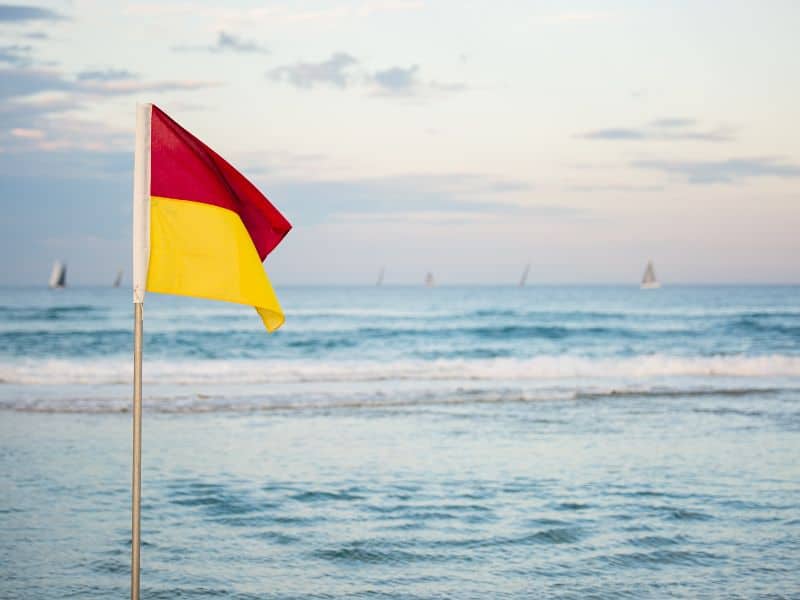
Life Guards are Patrolling
If you see a red and yellow flag, you can swim here knowing lifeguards are looking out for you. You still need to be responsible for your actions and choices and not put yourself in dangerous positions, but its good to know there are professionals on the job too!
Blue and white flag
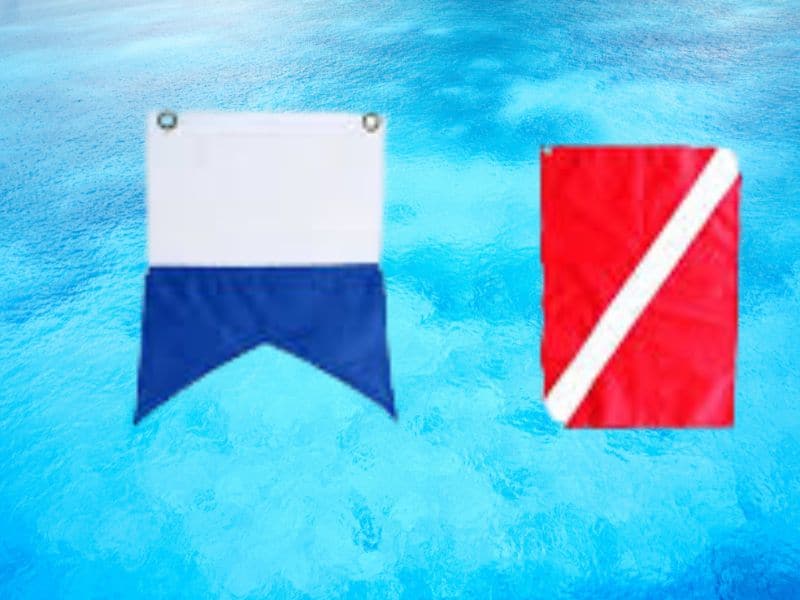
A diver is down
Watch for these ocean flags if you are boating, it indicates there is a scuba diver underwater. According to PADI, there are 2 recognized diver down flags. The red North American flag or the blue international flag.
Orange Flag on a boat

Man overboard
Watch for a raised orange flag if you are boating. Someone is in the water nearby. It doesn’t always signify an emergency.
For example, if you are wakeboarding or waterskiing and you fall off, those in the boat would raise an orange flag so other boaters know to watch out for you.
Orange Ocean Flag Meaning

This can mean no lifeguard on duty. An orange windsock flag will be used to indicate high offshore winds. You shouldn’t bring inflatables into the water here.
Rip Tides

Bonus question! Can you spot the rip tide?
It’s where no waves are breaking, and even though that looks like the safest place to swim, it’s the most dangerous. Rip tides can take you way out into the ocean very quickly.
If you find yourself caught in a riptide, don’t try to fight it. Swim sideways to get out of the current rather than trying to swim straight back to shore. Once you have swam sideways out of the rip tide, you can swim to shore more easily.
We saw a lot of riptides at the beaches in Australia last month; some are easier to spot than others, but they are often marked with beach flags as well.
Beach Flag Recap
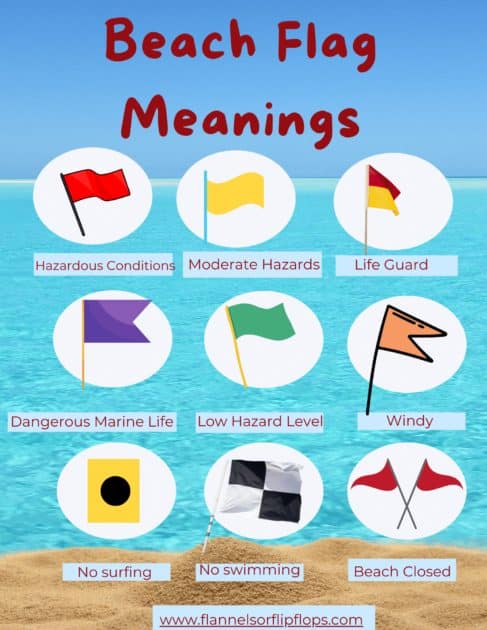
Beach warning flags play an important role in keeping everyone safe. By understanding the meanings of each flag, people can avoid entering the water when it is unsafe.
In addition, knowing how to read the flags will help lifeguards and other first responders better assess potential dangers and provide necessary assistance.
How did you do? Did you know these flags?