

17 Places In The United States That Look Like Europe
I love the US, I truly do. There is incredible beauty and diversity everywhere you go. But I also love visiting European Countries. I really love the old-world charm, the unmistakable regional architecture and style, the small eateries, and the incredible history.
If I were incredibly wealthy, I’d spend many weeks each year wandering the quaint little villages throughout Europe, but unfortunately, I am not. But I am good at finding ways to make the most out of what I do have.
I’ve found a handful of places in the US that look and feel very similar to the places I’ve visited in Europe. If a trip across the pond isn’t in your future, consider visiting one of these stateside gems.
1. Leavenworth, Washington

Leavenworth is located in Washington State, tucked into the Cascade Mountains along the Icicle River. Walking down Main Street feels like walking onto a Hallmark movie set. The mountains frame the town on every side, and it’s genuinely breathtaking, but what makes Leavenworth distinctly European is the architecture.
This is a small Bavarian-themed town, complete with gingerbread trim, flower boxes, and half-timbered buildings. Even the Starbucks is done up in Bavarian style. It’s not just the buildings either. The shops lean hard into Germany too, with Christmas stores, hat shops, and clock shops lining the streets. Stop into one of the breweries, or go wine tasting, and order schnitzel and spaetzle or sausages and pretzels while you’re at it. If you’re there on a holiday, you’ll probably spot locals walking around in lederhosen.
If you’re lucky enough to visit in December, you’re really in for a treat. The whole town glitters under snow and Christmas lights, and there’s a town Christmas tree with a lighting ceremony every night, complete with Santa and Mrs. Claus. It’s a trip I take annually and one I look forward to.
2. Solvang, California

California wine country probably isn’t the first place you’d expect to stumble across a Danish village, but that’s pretty much what happens when you arrive in Solvang.
The town is in the Santa Ynez Valley, about 45 minutes from Santa Barbara. Windmills, half-timbered buildings, and Danish bakeries fill downtown, and the whole place feels worlds away from the palm trees and beaches we usually associate with Southern California.
Come hungry because the bakeries are incredible. This is the place to try aebleskiver or a kringle before wandering through the shops downtown. Many sell Danish and other European goods, so give yourself some time to poke around.
Then there’s the wine. You’re still in Santa Barbara County, after all. There are tasting rooms in town and vineyards throughout the surrounding valley.
3. Holland, Michigan
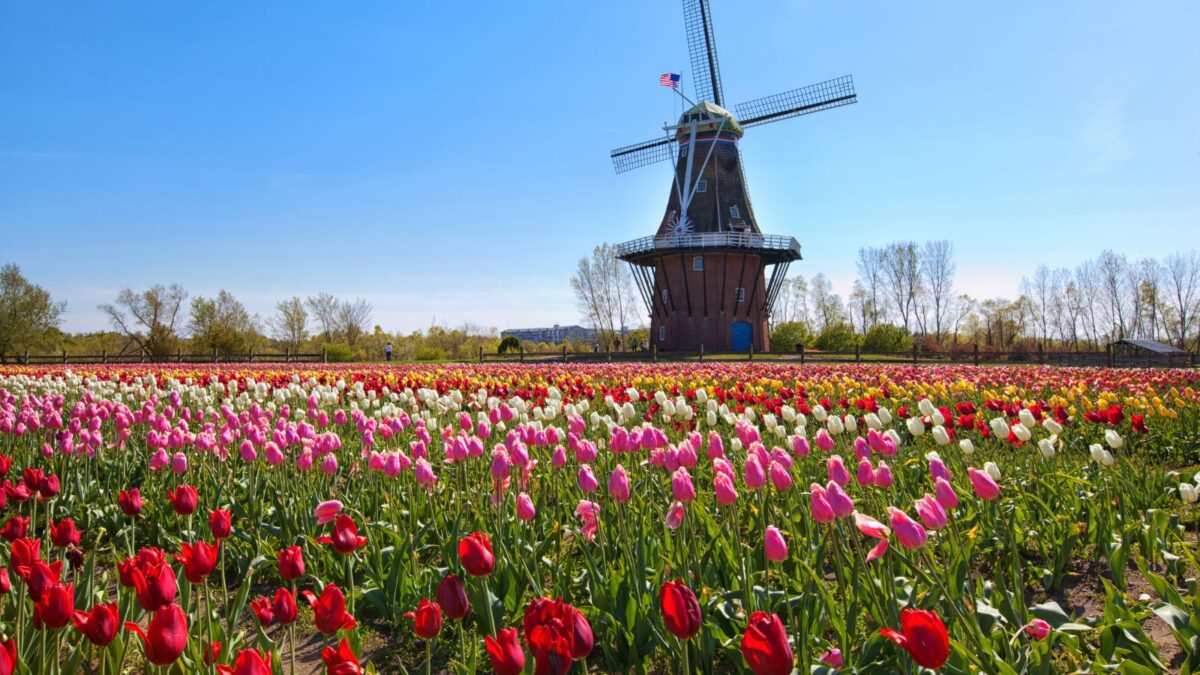
If tulips immediately make you think of the Netherlands, you aren’t alone. Every spring, Holland, Michigan, fills with them.
Tulip Time is the big event here, when seemingly every available patch of ground erupts in color. But the Dutch connection goes much deeper than flowers. Dutch immigrants settled the town, and you’ll see reminders of that history throughout the area.
There is a real working Dutch windmill brought over from the Netherlands. There are also wooden shoe demonstrations and Dutch-inspired architecture around town.
4. St. Augustine, Florida
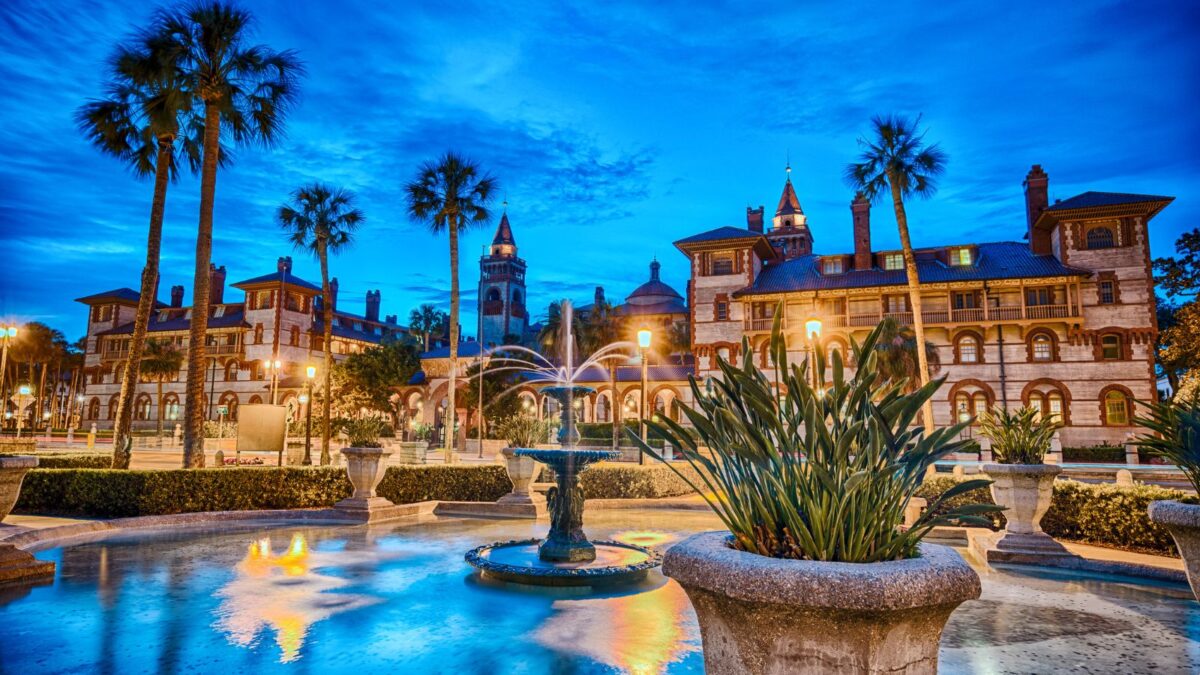
St. Augustine is very different from the Florida of sprawling resorts and theme parks.
The Spanish founded the city in 1565, making it the oldest continuously occupied European-established settlement in the continental United States.
That history is hard to miss once you get into the Old City.
Narrow streets, old buildings, and courtyards make parts of St. Augustine feel much more European than Floridian. The massive Castillo de San Marcos sits right along the water.
St. George Street is the main pedestrian area and one of the easiest places to start exploring. There are restaurants, little shops, and historic buildings packed together along the street. You can absolutely come here for the history, but you don’t have to turn the entire trip into a history lesson. Wander around, find somewhere good to eat, and head toward the water for sunset.
5. Frankenmuth, Michigan
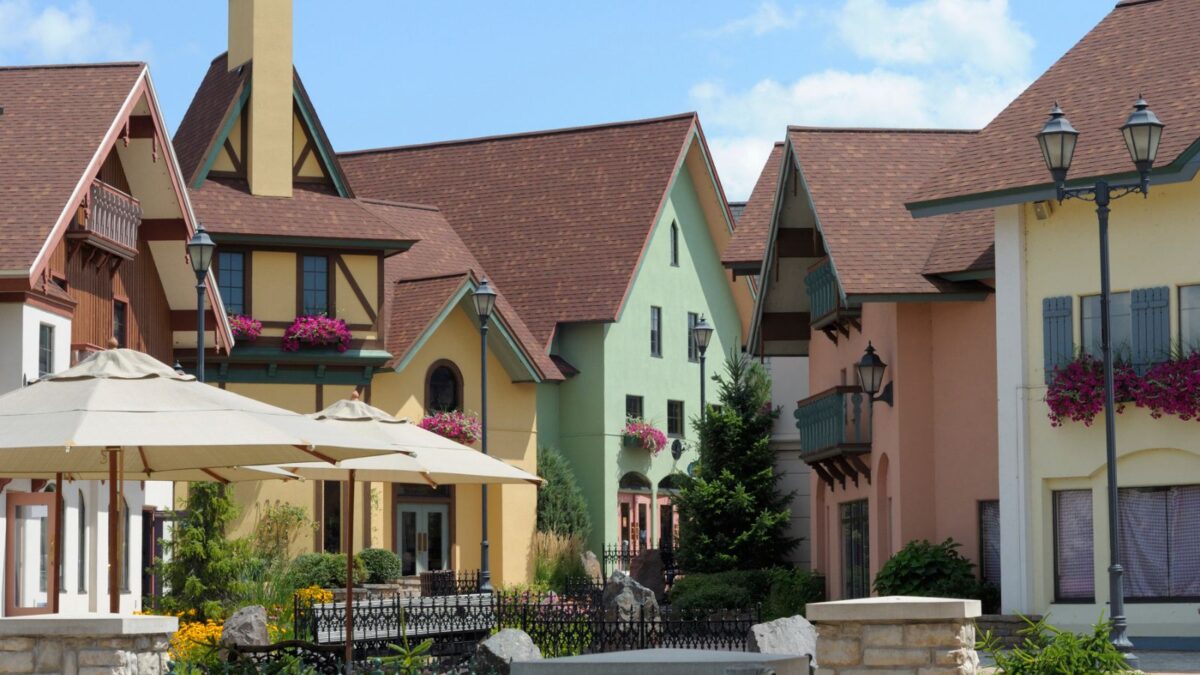
Michigan has another European-inspired town worth visiting, but Frankenmuth is known for its German heritage.
Known as Michigan’s Little Bavaria, Frankenmuth was settled by German immigrants in the 1840s. Today, you’ll find Bavarian-style buildings, German food, and plenty of reminders of the town’s roots.
Then there is Bronner’s Christmas Wonderland. It’s billed as the world’s largest Christmas store, and if you are one of those people who could happily look at Christmas decorations in July, you may never want to leave.
Frankenmuth is definitely touristy. There’s no pretending otherwise. But sometimes touristy is fun, and this is one of those places where you might as well embrace it.
6. New Glarus, Wisconsin

New Glarus is tiny compared with many of the destinations on this list, but that’s part of its charm.
Swiss immigrants founded the town in 1845, and that heritage still shows up in the chalet-style buildings, flower boxes, and little details scattered around downtown. It calls itself America’s Little Switzerland.
7. Vail, Colorado
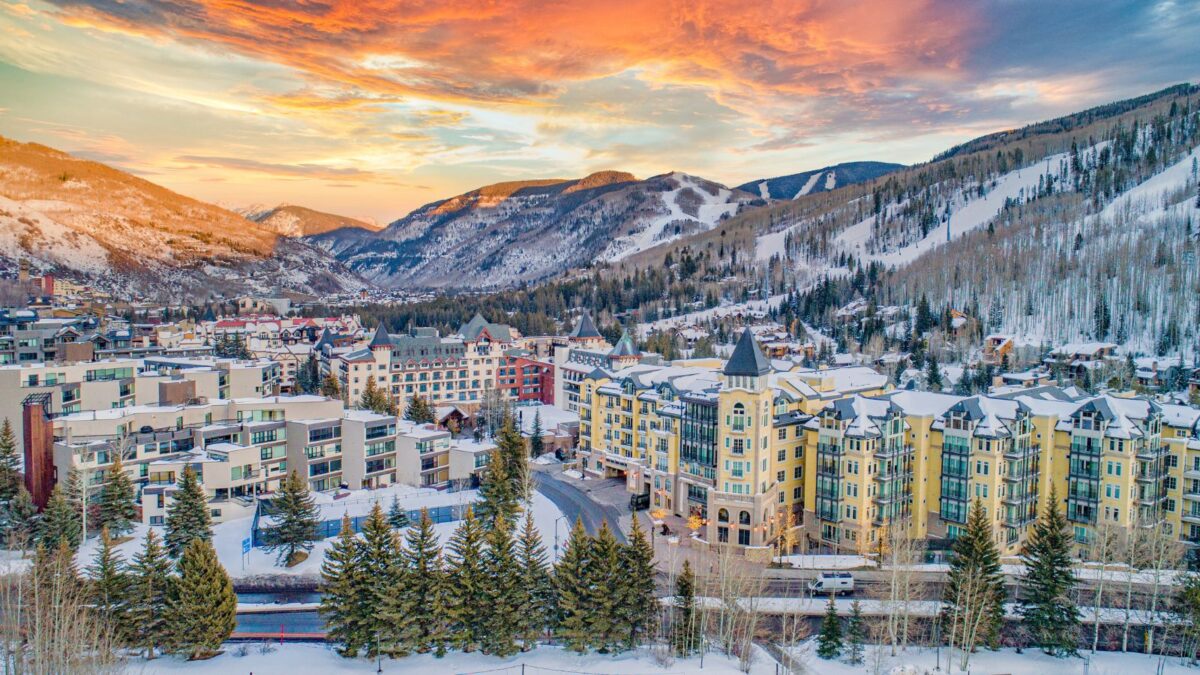
Vail is a little different from the other places on this list because its European appearance isn’t the result of generations of immigrants settling there. It was designed to look like an Alpine village. And it really does.
Pedestrian streets weave between chalet-style buildings while the mountains rise around the village.
In winter, add snow, skiers walking around in boots, and an outdoor ice rink, and the whole scene feels much closer to an Austrian ski town than to Colorado.
You don’t have to ski to enjoy it either. Vail is beautiful in the summer, when restaurant patios fill up, and the surrounding mountains turn green.
8. Tarpon Springs, Florida
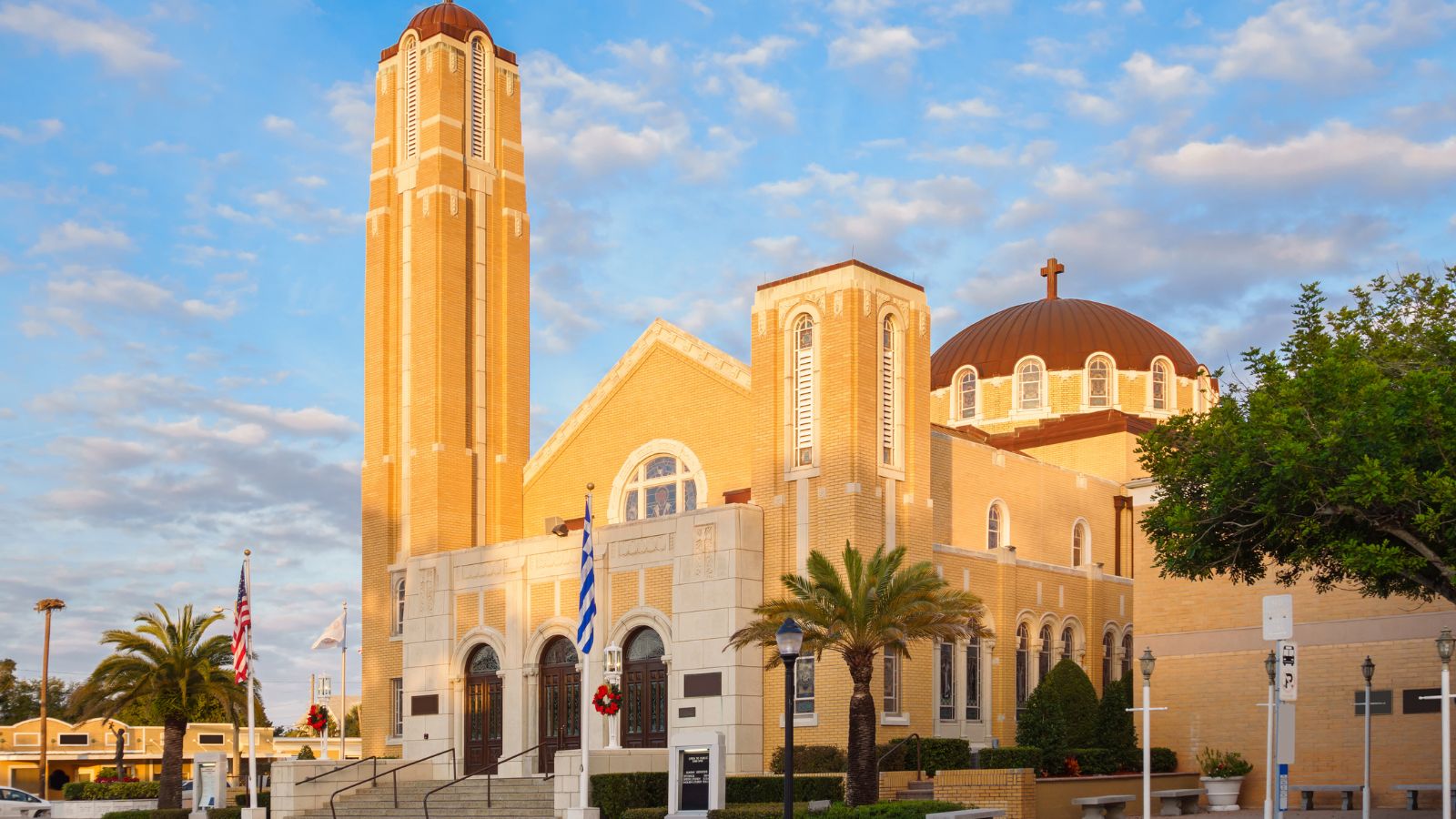
Here’s another side of Florida you might not expect: Greek sponge divers.
Tarpon Springs has one of the largest Greek-American communities in the country, with roots in the sponge-diving industry established here by Greek immigrants in the early 1900s.
Head down to the Sponge Docks, and that history is still very much alive. Boats continue to bring sponges into the harbor, while Greek restaurants, bakeries, and shops line the waterfront.
I’d come for the food alone. This is the place for baklava, spanakopita, and a long Greek lunch near the water.
January is an especially interesting time to visit because Tarpon Springs holds a huge Epiphany celebration, including the traditional Greek Orthodox blessing of the waters.
9. Lindsborg, Kansas

You might not expect to find a little piece of Sweden in the middle of Kansas, which makes Lindsborg that much more fun.
You’ll know you’ve arrived when you start seeing Dala horses everywhere. The colorful painted wooden horses are a traditional Swedish symbol, and Lindsborg has turned them into a kind of town mascot. You’ll find them on sidewalks, outside businesses, and scattered throughout downtown.
The town is small enough to explore in an afternoon, but don’t just snap a picture with a Dala horse and leave. The Swedish art and folk museum gives you a much better understanding of how deeply those roots run here.
If your timing works, Svensk Hyllningsfest is held every other year and celebrates the town’s Swedish heritage with food, music, and plenty of festivities.
10. Pella, Iowa

Pella is another Dutch town, but it has a personality all its own.
The showstopper is the Vermeer Mill, a working windmill that towers over the surrounding buildings.
Spring is especially beautiful. Every May, Tulip Time brings thousands of tulips into bloom along with parades, Dutch costumes, and other celebrations.
11. Mount Angel, Oregon

Mount Angel is an easy place to overlook when you’re driving through Oregon’s Willamette Valley, but if you like small towns with European character, it’s worth the detour.
German settlers shaped the town, and every fall thousands of people arrive for its Oktoberfest. Expect the things you’d hope for at Oktoberfest: German food, beer, music, and plenty of lederhosen.
The town is small, so I’d combine it with a larger trip to the Willamette Valley. Spend some time in Mount Angel, then head out into Oregon wine country for the rest of the day.
12. Poulsbo, Washington

You don’t have to go far from Seattle to find a little taste of Norway.
Poulsbo sits on Liberty Bay, and Scandinavian fishermen began settling in the area in the late 1800s. The town has proudly held on to that heritage, earning itself the nickname Little Norway.
Front Street is the heart of downtown, lined with shops, murals, and Scandinavian details. You’ll also find bakeries selling pastries that give you a very good excuse to stop for something sweet while you’re walking around.
Poulsbo makes an easy day trip from the Seattle area, especially if you work a ferry ride into the adventure.
Come in May, and you’ll catch Viking Fest, when you’ll see Viking costumes, Norwegian flags, and a whole lot of Scandinavian pride.
13. Fredericksburg, Texas
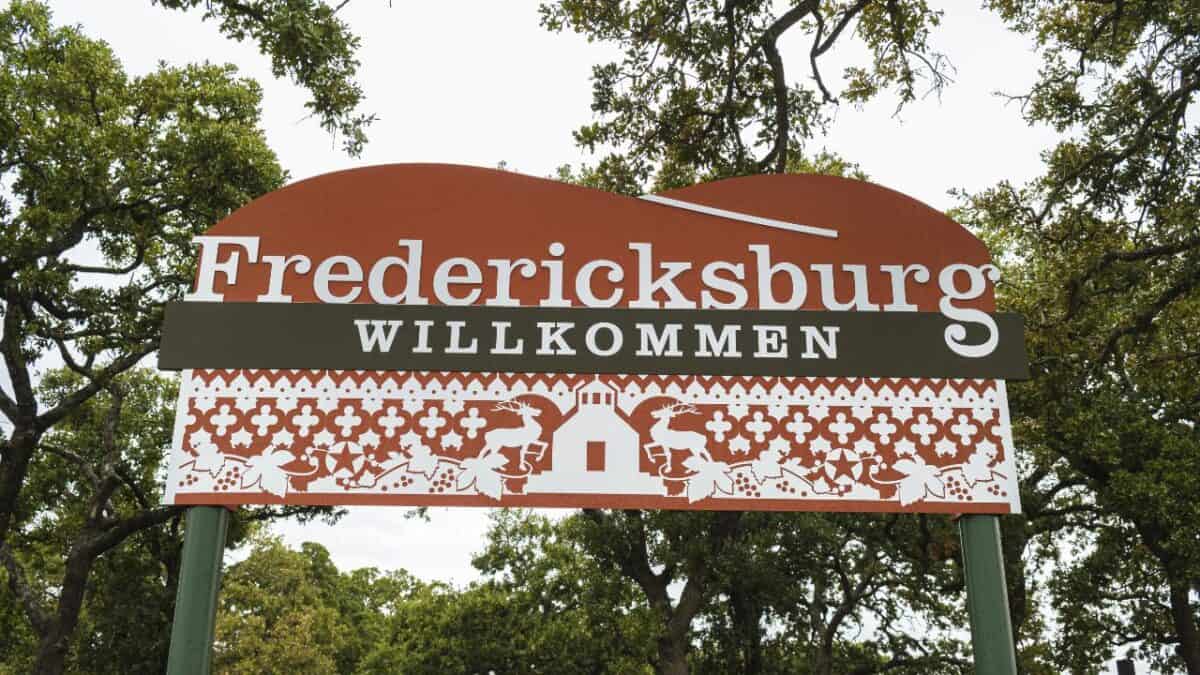
Fredericksburg is in the Texas Hill Country, about an hour and a half outside of Austin. German heritage is everywhere here; downtown features limestone storefronts and old Sunday houses that German families built to stay in when they came into town on weekends.
The wineries are a huge draw; this is real wine country, with dozens of tasting rooms scattered along the roads leading in and out of town. But for me, it’s really about the food.
You can get proper German food—sausages, schnitzel, the works—and then, a few blocks away, get some of the best Central Texas barbecue you’ll find anywhere.
There are also a handful of fusion restaurants worth checking out. My two favorites are Eaker BBQ, a husband-and-wife-owned spot blending Central Texas barbecue with Korean flavors, and Leroy’s Tex Mex BBQ, where I had BBQ tacos with sauerkraut and a ton of other amazing options. Please get the queso (in a gallon-sized bucket if you can).
14. New Orleans, Louisiana
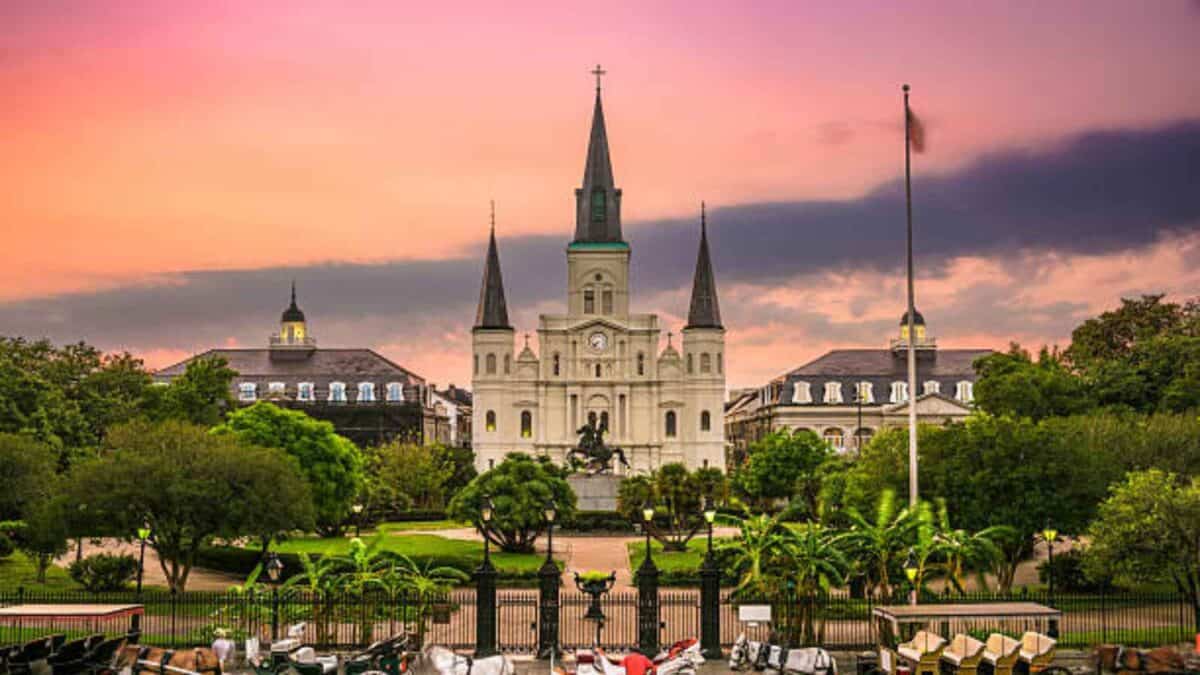
New Orleans doesn’t really look or feel like anywhere else in America, and that’s exactly why it belongs on this list.
The city began as a French colony in 1718 and later came under Spanish rule. Both influences are still visible in the French Quarter, where narrow streets run between colorful buildings, courtyards hide behind gates, and ornate iron balconies hang overhead.
St. Louis Cathedral anchors Jackson Square, and even the street names are reminders of the city’s French history.
French and Spanish influences, mixed with African, Caribbean, Native American, and other cultures, helped create dishes you won’t find anywhere else in quite the same way.
15. Charleston, South Carolina
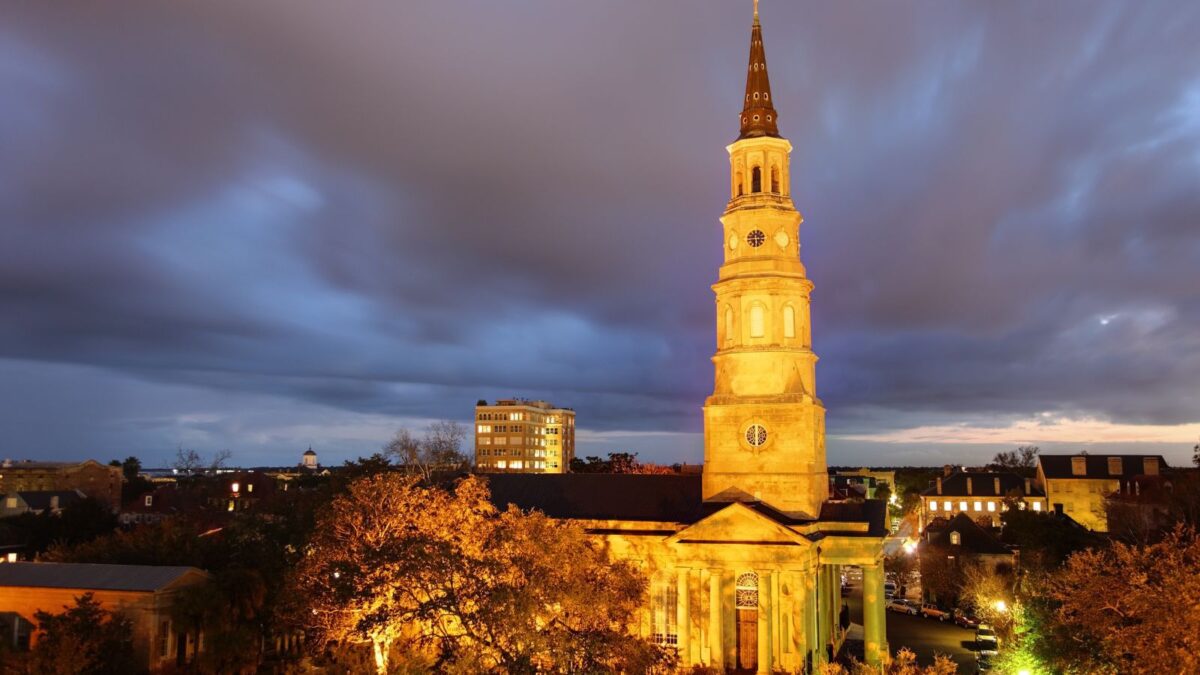
If your idea of Europe involves old buildings, narrow streets, hidden gardens, and architecture you want to stop and photograph every few feet, Charleston should be high on your list.
The historic district is made for walking. Pastel homes sit shoulder-to-shoulder, wrought-iron gates open onto gardens, and cobblestone streets lead toward the waterfront.
One of my favorite ways to see historic cities is to walk with little plan, and Charleston is perfect for that. Eventually, make your way toward the Battery, preferably around sunset, when the light hits the old houses and waterfront.
16. Hermann, Missouri

The Missouri River might seem like a strange place to go looking for the Rhine Valley, but that’s exactly what German immigrants were trying to recreate when they settled Hermann in the 1830s.
They brought their winemaking traditions with them, and vineyards remain a major part of the area today. Wine lovers should make time for Stone Hill Winery, one of Missouri’s oldest wineries. Riesling feels particularly appropriate here.
Hermann’s downtown has plenty of German character too, with historic buildings and streets that make wandering around half the experience.
17. Spring Grove, Minnesota
This town has deep Norwegian roots, with immigrants from Norway beginning to settle the area in the 1850s. Unlike some of the more tourist-heavy European-inspired towns, Spring Grove feels less like a themed destination and more like a small American town that has held on to its Scandinavian heritage.
You’ll find that history woven into the community, from local traditions to festivals and cultural events.
This isn’t where I’d go expecting blocks of elaborate European architecture or a packed sightseeing itinerary. It’s a quieter stop, and that’s really the appeal. If the smaller heritage towns on this list interest you more than the big tourist destinations, Spring Grove offers a very different kind of European connection.
Which town are you adding to your travel plans?

You don’t necessarily need a passport or a transatlantic flight to get a little taste of Europe. Sometimes it’s waiting in a mountain town in Washington, along the waterfront in Florida, or in a tiny community in the middle of Kansas.
Obviously, none of these places are going to replace actually going to Germany, Denmark, Greece, or France. But until I become incredibly wealthy and can spend months wandering through Europe as I mentioned earlier, I’ll happily take a weekend filled with windmills, old buildings, good pastries, and maybe a plate of schnitzel a little closer to home.


