15 Surprising Ways Other Countries Celebrate Christmas
Have you ever wondered how different countries around the world celebrate Christmas?
While in the U.S., the holidays are usually celebrated by hanging up stockings, leaving out cookies and milk for Santa, and opening presents on Christmas morning, the rest of the world may surprise us with other plans for celebrating the joyful season.
From hiding brooms and mops to avoid witches in Norway to celebrating Christmas in Japan with KFC and lining up for a life-changing lottery ticket in Spain, these holiday traditions are truly as fascinating as they are surprising.
Ready to discover 15 surprising holiday traditions from around the world? Let’s dive in!
1. Stashing Brooms in Norway

Hide your kids, hide your….brooms? According to centuries-old Norwegian folklore, brooms and even mops are hidden away on Christmas Eve because the legend says that evil witches and spirits run loose at night.
To sabotage their evil plans to scare children, Norwegian families hide the brooms and mops from the witches so they can’t find them and use them to travel around.
Many people say this tradition is based on the folklore “Wild Hunt,” popular in Scandinavia and other European countries.
2. Spiders on Christmas Trees in Ukraine

You’ll know you’ve stepped into a Ukranian home during the holidays if you see a few spider ornaments decorating the Christmas tree, which, according to local legend, are meant to bring good luck.
Ukranian legends tell the story of a spider who kept away from the cold inside a poor family’s home. Appreciating the warm refuge, the spider spun beautiful Christmas decorations for the family’s tree.
Today, “pavucky” (spiders in Ukrainian) is a staple bejeweled ornament that many families associate with good luck and the spirit of giving during the holidays.
3. Spot “the Pooper” in the Nativity Scene in Spain

When I lived in Spain, I came across different traditions and norms that were so different to me, and two of those were the “Caganer” or “the pooper” and the “poop log” or “Caga Tío.”
The Caganer is unique to the Catalan region of Spain. It shows a defecating Santa Claus randomly placed in nativity scenes, and some celebrity figurines are even shown doing the same.
Though shocking to most Americans, in Catalan culture, defecation is actually seen as a sign of fertility and even good fortune.
Similarly, the “poop log” or “Caga Tió is an actual wood log with a smiley face and hat that is fed leftovers. If you sing a specific song to it, it will “poop” out a traditional Spanish holiday nougat called “Turron.”
4. Be Good, or Krampus Will Find You in Central or Eastern Europe
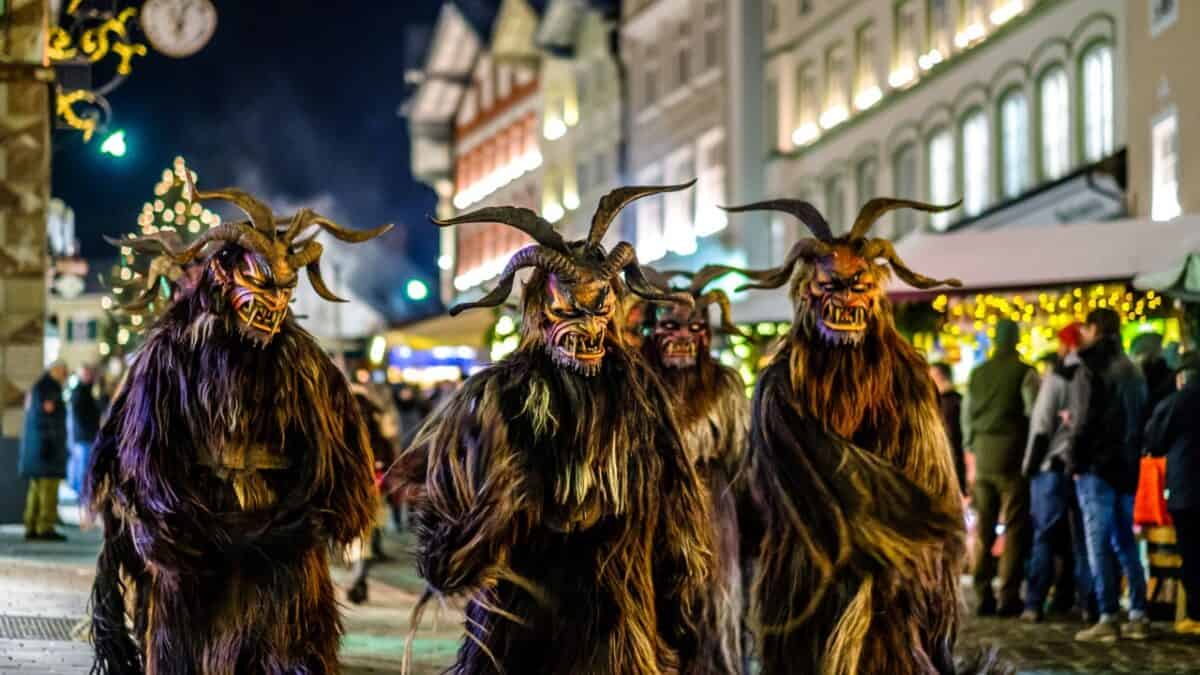
Most popular throughout many European countries, Krampus is a devil-looking character (horns and all!) who appears every Christmas season to scare kids and “punish” those who aren’t good.
Krampus, which means claw in German, comes from pagan and Alpine traditions and beliefs, specifically during the winter solstice.
Today, if you visit countries including Austria and Germany, you’ll see Christmas parades where Krampus appears, scaring the misbehaved children with a whip.
5. Enjoy Christmas Carolers in Bear Suits in Romania

According to local history, bears were sacred to the original Romanians because of their believed healing powers.
Today, it’s common to see Christmas carolers in Romania dressed in bear suits or with bear representation, which is thought to bring good luck.
Not only is Christmas caroling a thing, but also dancing! Romanians believe dancing brushes away evil spirits and fertilizes the land for the upcoming year.
6. Attend “Misa de Gallo” in Most of Latin America

“Misa de Gallo,” or Midnight Mass, is a popular Catholic-influenced Latin American tradition that families participate in to commemorate the birth of Jesus.
As a Mexican American living in the U.S., I attended “Misa de Gallo” (which translates to Rooster Mass because the hour coincides with roosters’ wake-up), a tradition I experienced as a child.
Attending “Misa de Gallo” was followed by opening gifts at midnight, which I learned early on was not the norm in the U.S.
7. Celebrating Christmas in Japan with KFC

In 1974, a “Kentucky for Christmas” global campaign promoted the idea that celebrating Christmas with fried chicken instead of a traditional meal was unique and cool.
This idea inspired a few people globally, but no more than Japanese people intrigued by Western culture and traditions at the time.
Today, many families still pre-order their pre-made fried chicken meal with sides as a fun way to enjoy the holidays with an American-Japanese twist.
8. Leave the Shoes by the Fireplace in France

If you’ve watched season 4 of Emily in Paris, you may have noticed the Christmas episode in which Emily learns about the French tradition of leaving shoes by the fireplace on Christmas Eve.
According to local tradition, children do this hoping Santa (Père Noël) will give them presents. Along with the shoes, the children leave some treats for Santa and his helpful assistants, who are not reindeer but a donkey called Gui.
9. Hit the Beach on Christmas Day in Australia

It’s an entirely different scene than what we are used to in the U.S. Because the holidays fall during the summer for Australians, it’s a regular activity to spend Christmas at the beach and in nature.
Australia’s “ traditional Christmas meal” consists of grilled foods, from meat to veggies, burgers, and salads, served at the beach while the kids play in the water or build sandcastles.
Santa in Australia is typically shown wearing shorts and other light and breezy clothes for fun. It’s a gold Christmas in Australia, that’s for sure!
10. Follow Mary and Joseph’s Path with Las Posadas in Mexico

In Mexico, “Las Posadas,” or “The Inns” in English, is a 9-day Catholic tradition and festivities that reenact Mary and Joseph’s journey while searching for an inn.
People dress up as Mary and Joseph, and neighbors get together to follow them as they move from one “inn” to another (neighbor’s houses) and sing a song outside that asks the “innkeepers” to let them in.
It’s a beautiful celebration I’ve experienced while visiting Mexico. It also involves Spanish Christmas carols, breaking piñatas, eating, dancing, gift exchanges, and much more!
11. Eating Fried Caterpillars in South Africa

South African holiday traditions include dining savory deep-fried caterpillars. More specifically, it’s the Emperor Moth caterpillars.
Aside from the custom of eating fried caterpillars, which many say have a very subtle and light flavor, many also say that the delicacy symbolizes good fortune for the coming year.
This unique delicacy is typically eaten as an appetizer.
12. See How the Yule Goat Oversees Christmas in Sweden

Have you ever wondered what the goat plushies and ornaments sold during Christmastime at Ikea meant in Swedish culture?
The Yule Goat in Sweden historically symbolizes an invisible spirit that overlooks the Christmas celebration and makes sure it goes well. It represents holiday magic and happy celebrations.
The Yule Goat is seen with Santa Claus as a helper to spread holiday cheer or sometimes by itself. The word “yule” possibly comes from the Swedish word “Jul,” which means Christmas.
13. Kick Off the Holidays the Colombian Way with Dia de las Velitas
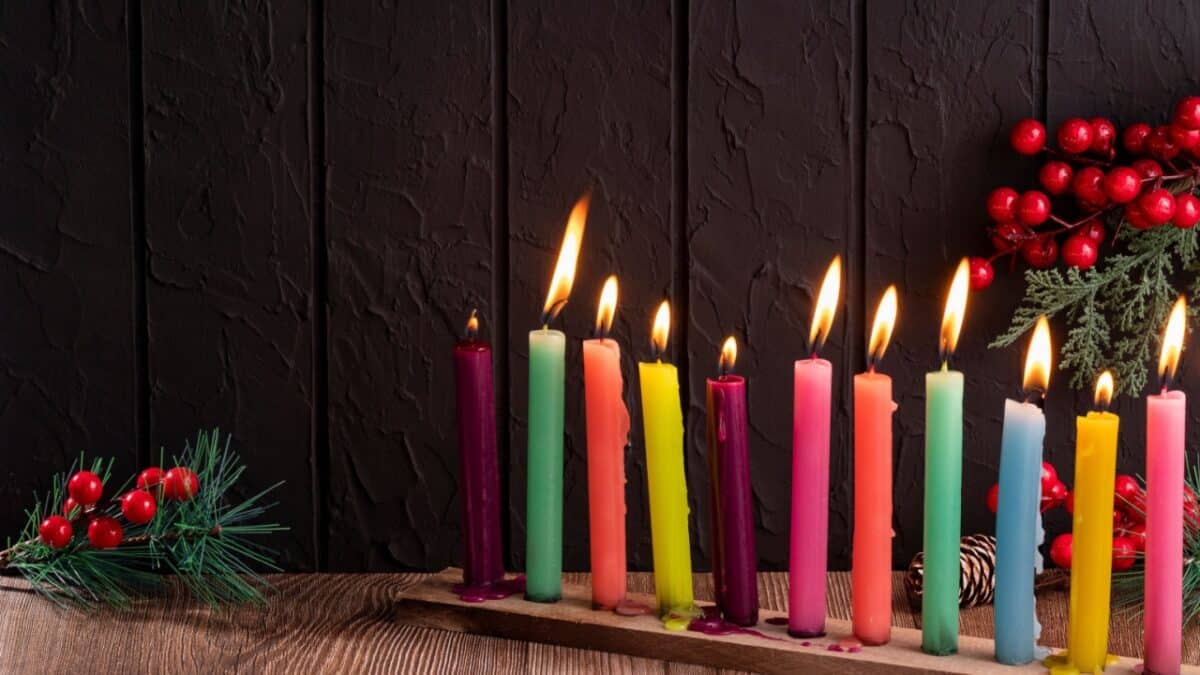
The real holiday celebration in Colombia doesn’t start before the celebration of Dia de las Velitas (Day of the Candles).
This holiday celebration honors the immaculate conception of the Virgin Mary on December 7th. Families gather to eat a special meal or celebrate with friends.
The celebration has been held every year since 1854, and to this day, it’s a beautiful celebration that includes the glow of hundreds of candles outside homes, streets, balconies, and more.
14. Waiting in a Long Line for the Christmas Lottery in Spain
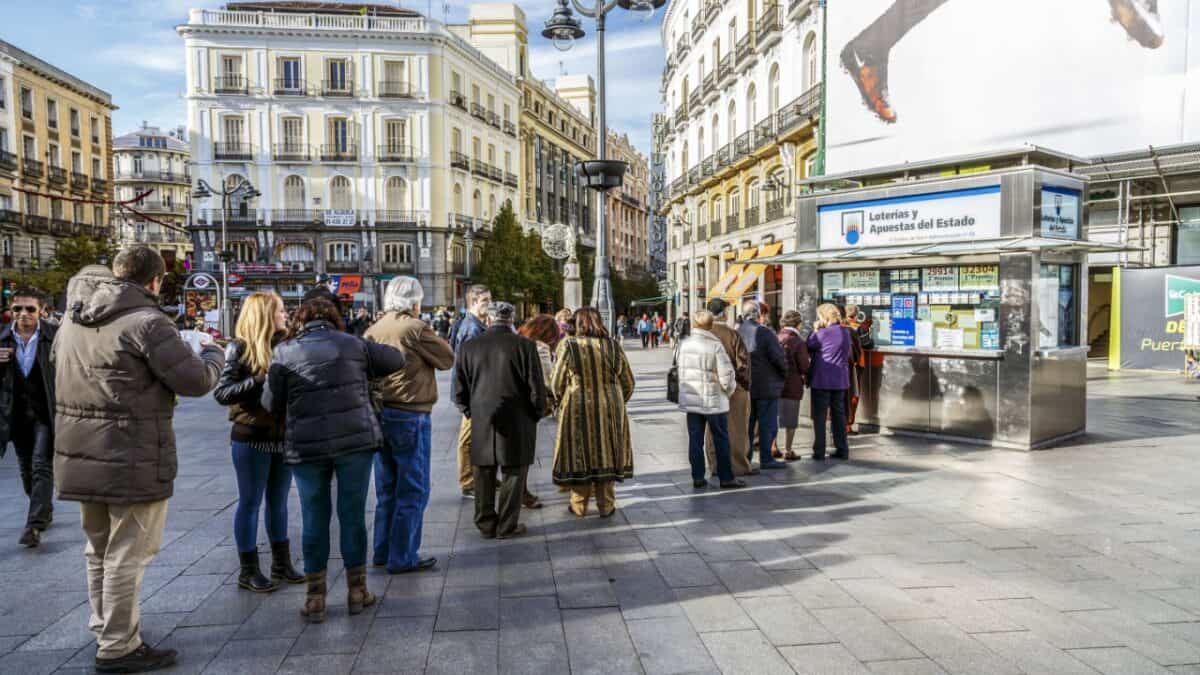
When I lived in Spain, something else that caught my attention during the holidays in Madrid was the hype around the Christmas Lottery, called “El Gordo,” which caused long lines outside convenience stores and special booths around the city.
“El Gordo” or “The Fat One” is the world’s second-longest continuously running lottery, with a handsome euro amount at stake. Starting in December, everyone tries to get their hands on their lottery ticket, hoping to be the new winners of a life-changing amount of money.
When the lottery winners are drawn, people watch the TV closely and even stream it in school, waiting to see the lucky winners.
15. Having a Lit Christmas at the Christmas Capital of the Philippines

There is no better place to experience Christmas, according to many than at the Phillippine’s “Christmas Capital,” which hosts the traditional Parol Christmas lantern celebration.
Here, you’ll find giant displays of bright lanterns in different shapes handmade by the locals. These lanterns weave in Filipino culture and Christmas tradition, symbolizing light winning over darkness, good spirits, and hopefulness.
The festival takes place in San Fernando, the “Christmas Capital of the Philippines,” about an hour from Manila.
Which Holiday Tradition Surprised You the Most?

Which one of these traditions is your favorite? Which one shocked you the most? Do you know of any more surprising holiday traditions from around the world?
Let us know in the comments!