10 National Parks with the Most Beautiful Wildflower Blooms
1. Great Smoky Mountains National Park

Great Smoky Mountains National Park, straddling the border between North Carolina and Tennessee, boasts a diverse range of flora and fauna, making it a prime location for wildflower enthusiasts. The park is home to over 1,500 types of flowering plants, more than any other American national park, earning it the nickname “Wildflower National Park.”
Visitors can enjoy the beauty of spring ephemerals like trilliums, lady slipper orchids, and violets along its myriad trails and roads. The peak bloom for wildflowers in Great Smoky Mountains National Park generally occurs from late March to April, with the annual Spring Wildflower Pilgrimage offering guided walks and talks to explore the park’s diverse plant life.
2. Yosemite National Park

Yosemite National Park in California is renowned for its stunning granite cliffs, waterfalls, and giant sequoias. It’s also a haven for wildflower enthusiasts. The park’s vast elevation range supports a variety of habitats, from valley meadows to alpine highlands, each hosting unique wildflower species such as lupines, California poppies, and the rare Yosemite woolly sunflower.
Wildflower peak bloom in Yosemite varies by elevation, starting in late March and April for the lower valley areas and progressing into July and August for the high country meadows.
3. Mount Rainier National Park
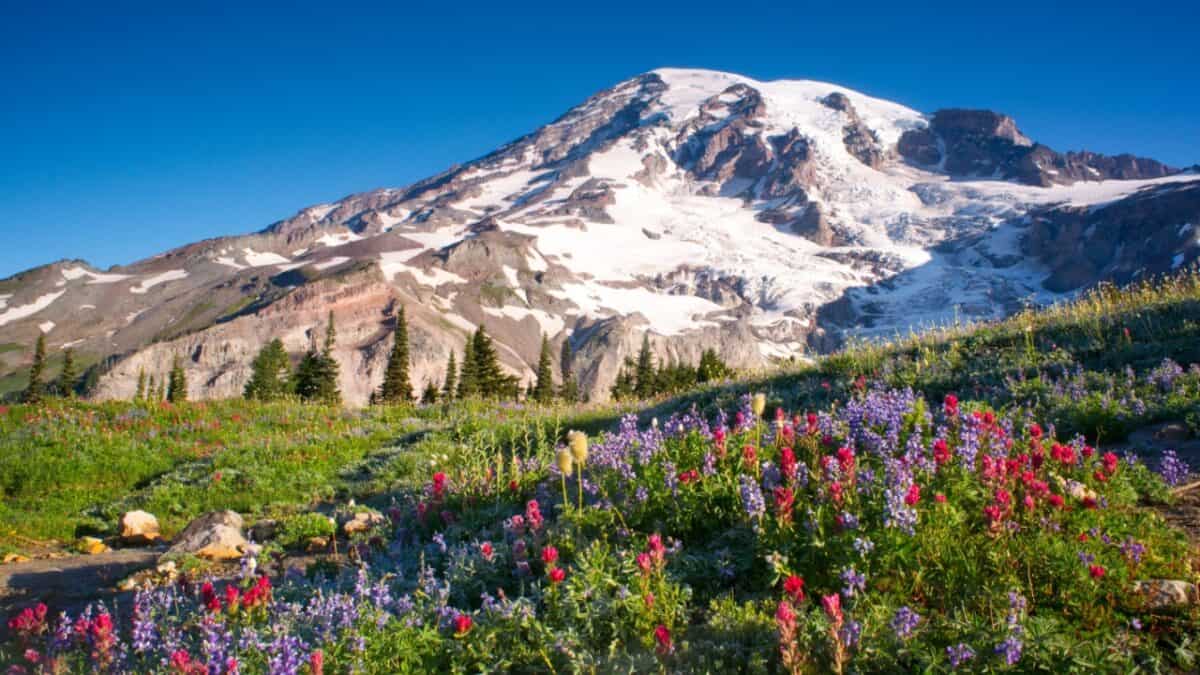
Mount Rainier National Park in Washington is famous for its awe-inspiring views of the titular mountain and its wildflower meadows. The subalpine meadows around Paradise and Sunrise are particularly renowned for their vibrant displays of avalanche lilies, lupines, and Indian paintbrush. These wildflower fields with Mount Rainier as a backdrop create one of the most picturesque scenes in the American West.
The best time to view wildflowers in Mount Rainier National Park is from mid-July to August, when the meadows at higher elevations burst into a riot of colors.
4. Rocky Mountain National Park
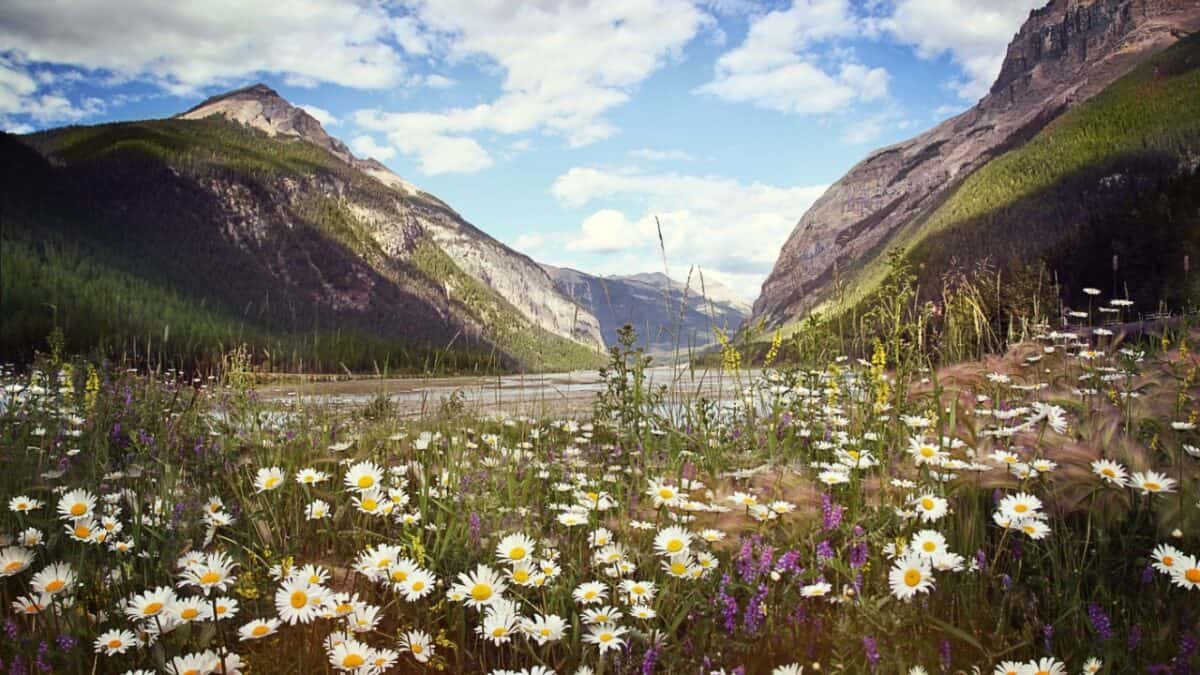
Rocky Mountain National Park, located in Colorado, offers a stunning variety of landscapes, from mountainous terrains to alpine tundra. The park is home to hundreds of wildflower species, including columbines (the state flower), wild roses, and larkspur.
Trail Ridge Road and the alpine regions offer some of the most spectacular wildflower viewing opportunities. Peak wildflower season in Rocky Mountain National Park typically runs from late June to early August, depending on elevation and weather conditions.
5. Glacier National Park
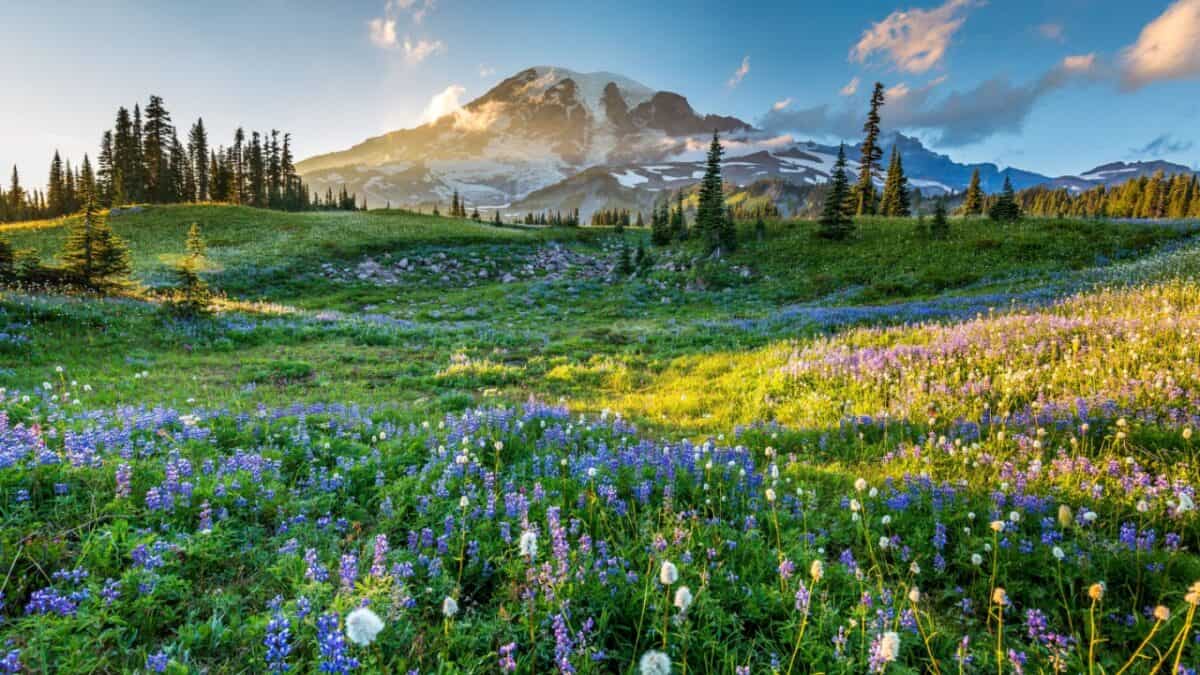
Glacier National Park in Montana, known as the “Crown of the Continent,” offers breathtaking landscapes and diverse ecosystems. The park’s over 1,000 species of plants support a spectacular display of wildflowers, including bear grass, glacier lilies, and fireweed. The meadows in the Many Glacier area and the trails around Logan Pass are among the best spots for wildflower viewing.
Wildflower blooms in Glacier National Park peak from late June through July, with some areas continuing to display vibrant colors into August. Each of these parks provides a unique wildflower viewing experience, reflecting the rich biodiversity of the United States. Remember, the timing of peak blooms can vary from year to year based on weather conditions, so it’s a good idea to check with each park for the most current information before planning your visit.
6. Acadia National Park
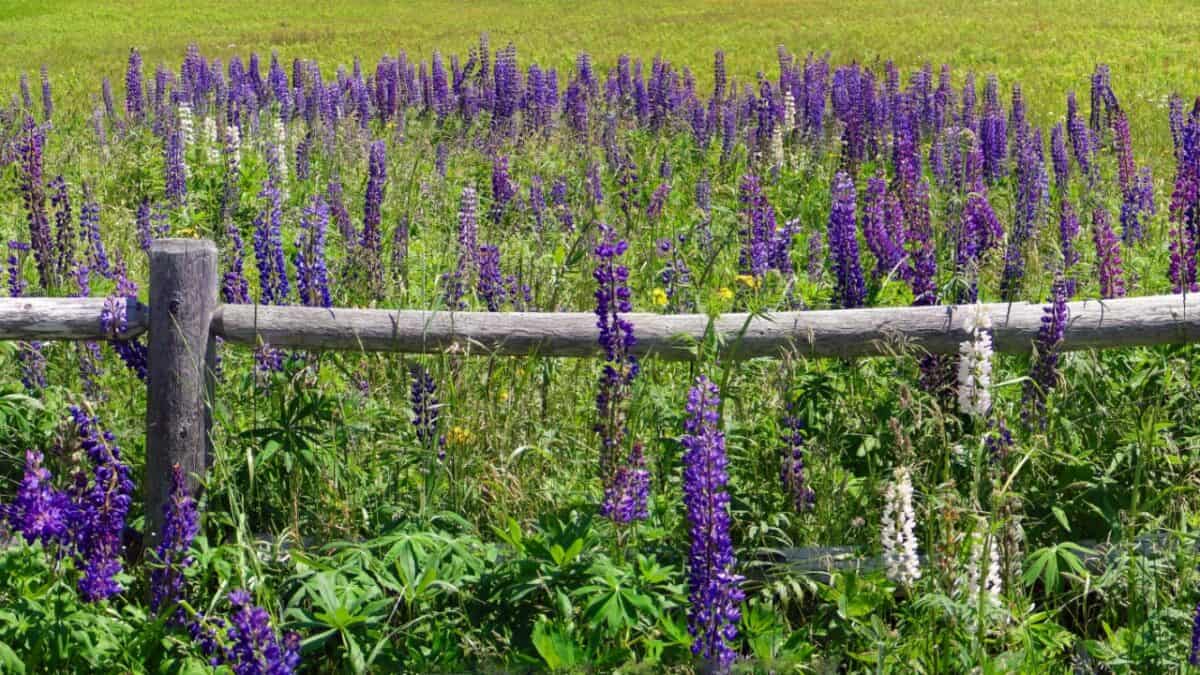
Acadia National Park, located on the rugged coast of Maine, is known for its stunning ocean views, forested paths, and granite peaks. The park’s diverse habitats, from coastal meadows to deciduous and coniferous forests, support a wide array of wildflowers, including lupines, asters, and wild blueberries.
The Park Loop Road and the carriage trails offer accessible paths for wildflower enthusiasts to explore. Wildflower viewing in Acadia peaks from late May through June, with different species blooming into the fall, providing a prolonged season of color and beauty.
7. Joshua Tree National Park

Joshua Tree National Park, situated in southeastern California, is a stark desert landscape defined by its rugged rock formations and the iconic Joshua trees. Following winter rains, the park comes alive with a burst of wildflowers, including desert lupines, California poppies, and the Joshua tree’s own creamy white blossoms.
The lower elevations bloom first, with the higher desert areas following. The peak bloom for wildflowers in Joshua Tree typically occurs from late February to early April, with variations depending on the winter’s rainfall.
8. Shenandoah National Park

Shenandoah National Park in Virginia is famous for its rolling hills, cascading waterfalls, and the scenic Skyline Drive. The park’s diverse elevation supports a wide variety of wildflowers, including spring beauties, trilliums, and wild azaleas.
The many trails and roadside views offer visitors countless opportunities to enjoy the floral displays. Wildflowers in Shenandoah National Park start blooming in early spring, with peak blooms from April through May, and some species continuing to flower throughout the summer.
9. Death Valley National Park
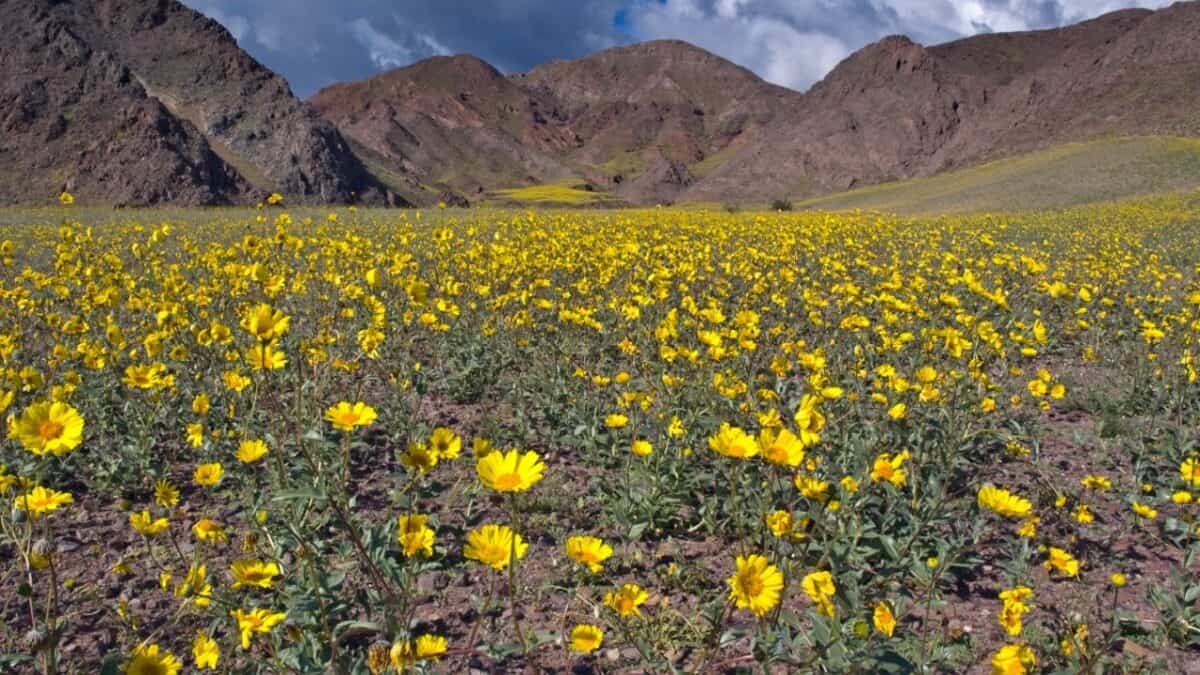
Death Valley National Park, located in California and Nevada, is known as the hottest, driest, and lowest national park. Despite its harsh desert environment, it hosts a spectacular wildflower “super bloom” in years with sufficient rainfall.
The valley floor and surrounding hillsides can become carpeted with colorful flowers such as desert gold, sand verbena, and desert five-spot. The wildflower bloom in Death Valley is highly variable but can occur from late February to early April during wet years, transforming the desert landscape into a vibrant sea of color.
10. Grand Teton National Park

Grand Teton National Park in Wyoming is renowned for its majestic mountain peaks, pristine lakes, and diverse wildlife. The park also offers beautiful displays of wildflowers, including arrowleaf balsamroot, Indian paintbrush, and lupine, set against the backdrop of the Teton Range.
The meadows in the valley floors and the alpine zones above provide some of the best wildflower viewing spots. Peak wildflower season in Grand Teton National Park is from mid-June to late July, with the timing and abundance of blooms depending on elevation and snowmelt.
Least Visited National Parks for 2024

Love nature, but not people? Head to one of these parks, they see the fewest visitors each year.
Do you want to see the Milky Way?

Head to this dark sky park to see the stars like never before
All 63 US National Parks by State

Learn about each National Park, how to get there, when to go, and what to do.
Olympic National Park Itinerary


Best Drives Through National Parks