16 U.S. Cities With Highest Crime Rates
In the United States, our diversity goes beyond just landscapes and cultures; it also includes varying safety levels across the nation. While some of the safer cities, like San Diego, CA, or Honolulu, Hawaii, are a breeze to visit and enjoy, they’re also not cheap.
Other places struggle with high crime rates and economic issues. Keeping yourself and your family safe is a top priority. So when you’re picking your next budget vacation destination or even the best affordable place to settle down, this list of the more dangerous U.S. cities, according to World Population Review, can arm you with valuable knowledge.
1. St. Louis, Missouri

When I visited the famous St. Louis Gateway Arch many years ago, I had no idea that this was one of the more dangerous cities in the country. But anyone who’s lived in a big city knows there are more secure areas to stay in and key spots to avoid in order to be safe.
St. Louis has the highest crime rate, with 2,082 violent incidents per 100,000 residents. It’s a hub for drug and gun trading due to its location. The effects of past segregation and wealth gaps have left some areas severely lacking in resources, which has made many desperate enough to turn to crime. Neglected neighborhoods lack basics like schools or parks, making it hard for people to build thriving communities.
2. Detroit, Michigan

Some unfortunate turns of events have left people feeling hopeless in this formerly thriving automotive capital. Detroit has a serious problem with violent crime, with 2,057 incidents per 100,000 residents. Many businesses and people have left since the heyday of car manufacturing has declined, and years of city mismanagement have made things worse.
The area’s high poverty rate and low-income levels show how hard it is to find job opportunities. The struggle and neglect are apparent when you see all the abandoned buildings and dark streets.
3. Baltimore, Maryland

Despite promising recent decreases in crime rates, Baltimore remains one of the country’s most dangerous cities, with a violent crime rate of 2,027 incidents per 100,000 residents.
Baltimore was significantly impacted by redlining, a discriminatory practice where banks denied loans to people in specific neighborhoods based on race or ethnicity. This resulted in disinvestment in these areas, causing lasting negative effects on crime rates.
4. Memphis, Tennessee
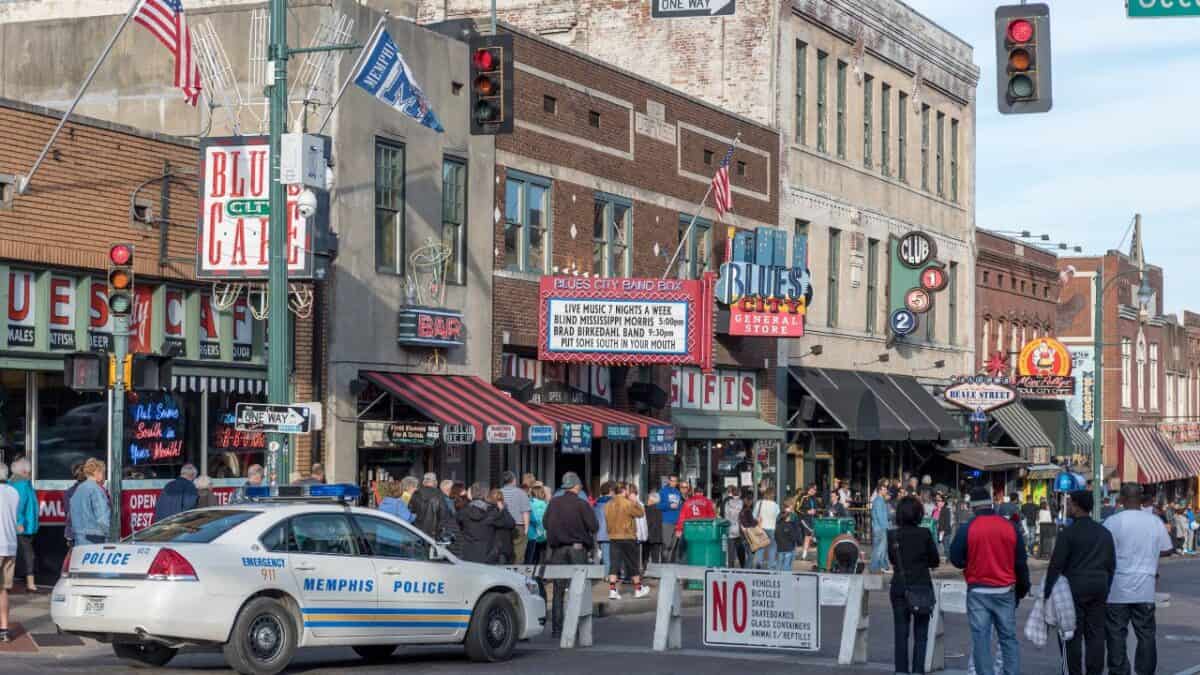
In Memphis, the violent crime rate is high at 2,003 incidents per 100,000 residents, much higher than in other cities. About 13% of homicides are due to gang violence. Gangs become attractive for young people facing tough situations, offering structure and support, and it leads to conflicts over territory, revenge, and drug trade, resulting in shootings and attacks.
Neglected neighborhoods with empty properties become havens for crime, with less community oversight and more illegal activities like drug use, trafficking, and theft.
5. Little Rock, Arkansas

Little Rock has wide gaps between rich and poor, educated and uneducated. Neighborhoods like the South End and West Little Rock struggle with higher poverty rates and limited opportunities.
This increases the risk of crime. Residents feel unsupported due to scarce services and activities, creating a sense of hopelessness. The violent crime rate in Little Rock is currently 1,634 incidents per 100,000 residents.
6. Milwaukee, Wisconsin
Milwaukee has a big crime problem, with a high rate of 1,597 violent and property crimes per 100,000 residents, considerably higher than other areas in the U.S. Metcalfe Park, one of the poorest neighborhoods, is known for being especially dangerous, with a poverty rate of over 60%.
Racial segregation in housing and schools has also made Milwaukee one of the most racially divided places in the country.
7. Rockford, Illinois

Rockford’s crime rate is alarmingly high at 1,588 incidents per 100,000 residents, higher than the national average. They’ve cut back on social services, making it harder to address the causes of crime.
The city used to rely on factories for employment opportunities, but many closed down, causing job loss and economic struggles. This, along with a history of discrimination, has led to frustration and crime.
8. Cleveland, Ohio

Cleveland faces a serious crime problem, with a violent crime rate reaching 1,557 incidents per 100,000 residents and a high likelihood of property crime victimization. Vehicle theft is especially common, putting Cleveland among the worst 10% of cities.
Economic struggles and limited access to good jobs and education contribute to this situation, trapping many in poverty and leading some to turn to crime as a means of survival. Additionally, gun violence is rampant, fueled by easy access to firearms and their frequent use in crimes, making crime control and public safety challenging.
9. Stockton, California

Stockton is only about a 1.5-hour drive from the tech capital of San Francisco, yet the difference is striking. As a former S.F. Bay Area resident, I can tell you how economically depressed Stockton appeared first-hand when I visited, especially in comparison to the wealth of San Francisco.
Stockton is a hotspot for drug trafficking because of its location, causing violence, addiction, and more crime. The violent crime rate is 1,415 incidents per 100,000 residents, higher than the national average. Sadly, there’s a big wealth disparity in Stockton, leading to a lack of resources for low-income people and crime.
10. Albuquerque, New Mexico

The Breaking Bad tv show about making Meth was based in New Mexico, and although it’s fictional, it wasn’t completely off base. In reality, Albuquerque has a major issue with drugs. High population density means more competition for resources, driving up crime rates.
Gangs add to the problem, increasing violent and property crimes, with a rate of 1,369 violent incidents per 100,000 residents. Because of the easy access to drugs, many residents also battle addiction.
11. Springfield, Missouri

In Springfield, crime rates are alarmingly above the national average, particularly in violent incidents (1,339 per 100,00 residents) and property crimes. The city’s murder rate is shockingly disproportionate to its national standing, often tied to rampant gun violence fueled by inadequate firearm regulations.
Additionally, despite a national decline, drug use and trafficking persist in Springfield, potentially fueling both break-ins and violence.
12. Indianapolis, Indiana

Indianapolis is a bustling city, but it carries a heavy burden with a violent crime rate of 1,334 incidents per 100,000 residents. If you’re thinking about visiting or relocating, be vigilant in selecting a safe neighborhood.
Despite its economic growth, many struggle with poverty, lack of education, and high unemployment, fostering desperation. The Indianapolis Police Department, grappling with staffing and resource issues, faces challenges in patrolling high-crime zones and curbing violence.
13. Oakland, California

I used to live about 20 minutes away from Oakland, and almost all of my friends who lived there had their cars broken into at some point. And it’s not just car break-ins; In Oakland, car thefts soar at 7697 annually, and violent crime rates hit a staggering 1,299 per 100,000 residents, higher than the national average.
Many residents have concerns with the Oakland Police Department’s use of force and poor community relations. Stay vigilant for your safety by becoming familiar with the different neighborhoods, with places like Forestland and Crocker Highland experiencing lower crime rates while Eastmont and Fitchburg face higher risks.
14. San Bernardino, California
San Bernardino faces a much higher crime rate than the national average, especially in violent crime, reaching 1,291 incidents per 100,000 people. The city has a persistent issue with gang activity linked to violent crime, causing turf wars.
Public schools in San Bernardino struggle due to inadequate funding, making it difficult for students to succeed. Additionally, there’s a shortage of affordable housing, healthcare, and social services, creating a troubling cycle of poverty.
15. Anchorage, Alaska

A whopping 75% of Anchorage residents believe their city is unsafe for living and walking alone at night. This reflects the harsh reality of its status as one of America’s most dangerous cities, with a violent crime rate of 1,203 per 100,000 people.
Neighborhoods near the city center, like Mountain View, Midtown, and Government Hill, grapple with heightened crime rates linked to factors such as poverty, unemployment, and steep rental costs.
16. New Orleans, Louisiana

Although we often see the exciting Mardi Gras celebrations on Bourbon Street in the French Quarter, this party town has a darker underbelly. Lots of folks in places like Pines Village are struggling financially, with over half of them living in poverty. This tough situation can push some to turn to crime.
New Orleans has a history of violence, and it’s tough to break that cycle. There are 1,121 violent crimes per 100,000 people. In 2023, NBC News said New Orleans is the “murder capital of the U.S.”; homicide levels haven’t been this high since the 90s.