11 Underrated UNESCO Sites That You Need To Visit ASAP
When considering UNESCO World Heritage Sites, you probably picture famous spots like Machu Picchu in the Peruvian Andes, the Great Wall of China, or Yellowstone National Park with geysers and hot pools. As of 2024, there are 1,223 UNESCO World Heritage Sites in the World, Italy holds the top with 60 sites, followed by China with 59 sites, and Germany with 54, respectively.
Famous UNESCO World Heritage Sites are popular bucket lists for many travelers, and they tend to be crowded. However, besides the well-known places, some see relatively few visitors and require more effort and planning to get to.
If you don’t like the idea of waiting in lines, evading pickpockets, and trying to enjoy a long-awaited getaway amid big tourist crowds, this guide is for you.
This article is about underrated UNESCO World Heritage Sites that you probably never heard of. Most of them are well off the beaten path, and if you want to learn about places that most people won’t likely get to see, you should bookmark this list.
1. San Borjita Cave Paintings – Baja California Sur, Mexico

To say that San Borjita Cave Paintings are remote would be an understatement.
The oldest cave paintings in North America require a long drive whether you are starting from Cabo or Tijuana. But even after arriving in the closest town, San Ignacio, you need to book a guided tour that includes a few-day trek in the desert. Visiting this mysterious site in the Sierra de Guadalupe Mountains is possible only with a guided tour.
According to some historians, San Borjitas cave paintings date back 7,500 years, and what’s even more remarkable about this site is how well these artworks have been preserved due to their remote location and the dry climate of Baja California. The paintings consist of red and black figures of animals and humans with long torsos and stretched out arms that are located on the inside part of the cave about 20 feet off the ground.
It’s unclear who the authors were, but the indigenous Cochimi people who lived here before the Spanish colonizers arrived told stories of the ancient race of giants that created these spectacular artworks.
2. Bukhara, Uzbekistan

Located along the Silk Road, an ancient trade route that connected the East and West, Bukhara is considered one of the best-preserved Islamic cities in Central Asia that’s over 2,000 years old with its well-maintained Kalon Mosque, Ark of Bukhara, and Salon Minaret, among other historic pieces of architecture.
The old part of Bukhara has been recognized as a UNESCO World Heritage Site, and what’s particularly remarkable about Bukhara is that it has no signs of urbanization. To this day, you can see the original buildings. Bukhara is a perfect stop on your Uzbekistan itinerary, thanks to its location between Khiva and Samarkand.
3. Bialowieza National Park – Poland, Belarus

Located along the border of Poland and Belarus about 250 km east of Warsaw, Bialowieza National Park is home to hundreds of European bison, the biggest animal on the continent.
It’s also the only natural property in Poland designated as a UNESCO World Heritage Site. The area is largely untouched by humans and covers 141,885 hectares, home to a mixed forest with oaks, mosses, and pine trees.
The Bialowieza is home to the forest that used to cover most of Europe’s terrain, so a visit here is a good idea for nature loversand history buffs alike. Consider hiring a local guide who can help you spot the iconic bison and provide a context of the area. You can visit Bialowieza year-round and stay in one of the cozy guest houses in the area.
4. Cocos Island National Park, Costa Rica

Located on the Pacific Island 550 km from mainland Costa Rica, Cocos Island was designated a World Heritage Site by UNESCO in 1997 because of its untouched beauty and incredible biodiversity, which attracts many animal enthusiasts and divers who come here to see sharks, dolphins, and manta rays, among other species.
The only residents on the island are national park rangers and tourism on the island is very limited and is allowed only with the permission of the rangers. Visiting Cocos Island is possible only by boat and takes at least 35 hours.
5. The Vilnius Historic Center, Lithuania

Vilnius is one of the most overlooked European capitals that sits along the shores of Neris River. The city is a hidden gem with a gorgeous historic center where you can find an interesting mix of architecture and original layouts well-preserved with time.
Vilnius has many unique pieces of history including Gediminas Castle Tower which overlooks the city from a steep hill, a magnificent Vilnius Cathedral built in the Neoclassical style, and various churches that give this city its unique character. If Vilnius is not on your bucket list yet, it’s time to put it there.
6. Lavaux Vineyards, Switzerland

Switzerland is not known for its wine production, because most of it is consumed within the country, with only a small fraction being shipped to other countries.
If you are a wine lover, looking for a less crowded wine country in Europe, consider the Lavaux Vineyard Terraces that stretch 30 km along Lake Geneva in southwest Switzerland. The area is part of the Swiss Wine Trail, which starts in Lausanne and continues along the hills of Lake Geneva.
The Swiss have been making wine for centuries, and Lavaux Vineyards designated a UNESCO World Heritage Site is an excellent place to sample dry white wine that’s often served in local restaurants.
Walk along the vineyards and you will come across several authentic Swiss villages where generations of one-makers have been perfecting their family craft over centuries.
7. Kotor, Montenegro

Kotor is home to Montenegro’s fjord-like bay on the Adriatic Sea that became “discovered” in recent years. Few people knew about Montenegro until recently, but now this Balkan hamlet with a stunning Adriatic coast attracts a steady stream of visitors from all over the world.
Kotor was the first site in Montenegro to receive a UNESCO World Heritage Site designation in 1979 when Montenegro was part of Yugoslavia. The Bay of Kotor boasts jaw-dropping landscapes with its aquamarine waters Adriatic Sea and surrounding mountains.
After walking through Kotor’s downtown, hike to the top of the fortress that surrounds the city or jump in a boat and ride to Our Lady of the Rocks, a cute little church on a small island. Another option is Blue Cave, a popular day trip from Kotor that will allow you to enjoy the unspoiled beauty of the Adriatic Sea.
8. Upper Svaneti Georgia

Located in the upper part of Georgia in the Caucus Mountains, Svaneti is a scenic region renowned for its snow-capped peaks and valleys. Indeed, if you look at the photos, you might think that it’s Switzerland, but unlike its famous counterpart, Svaneti is not as touristy and expensive.
The scattered villages of Upper Svaneti boast impressive stone structures that date back centuries, and the entire area is a heaven for outdoor enthusiasts with top-notch hiking, interesting culture, and amazing food. One of the most popular hikes in the area is the trail from Mestia to Ushguli which requires several days.
9. Segovia, Spain

Segovia is a hidden gem of central Spain that is only 1 hour 15 minutes from Madrid. If you would rather skip popular destinations like Toledo or Avila, Segovia is a good alternative.
Although it’s a short bus ride from the capital, Segovia is calmer and more authentic than the core parts of Madrid which can feel like they have been overrun with tourists.
Segovia boasts a spectacular Roman aqueduct over 2,000 years old, as well as the imposing Segovia Cathedral with stunning architecture. Spend a day walking along the cobble-stoned streets of Segovia and admiring its incredible Gothic architecture and small-town charm.
10. Mesa Verde National Park, United States
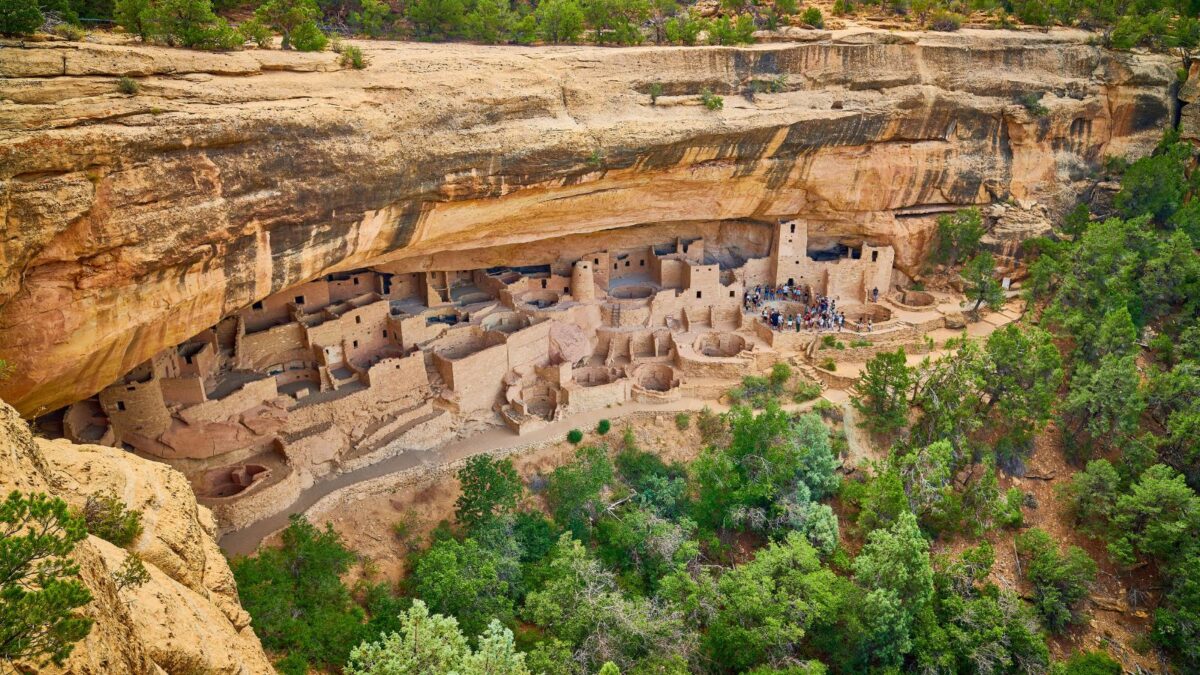
Located in southwest Colorado, Mesa Verde National Park is home to an impressive collection of 4,700 archaeological sites left by the indigenous Pueblo people who used to call this area home.
Although the park is not known for hiking, it has a rich cultural collection, as it protects the heritage of 26 Native American tribes. Besides diving into the history, you can also check out the incredible prehistoric rock art on Petroglyph Point Trail where you can also stretch your legs.
If you are a history buff, this is one of the best places to visit in the American Southwest.
11. Arequipa, Peru

Framed by three volcanoes, Arequipa Peru is one of the most striking cities in South America. The UNESCO World Heritage Site encompasses the colonial part of Arequipa, which was heavily influenced by European architectural style, and blended with colonial settlements created by indigenous populations before the colonization.
Plaza de Armas is the heart of the city where you can find local government and a cathedral. Arequipa is renowned for its colonial architecture made from white volcanic rock and its proximity to Colca Canyon, the second-deepest canyon in the world.