20 UNESCO World Heritage Sites That Are Pure Magic

A UNESCO World Heritage Site is a special mark of honor given to places around the world that are important because they are beautiful, have a lot of history, or are special in some way that makes them stand out.
UNESCO is a group that is part of the United Nations and looks after these special places. They list these spots to say, “Hey, these places are amazing, and we need to ensure they are protected and taken care of so that people can learn from them and enjoy their beauty for a long time.”
1. Great Barrier Reef, Australia
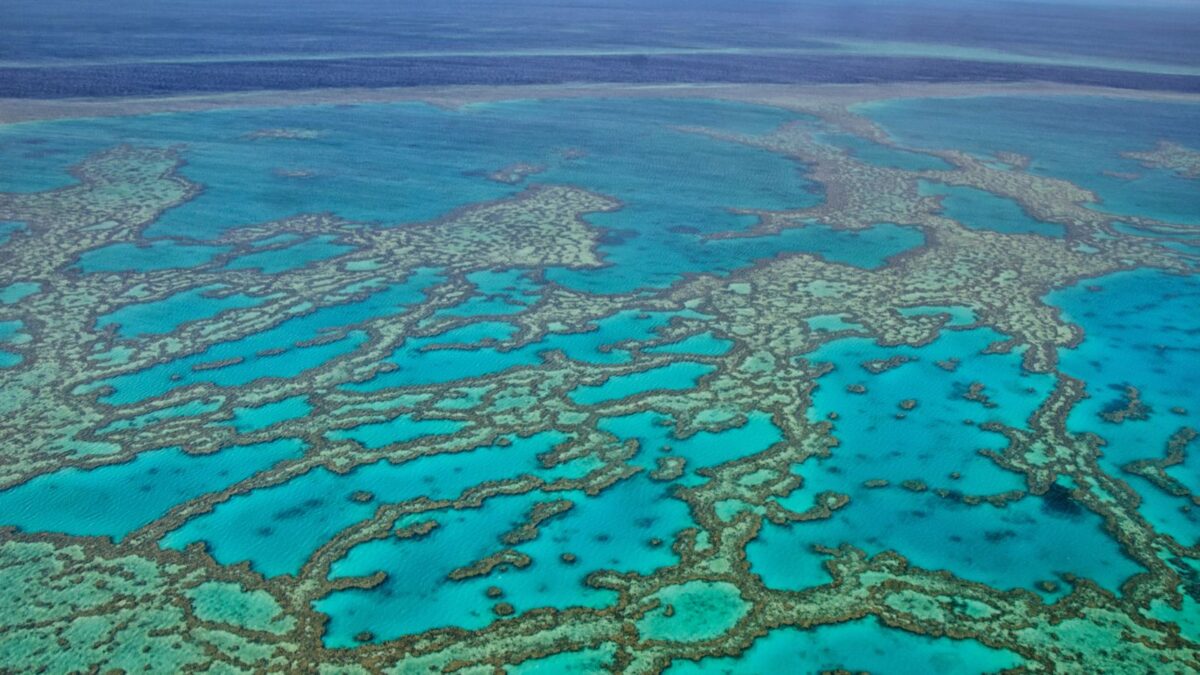
The Great Barrier Reef is the world’s largest coral reef system, comprising over 2,900 individual reefs and 900 islands stretching over 2,300 kilometers. It’s located in the Coral Sea, off the coast of Queensland, Australia.
This marine park is known for its stunningly diverse underwater ecosystems, home to thousands of species of marine life, including fish, sharks, dolphins, and sea turtles.
The vibrant corals and clear blue waters make the Great Barrier Reef a paradise for divers and snorkelers from around the globe. Its immense biodiversity and sheer scale of natural beauty make the Great Barrier Reef a quintessential UNESCO World Heritage Site, crucial for ecological study and conservation efforts.
2. Machu Picchu, Peru

Machu Picchu is an ancient Incan city set high in the Andes Mountains in Peru, above the Urubamba River valley. Built-in the 15th century and later abandoned, it’s renowned for its sophisticated dry-stone construction that fuses huge blocks without the use of mortar, intriguing buildings that play on astronomical alignments, and panoramic views.
Machu Picchu’s exact former use remains a mystery, which adds to its allure. It is a testament to the Incas’ ingenuity and harmonious relationship with nature. It’s an archaeological gem, a marvel of engineering, and a sacred place that captivates visitors with its beauty and mystery.
3. The Great Wall of China, China

The Great Wall of China is a series of fortifications made of stone, brick, tamped earth, wood, and other materials, generally built along an east-to-west line across the historical northern borders of China to protect the Chinese states and empires against the raids and invasions of the various nomadic groups of the Eurasian Steppe.
The Great Wall stretches over 20,000 kilometers and has parts dating back to the 7th century BC. It is not only a symbol of China’s historical reluctance to external influences but also a remarkable achievement of military architecture, logistics, and human endurance.
The panoramic views, architectural grandeur, and historical significance make the Great Wall a monumental site of human perseverance and creativity.
4. Serengeti National Park, Tanzania

The Serengeti National Park in Tanzania is famous for its annual migration of over 1.5 million white-bearded wildebeest and 250,000 zebra and for its numerous Nile crocodile and honey badgers.
Stretching over 14,763 square kilometers, the Serengeti offers some of Africa’s most spectacular game viewing. The park’s vastness and high biodiversity, including large prides of lions, elephants, giraffes, and other wildlife, make it a vital part of the Earth’s ecological system.
The park’s complex ecosystem is preserved with minimal human interference, allowing visitors to experience the raw beauty of nature and witness the cycle of life unfold before their eyes.
5. Venice and its Lagoon, Italy
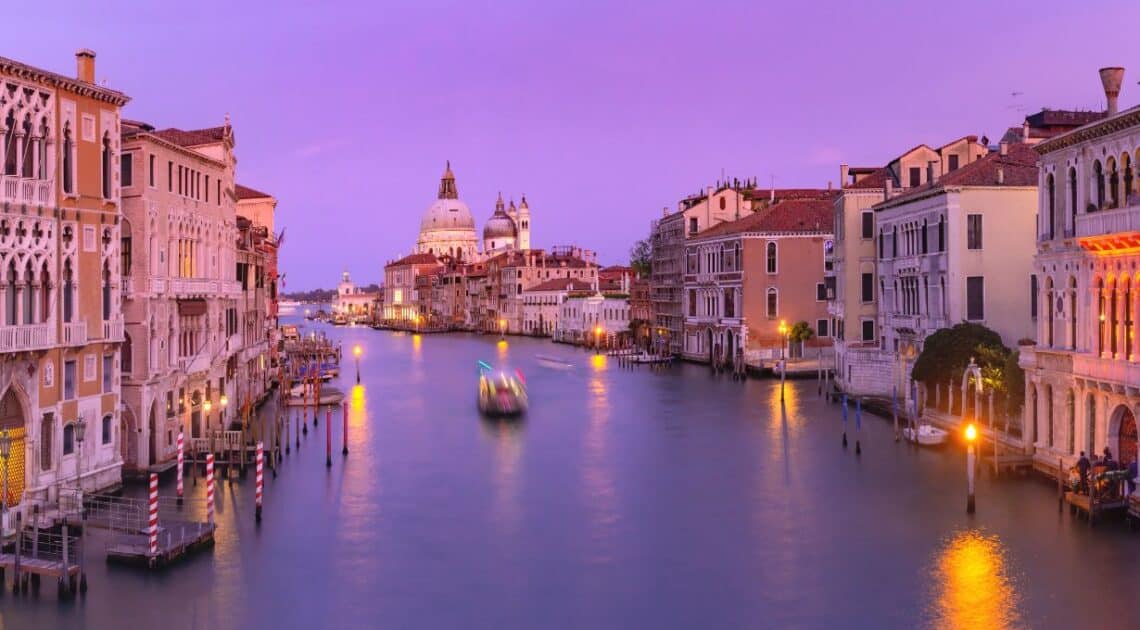
Venice, known as “The Floating City,” is an extraordinary architectural masterpiece. Even the smallest buildings contain works by some of the world’s greatest artists, such as Titian, Tintoretto, and Veronese.
The city and its lagoon are exceptional examples of a military maritime city, illustrating the interaction between people and the ecosystem of their environment.
Venice offers a unique urban landscape with its intricate waterways, historic buildings, and stunning art. Its preservation as a UNESCO World Heritage Site helps to ensure that its architectural and cultural legacy continues to enchant and inspire future generations.
6. Galápagos Islands, Ecuador

The Galápagos Islands are an archipelago of volcanic islands in the Pacific Ocean, which surrounds the center of the Western Hemisphere. They are located on either side of the equator.
The islands are famed for their many endemic species, which Charles Darwin studied during the Voyage of the Beagle. His observations and collections contributed to the inception of Darwin’s theory of evolution by natural selection.
The extraordinary biodiversity and evolutionary evidence make the Galápagos Islands a living museum and showcase of evolution.
Conservation efforts continue to be a priority to preserve its unique ecosystem, making it a crucial site for scientific research and environmental education.
7. Mont-Saint-Michel and its Bay, France
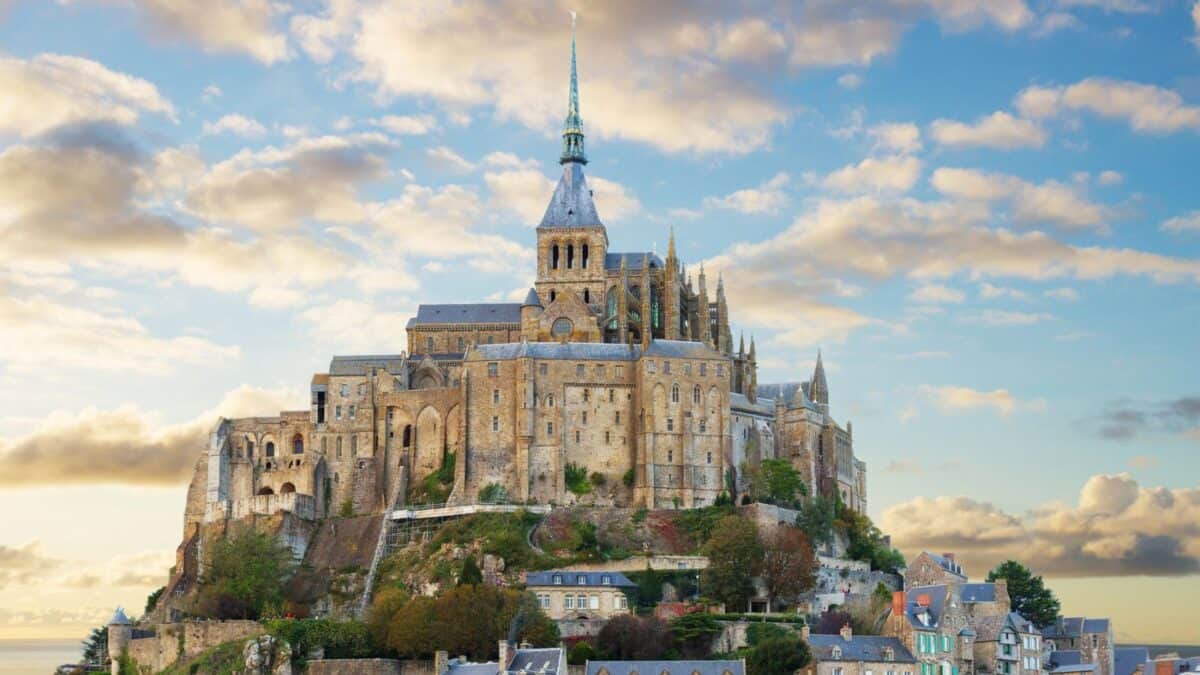
Mont-Saint-Michel is a rocky tidal island located in Normandy, France. It’s known for the medieval Benedictine Abbey and steepled church that dominates the island, which is only accessible via a narrow causeway at low tide.
The architecture of Mont-Saint-Michel and its bay reflects the medieval society that built it, aiming to reach heaven’s spiritual and cultural heights. The site is an architectural tour de force, blending natural beauty with human ingenuity in a way that has inspired artists and pilgrims for centuries.
Its strategic location and historical significance as a pilgrimage site make it a fascinating testament to human endeavor and faith.
8. Petra, Jordan
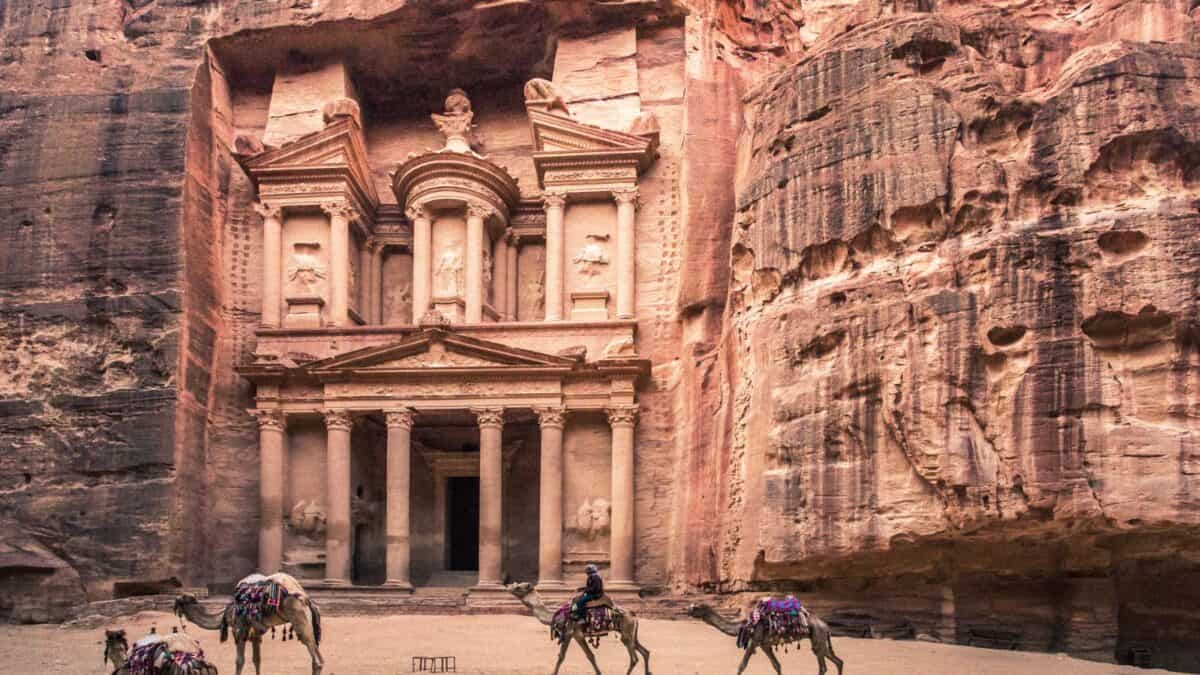
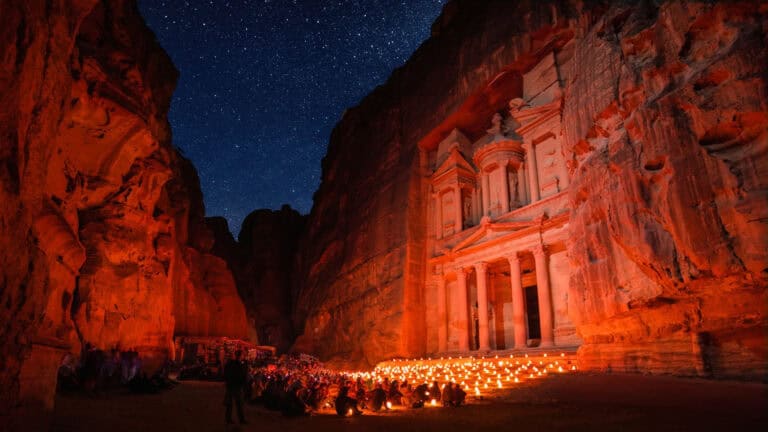
Petra, the capital of the Nabatean Kingdom, is an archaeological site in Jordan, famous for its rock-cut architecture and water conduit system. Established possibly as early as the 4th century BC as a trading post, it was later carved into the rose-red stone cliffs by its Arab inhabitants.
Petra is also known as the “Rose City” due to the stone’s color from which it is carved. It’s an iconic example of the ingenuity of ancient peoples, offering insights into the lives, cultures, and architectural mastery of a bygone era. The site’s aesthetic beauty and historical importance make it a jewel of the Middle East.
9. The Pyramids of Giza, Egypt
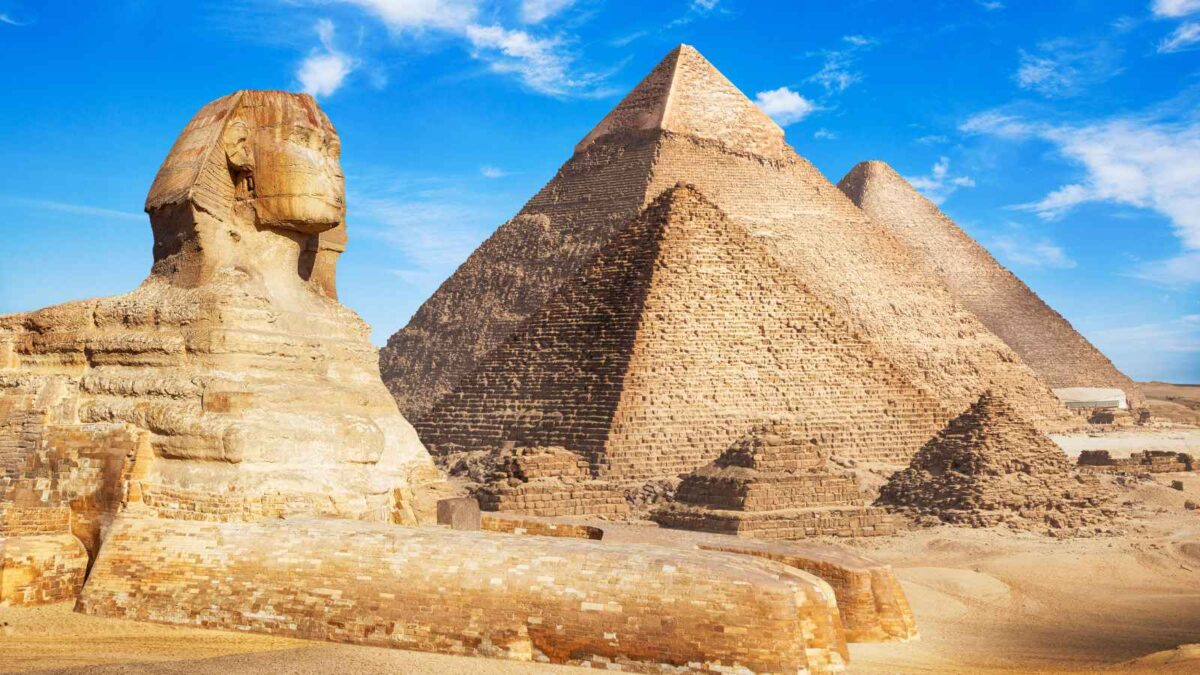
The Pyramids of Giza, located on the outskirts of Cairo, are the only remaining wonder of the ancient world. Built over 4,500 years ago, the Great Pyramid of Giza was the tallest man-made structure in the world for over 3,800 years.
The pyramid complex includes the Great Sphinx, several cemeteries, and workers’ villages. The pyramids’ scale, precision, and ambition, meant to house the pharaohs’ tombs and guide their souls to the afterlife, underscore ancient Egyptians’ advanced engineering skills and profound spiritual beliefs.
The site continues to fascinate historians, archaeologists, and travelers with its enduring mysteries and architectural marvels.
10. Taj Mahal, India
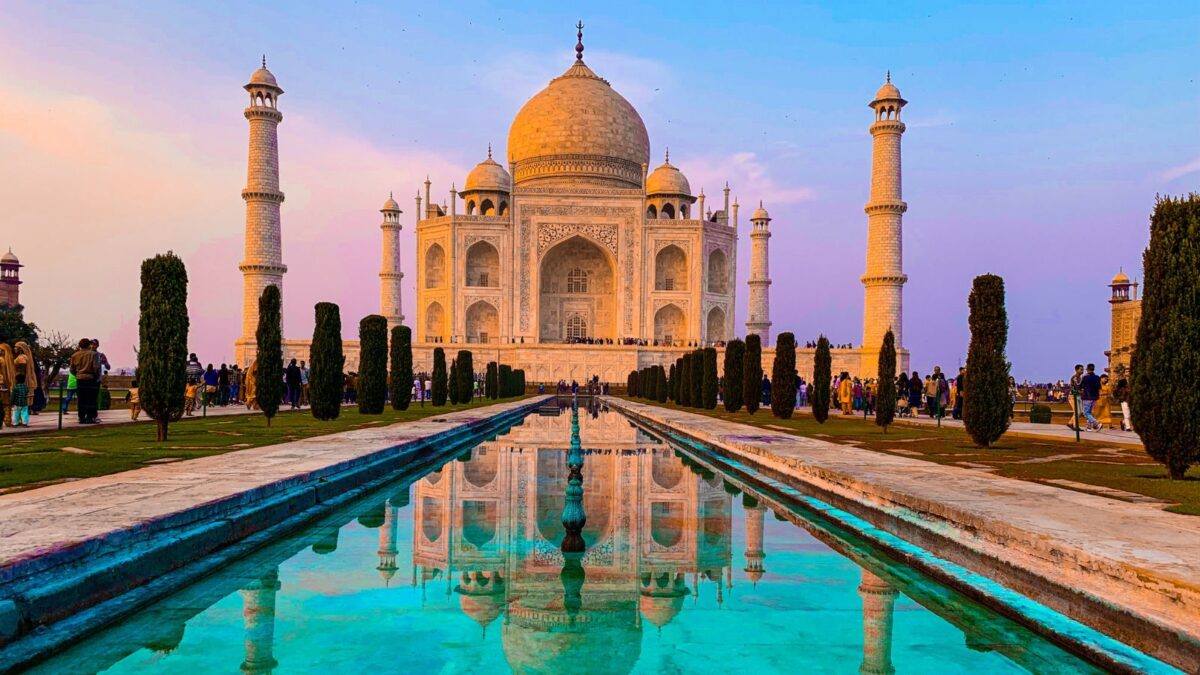
The Taj Mahal, located in Agra, India, is a mausoleum commissioned in 1632 by the Mughal emperor Shah Jahan to house the tomb of his favorite wife, Mumtaz Mahal. This iconic symbol of love is renowned for its magnificent white marble architecture, intricate Islamic calligraphy, and inlaid precious stones.
Beyond its stunning beauty, the Taj Mahal is a testament to the rich history of the Mughal Empire and the artistic and architectural advancements achieved during this period. It represents the height of Mughal architecture, combining elements from Persian, Indian, and Islamic architectural traditions.
The Taj Mahal attracts millions of visitors annually, drawn by its unparalleled beauty and the romantic story behind its construction.
11. Angkor Wat, Cambodia
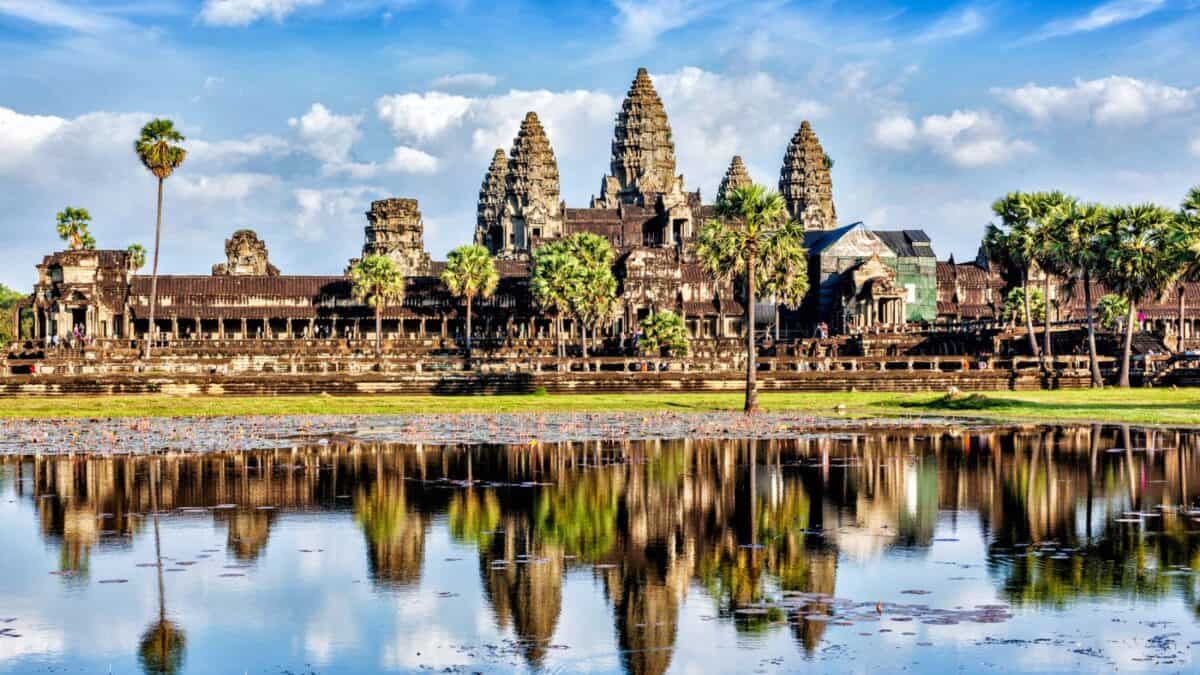
Angkor Wat is a temple complex in Cambodia and one of the largest religious monuments in the world. Originally constructed as a Hindu temple dedicated to the god Vishnu for the Khmer Empire, it gradually transformed into a Buddhist temple toward the end of the 12th century.
It is admired for the grandeur and harmony of its architecture, as well as its extensive bas-reliefs and the numerous guardian spirits adorning its walls. The temple is a symbol of Cambodia and a prime example of Khmer architecture, showcasing the Khmers’ architectural, artistic, and spiritual mastery on a grand scale.
Its beauty and state of preservation make it an invaluable piece of cultural heritage, a source of national pride, and a symbol of spiritual significance.
12. Iguazú National Park, Argentina/Brazil

The Iguazú Falls, located on the border of the Argentine province of Misiones and the Brazilian state of Paraná, are among the world’s most stunning natural wonders.
Within the Iguazú National Park, the falls comprise over 275 drops, the most famous being the Devil’s Throat, a U-shaped 82-meter-high waterfall. The park is also renowned for its biodiversity, including several rare and endangered species.
The breathtaking panoramas and the thunderous roar of the falls amidst lush subtropical rainforest make Iguazú a quintessential natural spectacle, highlighting the power and beauty of nature.
13. Historic Centre of Rome, Italy
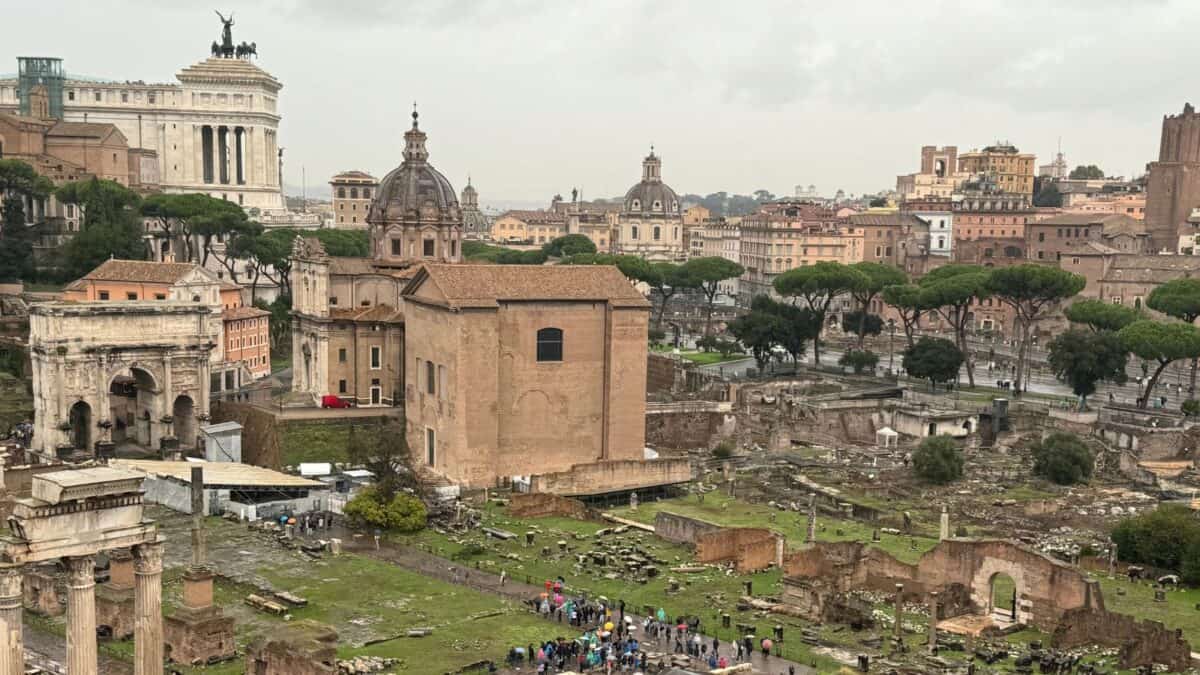
The Historic Centre of Rome encompasses the city’s millennia of history, from the remnants of its ancient empire, including the Forum and the Colosseum, to the Renaissance and Baroque flourishes that adorn the city’s streets, piazzas, and fountains. Rome, known as the “Eternal City,” has greatly influenced the world through its rich history, art, culture, architecture, and law.
This UNESCO site celebrates the city’s past glories and preserves its legacy as a living museum, offering insights into the layers of human history that have shaped the modern world.
14. Acropolis, Athens, Greece
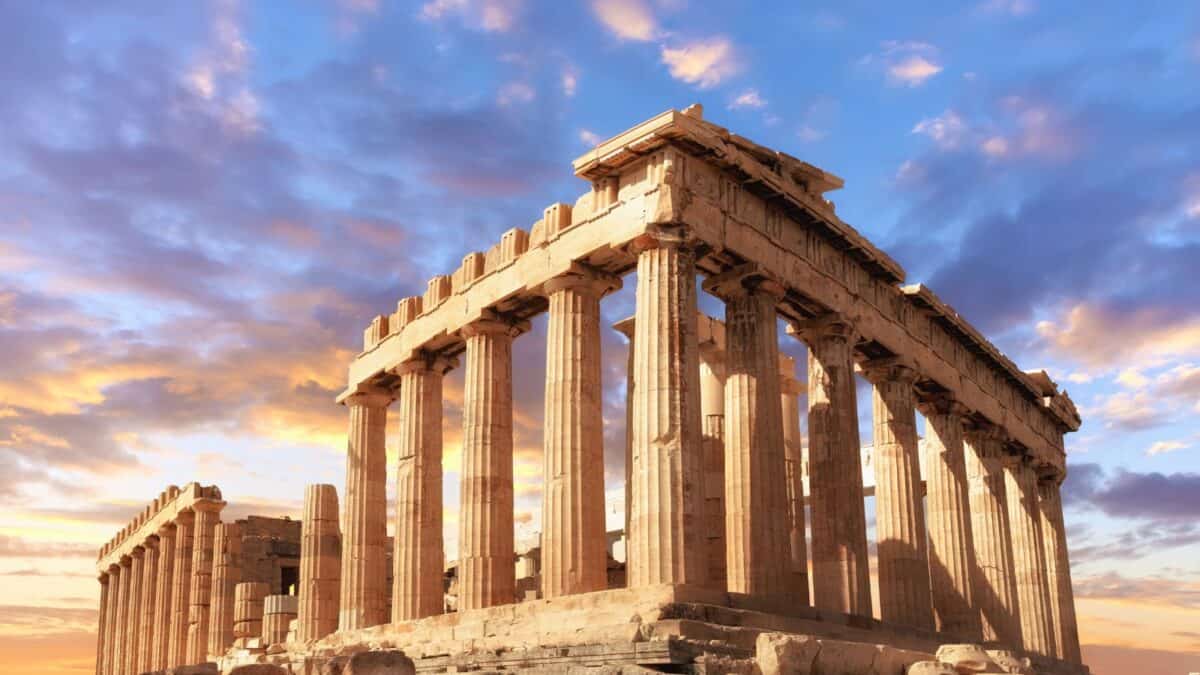
The Acropolis of Athens is an ancient citadel located on a rocky outcrop above the city of Athens. It features the remains of several ancient buildings of great architectural and historical significance, the most famous being the Parthenon. This site symbolizes the idea of world heritage as it has influenced art and culture globally for centuries.
The Acropolis stands as a testament to the creativity and power of the Athenian civilization and the enduring appeal of classical Greek architecture. Its historical significance and architectural brilliance offer a timeless reminder of the achievements of ancient Greece and its contribution to world heritage.
15. Yellowstone National Park, USA

Established in 1872, Yellowstone National Park is located primarily in the U.S. state of Wyoming and extends into Montana and Idaho. It was the world’s first national park. It’s famed for its geothermal features, like the Old Faithful geyser, and its vast, untamed landscapes, which range from forests and rivers to canyons and alpine peaks.
The park is also home to various wildlife, including grizzly bears, wolves, bison, and elk. Yellowstone’s natural beauty, geological diversity, and wildlife habitats make it an important site for conservation and an icon of natural beauty, showcasing the importance of preserving natural spaces for future generations.
16. Uffizi Gallery, Florence, Italy
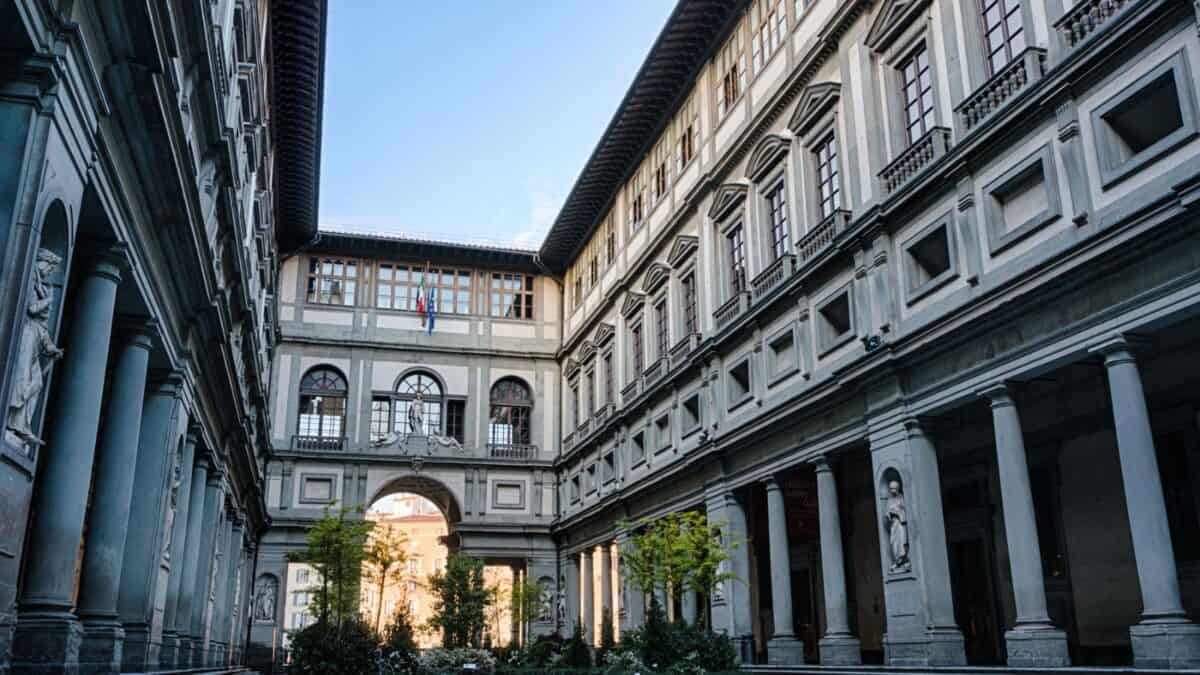
The Uffizi Gallery in Florence, Italy, is one of the world’s most important and most visited art museums. Housed in a magnificent Renaissance building designed by Giorgio Vasari, it holds the world’s finest collection of Italian Renaissance art, featuring masterpieces by artists such as Leonardo da Vinci, Michelangelo, Caravaggio, Raphael, and Botticelli.
The gallery not only embodies the artistic achievements of the Renaissance but also serves as a testament to the Medici family’s patronage that fueled the artistic revolution of the era. The Uffizi Gallery plays a crucial role in art history and continues to inspire and educate visitors from around the globe.
17. Banff National Park, Canada

Banff National Park, located in the heart of the Canadian Rockies in Alberta, Canada, is known for its stunning mountain landscapes, crystal-clear lakes, such as Lake Louise and Moraine Lake, and diverse wildlife.
Established in 1885, Banff is Canada’s first national park and the world’s third. The park’s breathtaking scenery and outdoor recreation opportunities, including hiking, skiing, and viewing wildlife, make it a haven for nature lovers and adventurers. Banff showcases the Rocky Mountains’ rugged beauty and the importance of preserving natural landscapes for enjoyment and ecological health.
18. Sagrada Familia, Barcelona, Spain
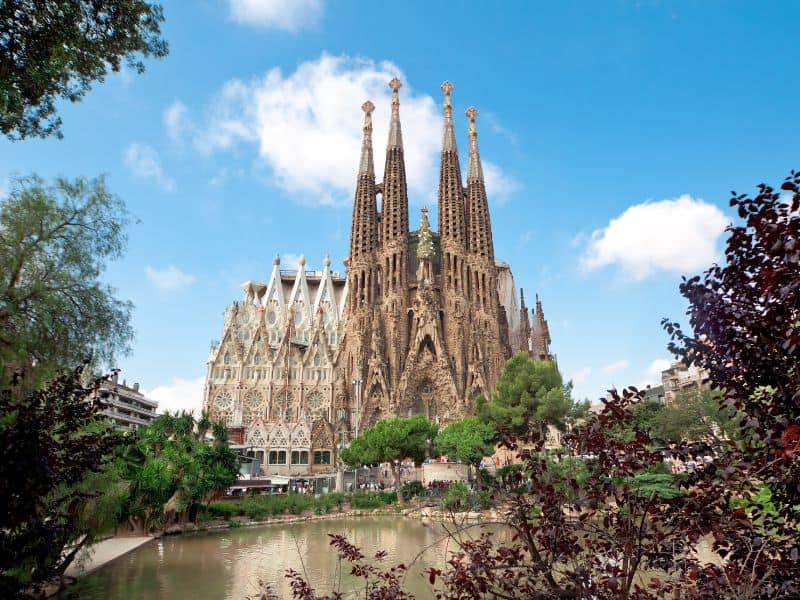
The Basilica de la Sagrada Familia, Antoni Gaudí’s unfinished masterpiece, is one of the most iconic landmarks in Barcelona, Spain. This architectural marvel is renowned for its intricate facades, expansive naves, and towers that reach the sky, rich with Christian symbolism and embedded with Gaudí’s unique modernist style.
Though construction began in 1882, the basilica remains incomplete, a testament to Gaudí’s ambitious vision and the ongoing dedication to his innovative techniques and designs. The Sagrada Familia stands as a symbol of creativity, faith, and the enduring appeal of architectural innovation.
19. Great Smoky Mountains National Park, USA

Great Smoky Mountains National Park, straddling the border between North Carolina and Tennessee, is renowned for its diversity of plant and animal life, the beauty of its ancient mountains, waterfalls and the remnants of Southern Appalachian mountain culture.
It is the most visited national park in the United States. It offers a rich tapestry of deciduous forests, rivers, and streams, along with a wide array of hiking trails and historical sites. The park’s lush landscapes and ecological diversity make it a prime example of the need for conservation and the joy of exploring the great outdoors.
20. Ha Long Bay, Vietnam

Ha Long Bay, located in Vietnam’s Quang Ninh Province, is known for its emerald waters and thousands of towering limestone islands topped with rainforests. Legend says the bay’s islands were formed by dragons who spit out jewels and jade, creating a fortress against invaders, which adds to the mystique of the landscape.
The site’s spectacular seascapes, cave systems, and floating villages offer a glimpse into a world of natural wonder and human resilience. Ha Long Bay is a place of breathtaking beauty and a testament to the Earth’s history, showcasing the power of natural forces in shaping our planet’s landscapes.
21. The Palace and Gardens of Schönbrunn, Austria
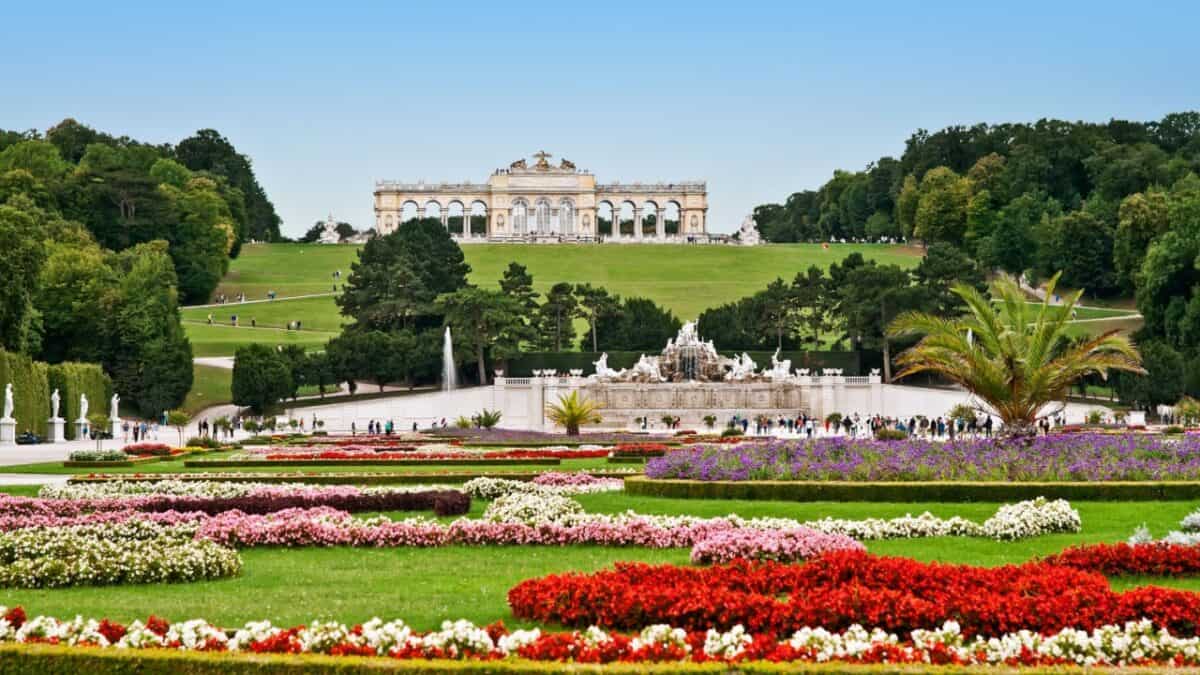
The Palace and Gardens of Schönbrunn, nestled in the heart of Vienna, Austria, was once the summer residence of the Habsburg emperors; this UNESCO World Heritage site dazzles visitors with its opulent rooms, sprawling gardens, and rich history that spans centuries.
The architectural magnificence of Schönbrunn Palace, with its 1,441 rooms, reflects the opulence of the Habsburg dynasty. The Great Gallery, the Hall of Mirrors, and the ornate ceremonial rooms offer a glimpse into the lavish lifestyle of the European aristocracy. Each room is a masterpiece, adorned with frescoes, gilded stucco work, and intricate tapestries, transporting visitors to a time of imperial splendor and grandeur.
The gardens of Schönbrunn are equally mesmerizing, stretching over 500 acres of meticulously designed landscapes. The Great Parterre, with its geometric flowerbeds, and the Gloriette, an exquisite colonnaded structure offering panoramic views of Vienna, are highlights that showcase the artistry and vision of the garden’s designers.
Visiting the Palace and Gardens of Schönbrunn is like stepping into a fairy tale, where history, art, and nature converge in a symphony of beauty and elegance.
22. Plitvice Lakes National Park

Plitvice Lakes National Park, situated in the heart of Croatia, is a mesmerizing wonderland of cascading lakes, lush forests, and captivating waterfalls. This UNESCO World Heritage site, renowned for its stunning natural beauty, offers a breathtaking glimpse into a pristine environment shaped by millennia of geological and ecological processes.
The park’s unique configuration of 16 terraced lakes, interconnected by a series of waterfalls, creates an ever-changing panorama of colors and reflections. Wooden walkways and hiking trails meander through the park.
Plitvice Lakes National Park is not only a haven for nature lovers but also a sanctuary for a diverse array of wildlife. The park’s dense forests are home to bears, wolves, and numerous bird species, creating a vibrant ecosystem that thrives in harmony with its aquatic counterpart. The flora, including rare orchids and endemic plant species, adds to the park’s biodiversity and ecological significance.
23. Ephesus

Ephesus, located in present-day Turkey, is a mesmerizing window into the ancient world, brimming with historical and architectural marvels. This UNESCO World Heritage site was once a bustling metropolis of the classical world and remains one of the most well-preserved ancient cities in the Mediterranean.
The ancient city of Ephesus is renowned for its magnificent structures, with the Library of Celsus standing as a testament to the intellectual pursuits of the ancient world. With its intricate facade and towering columns, this stunning edifice once held thousands of scrolls and served as a monumental tomb for the Roman Senator Celsus.
The Great Theatre, another architectural masterpiece, could seat up to 25,000 spectators and hosted dramatic performances and gladiatorial contests, echoing the city’s cultural vibrancy.
Wandering through the marble-paved streets of Ephesus, visitors encounter the Temple of Artemis, one of the Seven Wonders of the Ancient World. Although only a single column remains today, the temple’s grandeur and historical significance still resonate deeply, symbolizing the city’s once pivotal role in ancient religious life. The Terrace Houses, with their well-preserved mosaics and frescoes, offer a glimpse into the opulent lifestyles of Ephesus’s elite, showcasing the artistic and architectural brilliance of the time.