The Perfect Beach Camping Trip: 18 Tips for Beginners
 Chantelle Kincy
Are you someone who loves camping and is about to try beach camping for the first time? Or are you an avid beach camper and want to learn more? We are lucky enough in the state of Washington to have many great beaches that allow camping, and there is nothing like the sound of waves lulling you to sleep!
Regardless of your experience level, Beach camping (when done correctly) is a great way to experience nature and all that its beauty has to offer.
But before you hit the sand, there are a few things you need to know. In this blog post, we’ll share some of our best beach camping tips!

Beach Camping Planning Tips
1. Check the Rules before beach camping
Beach camping can be a great way to enjoy the outdoors and get away from the hustle and bustle of everyday life. However, before you pack your tent and high SPF sunscreen and head for the shore, there are a few things you need to keep in mind.
First, check to see if camping is allowed in the area you’re planning to visit. Some beaches have strict rules against overnight camping, so it’s important to do your research beforehand.
If camping is allowed, find out if you need a permit. In some cases, you may be able to obtain a permit from the local ranger station or Visitor Center.
Finally, check to see if there are any restrictions on building fires. Beach fires can be beautiful, but they can also be hazardous if not properly supervised.
➡️Click to find the Find the PERFECT BEACH CAMPSITE near you!
2. Learn how to build a fire while beach camping
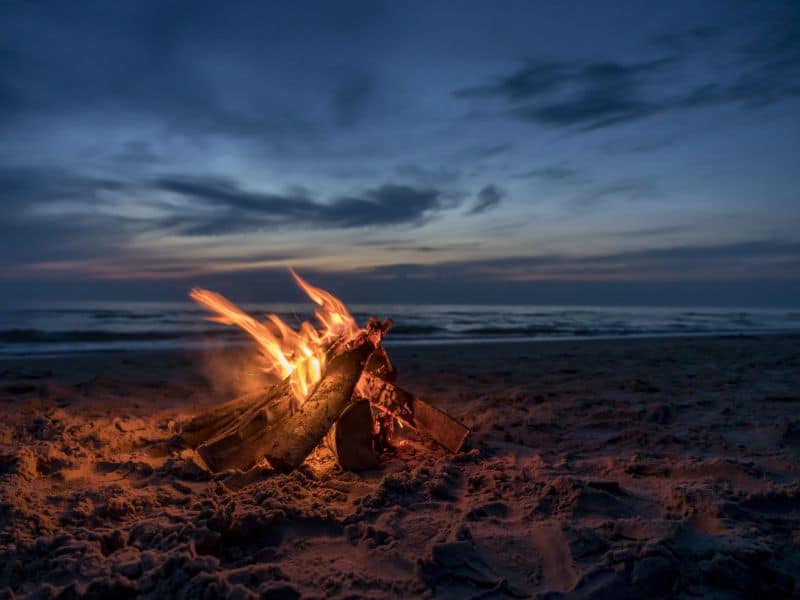
One of the best parts of beach camping is sitting around a roaring fire at night. Not only does it provide warmth and light, but it also creates a sense of community among campers and is one of my favorite camping activities. If you’re new to beach camping, here are a few tips for building a safe and enjoyable fire:
- First, check to see if fires are allowed in the area you’re visiting. Some beaches have strict rules against fires, so it’s important to do your research beforehand.
- If fires are allowed, find a spot that is away from any trees or bushes. The last thing you want is for your fire to spread and cause damage to the local environment.
- Once you’ve found a suitable spot, clear away any leaves or debris. Then, use a fire pit or build a small mound of sand to contain your fire. On the beach this is quite easy, you can dig a hole about a foot deep and a few feet in diameter to protect your fire from the wind.
- You can put a fire grate over your fire to cook your meals on too!
- Check the rules about firewood. Some beaches require you to bring firewood, some allow you to burn dead driftwood that you find along the beach. Not all beaches have an abundance of driftwood that can be easily gathered, so it’s best to come prepared.
- Finally, make sure you have plenty of wood and kindling to keep your fire going. So Don’t forget to put it out before you go to bed!
3. Check the toilet situation before camping
Beach camping can be a great experience, but it’s important to be prepared for the challenges that come with camping on the beach. One of the most important things to consider is what will be available for toilets. Most beaches do not have public restrooms, so campers will need to bring their own portable toilets or use an outhouse if one is available. Additionally, it’s important to properly dispose of all human waste to avoid polluting the local environment.
Beach camping can be a great way to enjoy the outdoors and get away from it all, but it’s important to be aware of how to properly dispose of human waste.
The first step is to choose a spot at least 200 feet away from any water sources, such as lakes, rivers, or the ocean. If possible, find an area with bushes or trees for privacy. Once you’ve found a suitable spot, dig a hole 6-8 inches deep and 4 inches around. After you’re finished using the toilet, cover the hole with dirt and leaves.
It’s also important to pack out any toilet paper or other trash. Personally, I bring large ziplock bags to dispose of my used tissue in a hygienic way until I can find the appropriate trash receptacles. By following these simple tips, you can help keep our beaches clean and safe for everyone to enjoy.
➡️ This is a great way to pack the waste in and out!
Beach camping can be a wonderful experience. waking up to the sound of the waves and breathing in the fresh salt air can be truly invigorating. However, we must all do our part in keeping sand and the beach free of pollutants.
4 Check the Weather
Beach camping is so much fun, but it’s important to check the weather before you go. If the forecast calls for high winds or severe weather, it’s best to choose another location.
Strong winds can cause beach tents to collapse, and thunderstorms can create dangerous conditions. By checking the weather in advance, you can help ensure that your beach camping trip is safe and enjoyable.
5 Check the Tides
Another important consideration when beach camping is the tide. If you camp too close to the water, you run the risk of being swept away by a high tide. Take note of where the high tide line is, and set up camp above that. Tide Times can be checked for almost anywhere in the world at Tideforecast.com.
It’s also important to avoid camping in low-lying areas, as these can flood during a storm.
6 Bring a Beach Wagon to Carry Supplies
If you are hiking or on a backpacking trip, this tip isn’t applicable. But if you are beach camping with your family, having a beach cart or wagon is a great way to haul all of your supplies to your campsite.
You can use the wagon to store beach toys and nonessentials while you aren’t using them to help keep a tidy campsite.
7 Bring a sunshade or canopy
You will want a break from the wind and sun, it’s handy to have some shade available in case there isn’t any on the beach. You can use a tarp for this, or you can bring a beach umbrella. I prefer to bring extra tarps over an umbrella because they are easier to pack in our camping gear, and have multi uses, depending on conditions. Tarps can be used as sand barriers, sunshades, wind blocks, or even a rainfly during unexpected storms.
8 Where will you get water?
Water is essential, so you’ll need to plan ahead on how and where you will get access to clean water.
Is there a running freshwater stream or creek nearby? If so, great! You won’t need to carry unnecessary water, but you will need a good filtration system.
If there is not a good water source, you’ll need to pack extra water into your campsite.
➡️Click here to buy my favorite water filtration system!
9 Food Safety
Find out the requirements for food storage where you are beach camping. Do you need a bear canister? If so, oftentimes you can rent them from nearby ranger stations. You can also purchase your own.
You’ll also want a good quality cooler to store food in while beach camping. It is important to keep all food and cooking supplies put away when not in use. You want to keep your food and cookware covered and safe from salt air and sand.
At night, you can hang your food (and anything that smells such as toothpaste, and deodorant) in a bag over a tree branch to keep it out of reach.
It is best to keep food 100 yards away from your sleeping area. Keeping your food safe from wildlife, not only protects you but protects the animals from becoming accustomed to human food sources as well.
➡️ This is a great bear canister for beach camping and hiking!
Beach Camping Tips: Setting up your campsite

10 Stay off protected areas
Check with camp maps, or ask ahead if you need to be clear on where it is ok to set up camp. Never camp on protected areas such as sand dunes.
11 Tent set up while camping
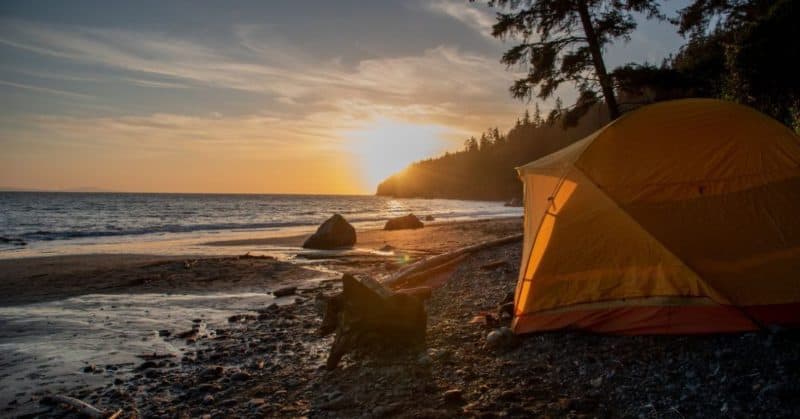
Setting up a tent on the beach isn’t much different than setting up a tent anywhere else. With just a few adaptations and considerations you’ll be sleeping to the sounds of rolling waves in no time.
First, smooth out the sand before setting up your tent. This will help reduce the amount of sand that gets inside, and also will keep you from sleeping on a big lump.
Second, use a large tarp to create a barrier between your tent and the sand. Use an oversized tarp to create an entry area to your tent.
If you plan on beach camping a lot, you can purchase a tent that is made for beach camping. These tents have poles that cross over to help withstand wind, they are light-colored, UV blocking, and have raised bucket floors.
A Tent with a large “porch” area will help further protect from wind and sand.
If you want to use the tent that you already have, you’ll need to purchase some longer stakes that are made for use in the sand. Sand Stakes will help your tent stay in place even in the wind. Place your gear inside the tent while staking it to help secure it.

➡️ Click here to order this tent for beach camping!
➡️ Click here for sand stakes for your existing tent.
12 Keep Sand out of your tent
One of the challenges of beach camping is dealing with the sand. It can be difficult to keep your tent clean and free of sand, but there are a few things you can do to make the process easier.
Bring a small broom and dustpan to help keep as much sand as possible from getting inside.
Leave your tent fly on during the day. Take it off for even a few hours and everything inside will be covered with sand and salt spray.
You can use a large tarp to make an entryway where you can leave your sandy shoes before entering the tent. A sand-free beach mat can be a great addition to your beach camping checklist as well, they are great for reducing the amount of sand inside.
Turn your tent, so the opening is not facing the wind so that the sand will not blow in when you unzip your tent.
13 Bring a sleeping mat
One of my biggest beach camping tips is to bring a mat to sleep on! Even though the sand is soft, a sleeping mat is one of the beach camping essentials! The sand will get cold at night, so, having a sleeping mat between you and the sand is a wise choice.
14 Bring Protection
Sand flies and fleas are the worst, not to mention mosquitoes! Bring bug spray when you beach camp and apply it before and during your trip.
You’ll also want to bring sunscreen and lip balm with SPF in it. Always use reef-safe sunscreen when beach camping, or anytime you are near the water.
15 Red Lights
One of the best things to do while beach camping is to enjoy the night sky. Away from light pollution, you can see stars in a way that you normally can’t.
This kind of darkness can be ruined by even the smallest light source. The best way to give yourself some light, and still keep your eyes acclimated to the darkness is by using a red light. You can either place red cellophane over your flashlight or purchase a redlight. I like having a redlight headlamp so that I can keep both hands free!
➡️ Click here to get a redlight for stargazing!
16 Bring the 10 Essentials
Any time you are hiking or camping, you should always have the 10 essentials with you. Do you know what they are? If you need to restock your list, you can shop for the 10 essentials here.
- Pocket Knife
- First-aid Kit
- Extra Clothes
- Rain Gear
- Water Storage
- Flighslight/headlamp
- Food
- Matches and Firestarter ( windproof/waterproof for beach camping)
- Sun Protections
- Map and/or compass
17 Bring Games
Part of the fun of camping is sitting around the fire at night playing games. You can bring cards, dominos, or other small games to enjoy, that don’t take up much room in your pack. You can also bring frisbees, footballs, or other fun games to play on the beach.
Traveling with teenagers always makes “entertaining” more challenging. Luckily, we’ve got you covered with these fun things to do while camping with teenagers!
18 Leave No Trace
This one is the most important. Take your trash with you! This means, food, cigarette butts, wrappers, and anything else you brought. TAKE IT ALL OUT! Leave the beach better than you found it.
Beach Camping
Have you been beach camping? I’d love to hear about your favorite place in the comments. For now, though, I hope this post has inspired you to give it a try. Beach camping is definitely one of my favorite summertime activities – it’s affordable and relaxing, and there’s nothing quite like waking up to the sound of waves crashing on the shore.
If you haven’t tried it before, what are you waiting for? Get packing!