Best Time to Visit Great Sand Dunes National Park
If you’re looking for an incredible National Park to visit in Colorado, look no further than Great Sand Dunes National Park. This park is home to the tallest sand dunes in North America, and it’s definitely a sight to see.
But when is the best time to visit? Keep reading to find out!

About Great Sand Dunes National Park
Great Sand Dunes National Park is one of 4 National Parks in the state of Colorado. The other Colorado National Parks are Mesa Verde, Black Canyon of the Gunnison, and Rocky Mountain National Park.
Great Sand Dunes National Park is located in the southern part of Colorado, and it covers about 149,000 acres. The park is best known for its massive sand dunes, which can reach up to 750 feet tall!
In addition to the sand dunes, Great Sand Dunes National Park is also home to a variety of other attractions. These include Medano creek (which is perfect for wading and splashing around), the alpine lakes (which are great for fishing and hiking), and several different trails (including a few that will take you to the top of the dunes).
There’s also a visitor center where you can learn more about the park, and ranger-led programs are offered seasonally.
Great Sand Dunes National Park Weather by Month
| Jan | Feb | Mar | Apr | May | Jul | Jun | Aug | Sep | Oct | Nov | Dec | |
| High Temp •F | 35 | 40 | 49 | 57 | 67 | 78 | 82 | 79 | 73 | 61 | 47 | 36 |
| Low Temp •F | 11 | 16 | 24 | 29 | 38 | 47 | 52 | 50 | 44 | 33 | 22 | 12 |
When to Visit Great Sand Dunes National Park

The best time to visit Great Sand Dunes National Park really depends on what you’re looking to do while you’re there.
If you want to experience the sand dunes, the best time to visit is between late May and early September. This is when the temperatures are the warmest, and the sand is dry enough to best enjoy walking or sledding down the dunes.
If you’re interested in fishing, the best time to visit Great Sand Dunes National Park is between late June and early October. This is when most of the alpine lakes are thawed, and the fish are biting.
And if you want to enjoy all that the park has to offer, the best time to visit Great Sand Dunes National Park is between late May and early October. This is when the weather is the most pleasant, and all of the attractions are open.
Summer in Great Sand Dunes National Park
If you’re looking for a fun summer destination, Great Sand Dunes National Park is definitely worth considering.
The park is busiest during the summer months, so if you’re looking for some peace and quiet, try to visit during the week. Arriving early in the morning is a good idea too.
The best time to go hiking or walking is early in the morning when the temperatures are a bit more moderate.
In general, the weather is sunny and calm, but there may be some storms, especially in the afternoon. The temperature of the sand can get extremely hot, up to 150 degrees Fahrenheit.
The average temperature in June is fairly warm, around 76 degrees Fahrenheit. The creek flow reaches its peak in late May and early June but then starts to gradually lower throughout the month. By late June, the water level will usually be quite low– averaging only about 1 inch (2 cm) deep.
July is the warmest month at the park, with average highs usually reaching the low 80s Fahrenheit. Coming in a close second is August, where average highs are in the upper 70s but can drop to lows in the 40s during nighttime.
Wildflowers and sunflowers bloom in late August.

Fall in Great Sand Dunes National Park
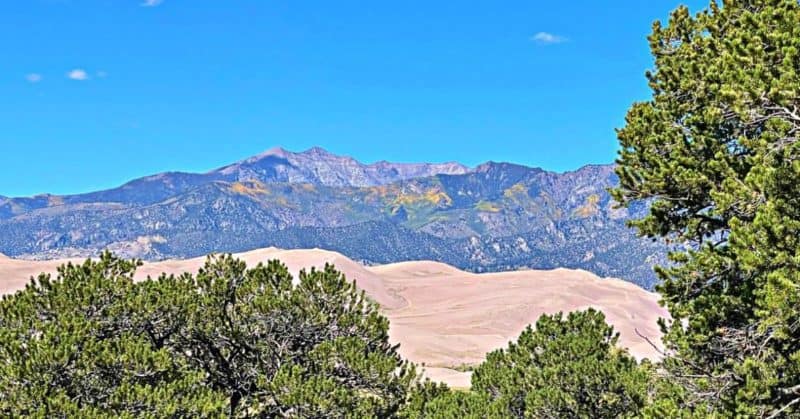
We visited Great Sand Dunes National Park in late September, and the weather was perfect! It was blue and sunny, but not too hot. There is no shade on the dunes, so having cooler temperatures is important.
The temperatures are comfortable, the crowds have died down, and the leaves are changing color.
As the days grow shorter and the leaves start to change color, September is a great time to visit Great Sand Dunes National Park. The weather is still warm during the day, but the evenings can be a little chilly, so be sure to pack a jacket.
The park is especially beautiful in the fall when the aspens turn yellow. Plan on late September to early October for peak fall colors.
You might start to see light snow showers in October.
In November, the days are cool, averaging 46 F in the day and lows reaching 20 F at night, and the park is much less busy than during the summer months.
This time of year, you may see elk and pronghorn. Morning and evening are the best times to see elk and pronghorn in the grasslands, as they tend to be more active when the park is less crowded.
Winter in Great Sand Dunes National Park
The park and preserve are tranquil most days, but lively during holidays.
If you visit the dunes after fresh snow has fallen, consider sledding or skiing. The sand will be firmer from the cold and partially frozen, making hiking easier as well.
Afternoons on the dunes have the warmest temperatures. There will be long lasting and frequent snow. In December, temperatures range from 36 Fahrenheit to 11 Fahrenheit.
January is usually the coldest month of the year when temps are in the low 30s and even below zero.
Mountain hiking trails are under deep snow. The higher-elevation roads will be closed.
Spring in Great Sand Dunes National Park

Early spring is an interesting time in Great Sand Dunes National Park. The mornings are typically sunny and calm, but the afternoons often have high winds. Be prepared for occasional blizzard conditions and deep snow, as March is the snowiest month of the year.
April weather can still be wild, with blizzard-like conditions from time to time.
In late May you can see Medrano Creek at its highest point. This is due to the “surge flow” which occurs when the snow in the mountains melts and creates waves up to 20 inches high. Children often play on these waves, floating on inflatable toys.
The best time to visit Great Sand Dunes National Park for surge flow is late May to early June. However, keep in mind that the water is coming down from the mountains and is therefore very cold. The sun will eventually warm it up, but you should still be prepared for cold conditions.
Tips for visiting Great Sand Dunes National Park
Always bring water! Bring extra water.
Bring sunscreen any time of year.
Wear sun protection like a hat, sunglasses, and long sleeve shirt.
Bring Mosquito Repellent.
Always visit the dunes early in the morning. This will help you avoid the hottest sand temperatures, as well as avoid the afternoon thunderstorms.
Be sure and stay after dark! Great Sand Dunes is a dark sky park, which means there is no light pollution and makes it a wonderful place to see the stars.
Wear bright colors if planning on hiking in the mountains of the preserve during the fall, as it is hunting season.
There is no food or gas inside the park, come prepared.
Rent sandboards or sand sleds before entering the park. You can rent them from the little store right outside the park. Snow sleds and boards will not work on the sand.
The cost to enter Great Sand Dunes National Park is $30. I highly recommend purchasing the America the Beautiful Pass prior to your trip to save money on entrance fees at all National Park sites.

Conclusion: The Best Time to Visit Great Sand Dunes National Park
The best time to visit Great Sand Dunes National Park really depends on what you are looking for, but in my opinion, early fall is the best time to visit. Fewer visitors and mild temperatures, along with the fall colors nearby made our trip quite enjoyable.
Late summer is a good choice too, but it will definitely be more crowded.
If you are looking for a great place to stay during your Great Sand Dunes visit, be sure and check out our post on Rustic Rook Resort.