

Easy Sourdough Pizza Dough
Pizza is delicious, but certain elements, like the crust, can elevate an average pizza into a masterpiece. I want the bottom crisp enough to hold up a slice, a little chew in the middle, and those browned bubbles around the edge. Good toppings matter, of course, and I won’t argue against a generous amount of cheese. But if the crust isn’t good, the whole pizza falls short.
You can bake this in a regular home oven. No pizza oven required, and you don’t need to toss the dough, although I keep trying to master that. This recipe makes two pizzas, so you can also freeze one dough ball for another night.
My husband and I love to make sourdough pizza, each of us choosing our own toppings and having a bake off.
What You’ll Need
- 420 grams bread flour
- 285 grams water, room temperature or slightly lukewarm
- 85 grams active sourdough starter, fed and near its peak
- 10 grams fine salt
- 8 grams olive oil, plus a little for the containers
- Whatever sauce, cheese, and toppings you want.
Bread Flour or All-Purpose?
Bread flour gives this dough some strength and helps with that chewy crust. You can use all-purpose flour, but it may make the dough softer. Whatever flour you use, don’t panic at the first sticky handful. Let it rest before deciding you need to add anything.
What About Discard?
Use an active starter for this recipe. If you use discard, you’ll have to add active yeast.

How to Make the Dough
1. Mix and Rest
Stir the water and starter together in a large bowl, then add the flour, salt, and olive oil. Mix everything together. Knead the dough by hand for a few minutes, until it starts to hold together.
Scrape down the sides, cover the bowl, and leave it for 30 minutes. The dough will be sticky at this point.
2. Do Two Rounds of Stretch and Folds
Wet your hand lightly, grab one side of the dough, and stretch it up. Fold it over the center. Turn the bowl a quarter turn and repeat, working your way around all four sides. That’s one round.
Cover it for another 30 minutes, then do a second round. You should feel the dough getting smoother and more elastic. If it resists when you pull, don’t force it until it tears.
3. Let It Rise
Leave the bowl covered at room temperature until the dough has risen by about half. Look for bubbles around the edges. I like to use a glass bowl, so I can see the changes easier.
At around 70–75°F, allow roughly four to eight hours from the time you first mixed the dough. That includes the rests and folds.

4. Divide It into Two Balls
Tip the dough onto a lightly floured surface and divide it in half. Each piece will weigh about 404 grams if you want to measure them.
Pull the edges of one piece into the middle and pinch them together. Turn it over, cup your hands around it, and tuck the dough underneath as you turn it. You’re making a rounded ball with a smooth surface.
5. Put It in the fridge
Set each ball in a lightly oiled container with room to expand. Rub a little oil over the top and cover it so it doesn’t dry out.
Leave it in the refrigerator for 12–24 hours. You can keep it there for up to three days.
Getting Ready to Bake
Take the dough out of the fridge about one to two hours before you want to shape it. Keep it covered while it warms up. Cold dough tends to pull back on itself, making it more frustrating to stretch than it needs to be.
Preheat the oven to 500°F. If you’re using a pizza stone, let it heat for 45–60 minutes. Start on a middle-to-lower-middle rack.
Stretch the Dough
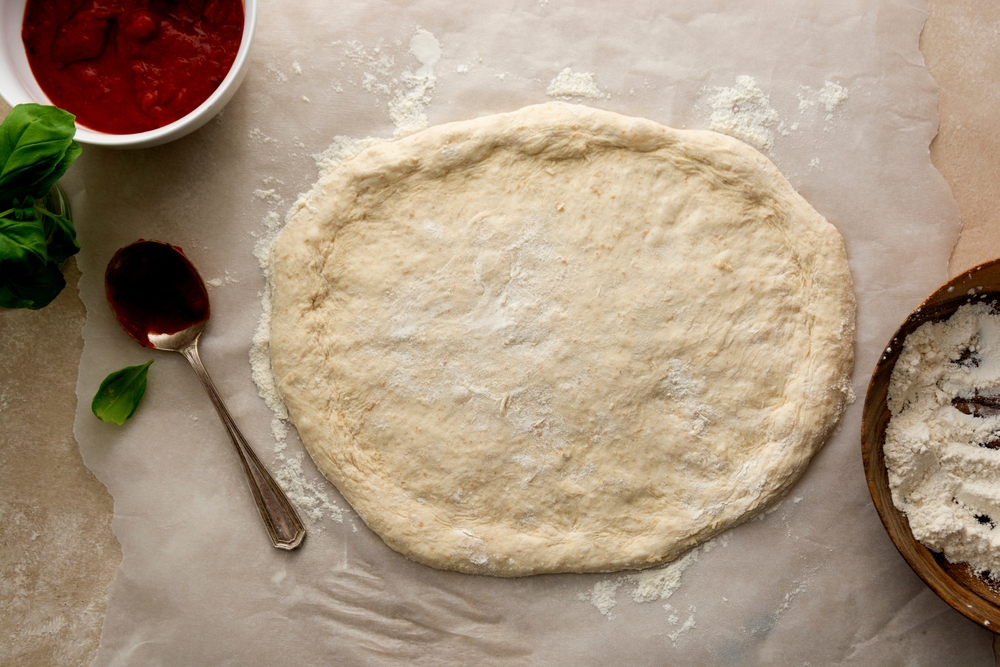
Put a dough ball on a lightly floured surface and press outward from the center with your fingertips. Leave a thicker edge for the crust. Keep turning and stretching gently until it’s about 12 inches across. You can lift it over your knuckles to help stretch it, but there’s no need to throw it.
If it keeps shrinking, cover it and walk away for 10–15 minutes, then try again.
A rolling pin is an option if you want a flatter crust. For a puffier rim, use your hands and try to leave some of those bubbles intact.
Top It and Put it into the Oven
Dust a pizza peel with a little semolina or flour, transfer the dough onto it, and give it a shake. It should move freely before you add anything.
Spread on a thin layer of sauce, add the cheese and toppings, and check once more that the pizza slides. Work fairly quickly here. A topped pizza left sitting on the peel is more likely to stick.
Slide it onto the hot stone or steel and bake for about 12–18 minutes. Start checking earlier if you have a steel or a very thin crust. Look for a browned rim, melted cheese, and a cooked underside. Rotate the pizza if one side is browning faster.
Let it cool for a few minutes before slicing.

No Stone or Steel? Use a Pan
A metal pizza pan or baking sheet will work. Make sure it’s rated for 500°F, lightly oil it, and shape the dough directly on the pan. Add your toppings and bake on a lower-middle rack.
Start checking around 15 minutes. It may need 15–20 minutes, depending on your oven and how thick you’ve stretched it. The bottom won’t be as crisp as it would be on a preheated steel, but you don’t need extra equipment to make dinner.
If you use parchment, check its temperature rating first. Not all parchment is intended for an oven this hot.
Go Easy on the Wet Toppings
Too much sauce or a thick pile of toppings can leave the middle wet while the edges brown. For each pizza, start with about ¼ cup of thick sauce and ½–¾ cup of shredded mozzarella, then add your toppings without burying the dough.
Cook the mushrooms, peppers, and onions first to remove some moisture. Drain fresh mozzarella well. Low-moisture mozzarella and pepperoni are straightforward choices if you want to keep things simple.
Add fresh basil or arugula after baking. You can drizzle on hot honey then, too.
If the Dough Isn’t Cooperating
It keeps shrinking. Give it more time to warm up or let it rest, covered, for 10–15 minutes. Then stretch again.
It tears. You may be pulling it too thin. Pinch a small hole closed and handle it gently. If it tears easily throughout, review the mixing and folds on your next batch.
It sticks to the peel. Lift the edge and dust a little flour or semolina underneath before moving it. Check for sticking before topping, and don’t leave the finished pizza sitting there.
The center is soggy. Use less sauce and fewer wet toppings. Check the underside before taking it out; melted cheese alone doesn’t mean the dough is done.
The crust is dense. Make sure the starter is active and give the dough enough time to rise. Refrigerating dough that hasn’t shown much activity can leave you with a disappointing crust.
Saving Dough for Later
Covered dough balls can stay in the fridge for up to three days. If you won’t use them by then, freeze them after their overnight rest. Put each ball in a lightly oiled, freezer-safe container or bag, leaving a little room for expansion. Use within a month for this recipe’s suggested storage window.
Thaw overnight in the refrigerator, then let the dough warm up, covered, for about one to two hours before stretching. Give it longer if it still feels tight.
Can You Skip the Overnight Rest?
Yes. Once the dough has finished its initial rise, divide it into balls and let them rest covered until they’re relaxed enough to stretch, usually another 30–60 minutes. Then shape, top, and bake.
The flavor won’t have as much time to develop, but you can still make pizza that day. Just start early enough for the dough to rise.
Sourdough Pizza Dough: Quick Recipe
Makes: Two approximately 12-inch pizzas
Hands-on time: About 30 minutes, plus topping
First rise: Roughly 4–8 hours from mixing
Refrigerator rest: 12–24 hours
Before shaping: Allow about 1–2 hours out of the fridge
Bake: 500°F for about 12–18 minutes on a preheated stone or steel
Ingredients
- 420 g bread flour
- 285 g water
- 85 g active starter, maintained with equal weights of flour and water
- 10 g fine salt
- 8 g olive oil
- Extra oil for containers and flour or semolina for shaping
Instructions
- Mix the ingredients thoroughly and work the dough for a few minutes. Cover and rest for 30 minutes.
- Do one round of stretch and folds. Rest 30 minutes and repeat.
- Continue resting, covered, until the dough has risen about 50% and has bubbles at the edges. Allow roughly 4–8 hours total from mixing, depending on temperature and starter activity.
- Divide into two balls. Put them in oiled containers, lightly oil the tops, cover, and refrigerate for 12–24 hours.
- Take the dough out 1–2 hours before shaping. Preheat the oven and stone or steel to 500°F for 45–60 minutes, within the equipment’s temperature limits.
- Stretch each ball to about 12 inches. Transfer to a dusted peel, check that it slides, and add a thin layer of sauce, cheese, and toppings.
- Bake for about 12–18 minutes, checking earlier for a thin crust or steel. The rim and underside should be browned, and the base should be cooked through. Cool briefly before slicing.


