

15 Seemingly Innocent American Habits That Offend Locals Abroad
Although traveling abroad is an exciting adventure, it’s easy to overlook how our everyday habits as Americans can come across to locals in other countries. Whether starting small talk with strangers or talking loudly, seemingly innocent behaviors that are second nature in the U.S. may unintentionally offend or confuse others.
Though it’s not about feeling negative about ourselves, being aware of our actions and how they impact others while being guests in their countries is an important life skill to use in travel and beyond.
This list will explore 15 seemingly innocent habits Americans do abroad that annoy locals.
1. Asking Personal Questions About Jobs or Money

While asking locals about their jobs or money is common in the U.S., asking strangers in many countries can feel overly invasive and surprising. These topics are private and often reserved for close circles in places like Japan or Scandinavian countries.
While we Americans may use these questions to connect, they may come across as crude. So, when trying to figure out what to talk about with someone new, think about a shared interest or general topic.
2. Being Overly Touchy

Americans don’t typically kiss each other upon meeting new people like in other countries. However, our version of being “touchy,” like hugging or even touching someone’s shoulder, can come across as culturally insensitive depending on where in the world you’re visiting.
In countries like India and various countries throughout the Middle East, not only is touching not encouraged when meeting new people but it’s especially looked down upon to touch people of the opposite sex. Any touching, although innocent, can make others feel uncomfortable.
3. Blowing Your Nose in Public Loudly

Blowing your nose may be the most natural thing in the world, but when you step outside the U.S., it’s important to consider that locals may not want to hear or see someone blow their nose.
Most commonly, blowing your nose loudly or openly can make locals uncomfortable or even embarrassed, especially in places like restaurants.
South Korea and France are two countries that tend to discourage publicly blowing one’s nose loudly, especially during meals.
4. Tipping Too Much or at the Wrong Times

When I studied abroad in Greece, a classmate left a tip, and the restaurant owner refused, saying it wasn’t necessary. As an American, this really shocked me.
In countries like France and China, tipping can offend the staff and owners because it may imply that staff aren’t paid enough or that you pity the waiter.
The best way to avoid this awkward situation is to check local customs and check your bill to see if a service charge is included to avoid tipping extra.
5. Leaving Food on Your Plate

Leaving food on your plate can signal that you didn’t enjoy the meal or are being wasteful, which may offend locals. While food portions are smaller in much of the world compared to the U.S., doggy bags are a common practice here, but that may not be the case in the rest of the world all the time.
To ensure I don’t waste food or overeat, I like to have one large meal during the day and the rest smaller to have a better chance of finishing everything when I have that larger meal.
6. Being Loud and Laughing With Your Mouth Open

Americans are often called out for being loud, a cultural norm not seen positively abroad.
Speaking or laughing loudly in spaces where everyone is speaking quietly can be disruptive and seem like a sign of lacking self-control and disrespect. Sometimes, getting caught up and excited is easy, but it’s also important to observe local norms.
When traveling, it’s best to observe local behavior, note the speaking volumes, and adapt to show respect for the destination and its people.
7. Casual Fashion Choices

As Americans, it’s easy to spot each other abroad simply by our outfit choices. Lots of people prefer sweatpants, hoodies, or baseball caps (don’t get me started on carrying around a water bottle!).
While it’s not a reason for locals to hate us, it may be something to be judged over, especially in some European countries, where fashion and style are slightly more elevated. You don’t have to change your look, but travel is a great chance to get inspired by how others live, eat, work, and dress, which gives you insight into local culture.
8. Extreme Friendliness and Smiling at Strangers

Though smiling at strangers feels friendly to Americans, it can come across as off-putting and even “fake” in some cultures, specifically Eastern European countries and Scandinavia.
While our habit of smiling at strangers stems from good intentions, they may not translate the same way abroad. I know I’m definitely guilty of this habit, so I have to work on being mindful of local customs to know when it may or may not be appropriate.
9. Sending Food Back at Restaurants

In the U.S., the phrase “The Customer is Always Right” encourages certain behaviors from the customer and certain things they are entitled to do, such as sending food back if they’re unhappy. However, in many countries, like France, doing this can be seen as rude and sends an embarrassing message to the restaurant or chef that they failed somehow.
It’s about how you say it rather than what you say, and if your food is not what you order, asking politely, offering a solution, and saying thank you will go a long way.
10. Making Small Talk With Strangers

Before stepping foot at their destination, Americans must understand that making small talk with people and talking to strangers in general is not the norm (most of the time) in other parts of the world. This mannerism can be intrusive and even awkward in some countries, especially in cultures where privacy and personal space are highly regarded, such as Japan.
Locals tend to see this type of behavior as superficial and unnecessary, and if you don’t get the reaction you were looking for, it can confuse both the locals and yourself.
11. Using Certain Hand Gestures

Before using gestures like a thumbs-up or throwing a peace sign, it’s important to research their meanings in other countries.
For example, using your left hand in countries like Africa or India is looked at as “dirty.” While the “Ok” sign might offend in Brazil, making the rock-on sign in Mexico could tell someone they’re being cheated on.
Of course, this all depends on context, but it’s something to remember. If you throw signs around thinking the meaning is international, you may be in for a rude awakening.
12. Lack of Awareness or Knowledge

Knowing little about the world may not matter in the U.S., but it can leave a poor impression abroad. Lacking knowledge about local history, world geography, or even a few key phrases in the language can be seen as self-centered and ignorant, especially when we want to travel to explore and learn more about the world.
Though you don’t have to know everything, learning some basics goes a long way abroad as you interact with locals. It also helps avoid some awkward moments.
13. Calling the USA “America”

While saying “I’m from America” may seem harmless, it can confuse those outside the U.S., where “America” often refers to the entire continent.
Though not always the case, some locals may find it weird and annoying that calling the USA just America may sound ignorant and lacking awareness.
It may be better to say you’re from the United States, especially traveling throughout the Americas.
14. Always Rushing and Eating on the Go

While Americans often eat on the go, this habit is looked down upon abroad. In many parts of the world, mealtime is seen as more than we may be accustomed to in the U.S. It’s about truly enjoying the moment and connecting with others, every day.
When I lived in Spain, my lunch breaks lasted from 1 to 2 hours, leaving me unsure what to do while my co-workers enjoyed every moment.
Rushing through eating might seem unnecessary and weird for locals, so this is your sign to slow down and enjoy this part of the adventure.
15. Feet Etiquette
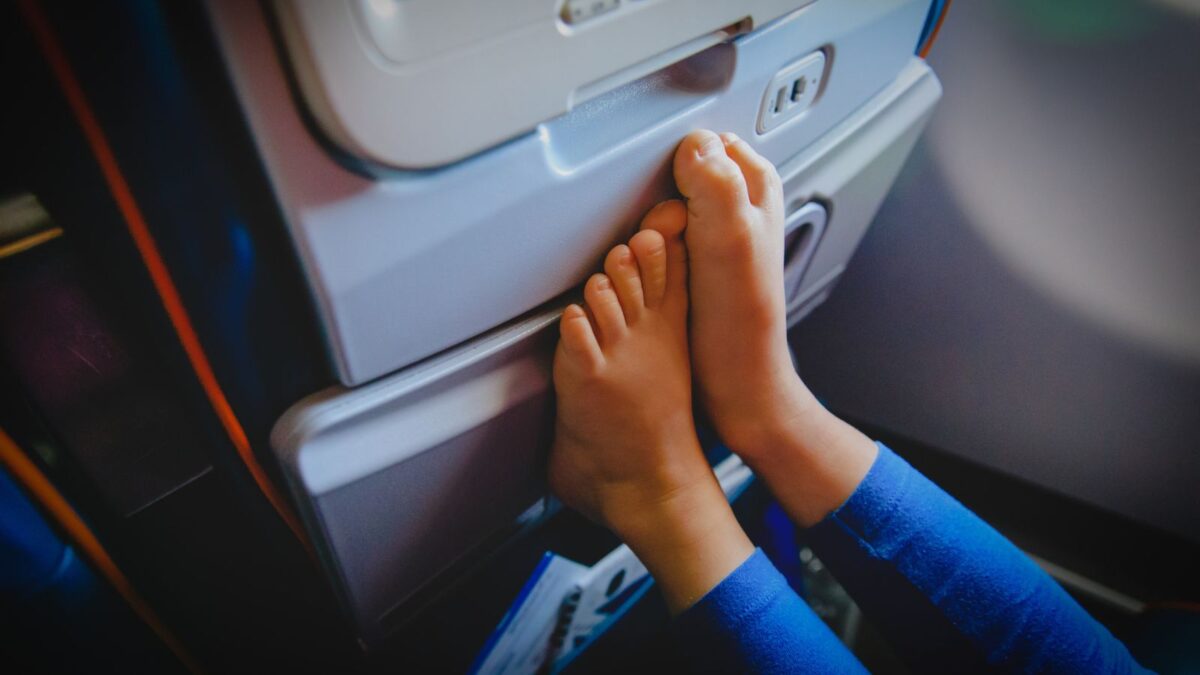
While kicking your feet up after miles of walking for a little bit may seem harmless, it is considered disrespectful and offensive in some cultures.
In countries like India or Thailand, feet are considered the dirtiest part of the body, so putting them on a table or chair or just showing the soles of your feet is not encouraged.
Instead, if you get tired, take breaks throughout the day, whether at a public park or returning to your hotel for longer rest.
Which of These Habits Have You Noticed or Been Guilty of While Traveling?

Have you ever done any of these while traveling? Which one of these habits were you most shocked to learn offends locals? Do you know of other seemingly innocent American habits that offend locals abroad?
Let us know in the comments!
Thank you for reading!


