You Know Santa, But Do You Know These 14 Global Holiday Characters?

Santa Claus goes by many names and forms around the globe, from the jolly old man in a red suit to mischievous gift-bearing spirits.
Each culture has its unique take on this beloved figure, shaping traditions and stories that reflect their values and histories.
Here’s a closer look at 14 different versions of Santa Claus, showcasing the fascinating diversity of this holiday icon.
Père Noël

France brings its own flair to Christmas traditions, and at the center of it all is Père Noël (Father Christmas), a figure that’s as enchanting as the cobblestone streets and twinkling lights of Paris in winter.
Unlike the jolly, round Santa we know in the U.S., Père Noël is often depicted as tall, elegant, and dressed in a long, red robe trimmed with fur. His persona captures the subtle sophistication the French bring to their celebrations.
Père Noël’s arrival is eagerly awaited on Christmas Eve, when children place their shoes by the fireplace, hoping he’ll fill them with gifts and treats. This charming custom dates back centuries to when shoes were more commonly used than stockings.
In some regions, children leave carrots or hay for Père Noël’s donkey, Gui (mistletoe), a loyal companion, instead of the more familiar flying reindeer.
While modern French families have embraced some global traditions like Christmas trees and Santa suits, the essence of Père Noël remains deeply rooted in local culture.
He’s not just about presents but joy and togetherness, often celebrated with a Réveillon, the elaborate Christmas Eve feast.
Père Noël’s influence even stretches beyond France. His spirit endures in French-speaking regions like Quebec, Belgium, and parts of Africa, bringing a unique twist to the global Santa Claus story.
Weihnachtsmann
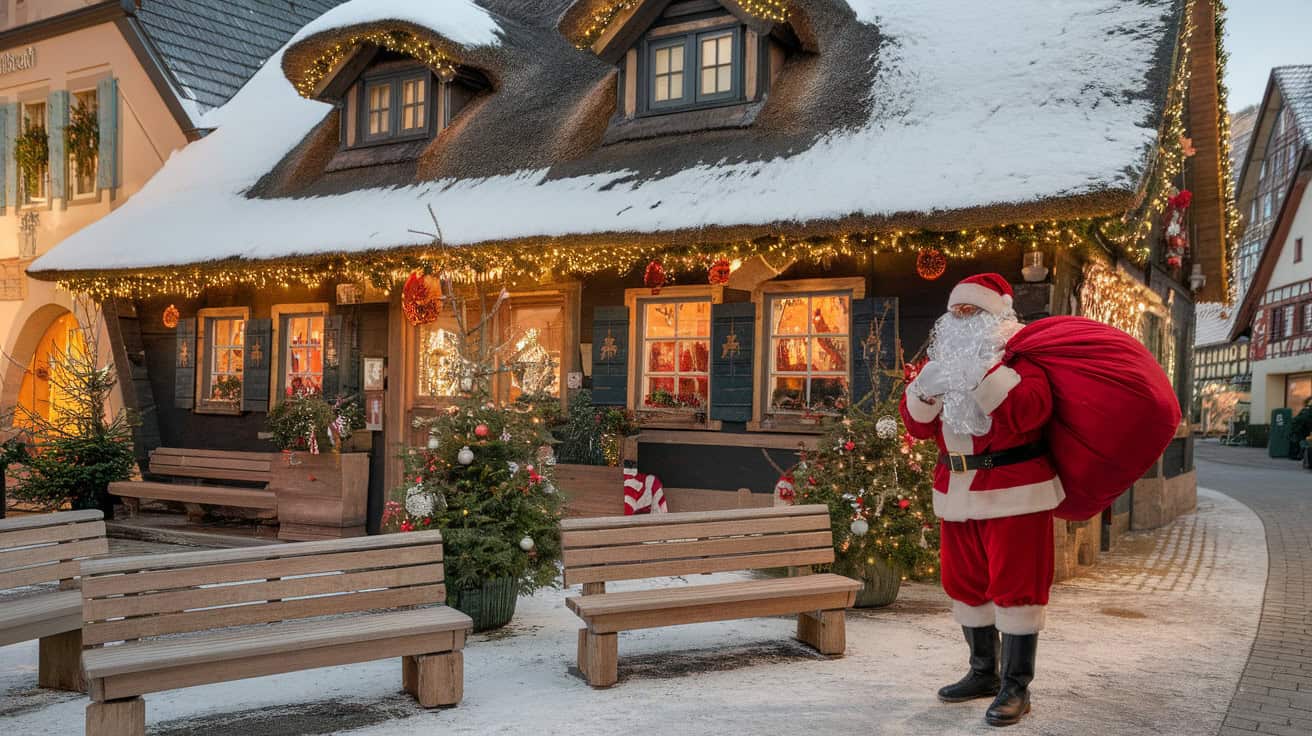
In Germany, the festive season is a magical time, and the Weihnachtsmann (Christmas Man) plays a central role in the celebrations. Unlike the North Pole-dwelling Santa Claus popularized in the U.S., the Weihnachtsmann has its roots in German folklore and traditions. Often depicted as a kind, bearded figure in a red cloak, he embodies the spirit of generosity and warmth that defines the holiday season in Germany.
The Weihnachtsmann is most commonly associated with December 24th, delivering gifts to children after a family feast. Before that, the Advent season builds the anticipation. German homes are filled with the glow of Advent wreaths, the daily excitement of Advent calendars, and the aroma of freshly baked Christmas cookies, known as Plätzchen. The Weihnachtsmann’s arrival is just the pinnacle of these joyous weeks.
Interestingly, Germany also celebrates St. Nicholas Day on December 6th, where St. Nikolaus (a separate figure from the Weihnachtsmann) visits children and leaves small treats like chocolates, oranges, and nuts in their shoes. While St. Nikolaus is tied to religious tradition, the Weihnachtsmann is more secular, making him accessible to families of all backgrounds.
Sinterklaas
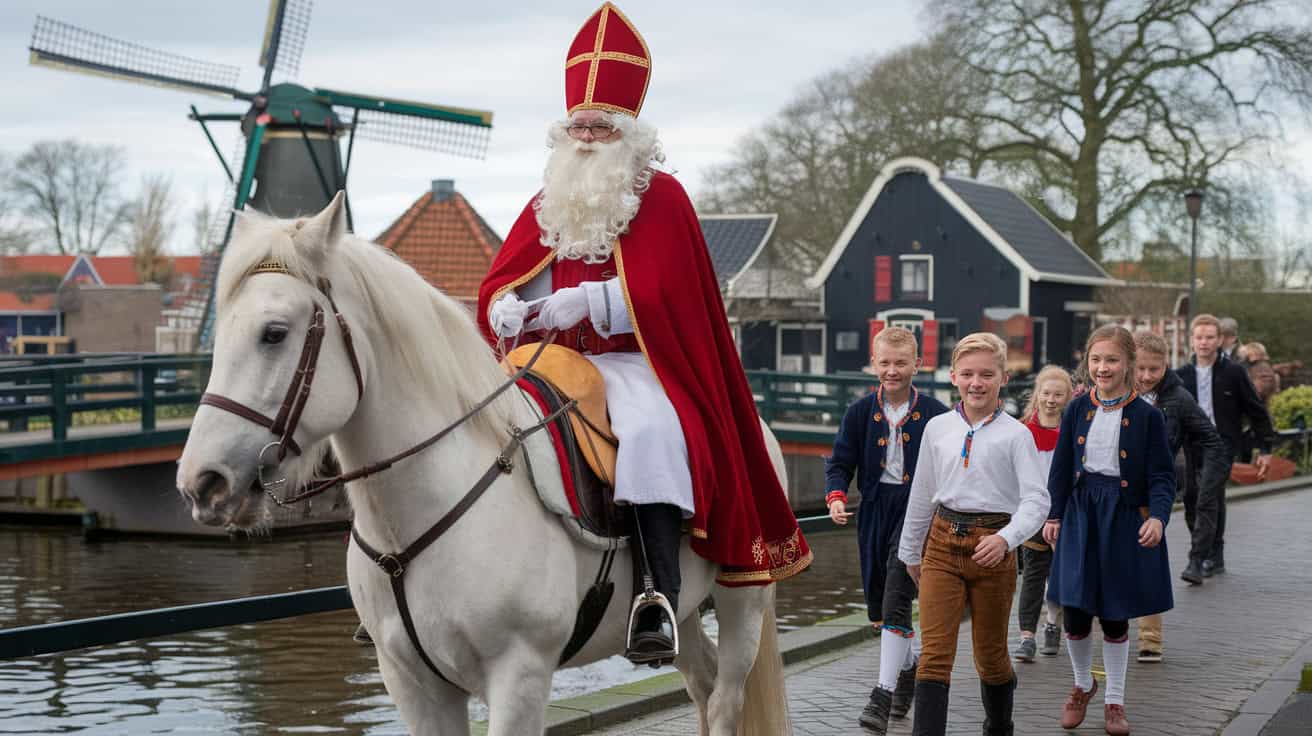
In the Netherlands, the holiday season revolves around the arrival of Sinterklaas, a figure steeped in tradition and folklore. Sinterklaas is a tall, stately man dressed in a bishop’s red robe and miter, carrying a golden staff, often credited as the inspiration for the modern Santa Claus. His white beard and kind demeanor make him a beloved figure among Dutch children, who eagerly await his arrival each year.
The festivities begin in mid-November when Sinterklaas arrives in the Netherlands by boat from Spain, a journey celebrated with a grand parade in towns and cities across the country. Accompanied by his helpers, the Pieten (or Peters), Sinterklaas brings gifts and treats like chocolate letters, marzipan, and “pepernoten” (spiced biscuits). This spectacle, known as the Intocht van Sinterklaas, is broadcast on national television and marks the start of the holiday season.
Unlike Christmas, the main celebration for Sinterklaas is on the evening of December 5th, called Pakjesavond (Gift Evening). Families gather to exchange presents, often wrapped in creative or humorous ways, accompanied by personalized poems teasing or celebrating the recipient.
Children leave their shoes by the fireplace or door, hoping Sinterklaas will fill them with treats overnight—a tradition reminiscent of stockings hung for Santa.
Though Sinterklaas predates the modern Santa Claus, he remains distinct. Rooted in Dutch culture and history, his traditions are celebrated not only in the Netherlands but also in parts of Belgium and Suriname, as well as among Dutch expatriates worldwide.
Joulupukki

Joulupukki: Finland’s Christmas Goat-Turned-Gift-Giver
The festive season wouldn’t be complete in Finland without Joulupukki, the Finnish version of Santa Claus. But Joulupukki is no ordinary Santa—his origins are rooted in ancient Finnish folklore.
The name “Joulupukki” translates to “Christmas Goat,” referring to pagan traditions when a goat, symbolizing fertility and protection, was central to midwinter celebrations. Over time, the goat evolved from a mischievous character demanding gifts to a kindly figure who gives them.
Unlike the North Pole-based Santa, Joulupukki is believed to live in Korvatunturi, a fell in Finnish Lapland. This magical, snowy region is often called his workshop, where reindeer roam freely and elves prepare for Christmas. Finnish children write letters to Joulupukki, who is said to read them in his Lapland home, adding to the sense of wonder.
On Christmas Eve, Joulupukki visits homes in person, often accompanied by a sack of gifts and his trusty elves. A typical exchange begins with the question: “Onko täällä kilttejä lapsia?” (“Are there well-behaved children here?”). Unlike Santa, who sneaks in unseen, Joulupukki’s visit highlights Finnish Christmas traditions, adding an intimate and communal touch to the celebration.
Finnish Christmas traditions also revolve around family and food. A traditional meal might include karjalanpaisti (Karelian stew), rosolli (beet salad), and baked ham, with rice porridge and plum jam for dessert. Many Finns also partake in a uniquely Finnish custom: a Christmas sauna, symbolizing cleansing and renewal.
Ded Moroz

In Russia and other Slavic countries, Ded Moroz (Grandfather Frost) is the iconic figure who brings gifts and joy during the New Year celebrations. Unlike Santa Claus, Ded Moroz is not tied to Christmas but to Novy God (New Year’s Eve), reflecting Russia’s historical and cultural shifts. Dressed in a long, ornate coat—often blue or silver—and carrying a staff, Ded Moroz is accompanied by his granddaughter, Snegurochka (the Snow Maiden), who helps him deliver gifts and spread cheer.
Ded Moroz’s origins trace back to ancient Slavic folklore, where he was a winter spirit capable of punishing and rewarding people. Over time, his image transformed into a kind and generous figure celebrated during the winter festivities. His modern persona was popularized during the Soviet era, when Christmas was de-emphasized, and New Year’s became the main holiday for family and gift-giving.
New Year’s Eve in Russia is a grand affair, with Ded Moroz appearing at parties, community events, and in homes. Families gather to enjoy a lavish feast, including traditional dishes like olivier salad, herring under a fur coat, and caviar. At midnight, fireworks light up the sky as Ded Moroz and Snegurochka distribute presents to children, who often recite poems or sing songs in exchange for gifts.
Ded Moroz is also celebrated in other Slavic countries, including Belarus, Ukraine, and Kazakhstan, each with regional variations. In some places, Ded Moroz arrives by sleigh pulled by horses, while in others, he may visit schools and public squares to spread holiday cheer.
Baba Noel
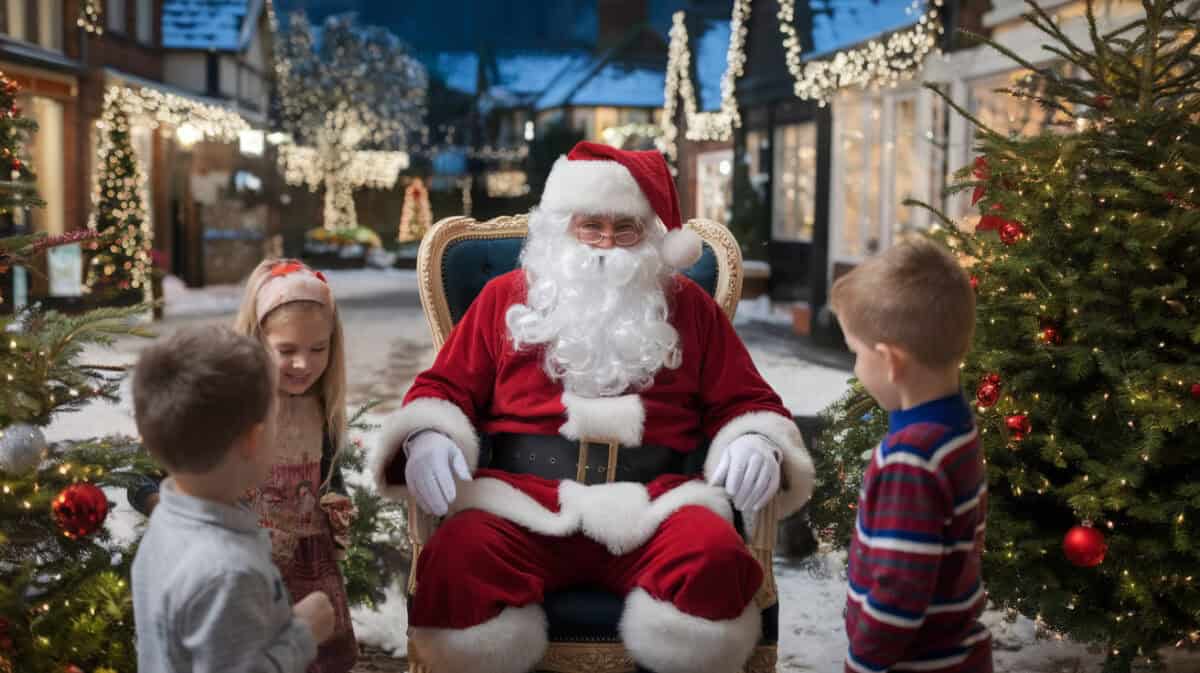
In the Middle East, where Christmas traditions blend with rich cultural heritage, Baba Noël (Father Christmas) is a cherished figure who brings joy to Christian communities in countries like Lebanon, Syria, and Iraq.
While the region is predominantly Muslim, the Christian minority celebrates Christmas enthusiastically, and Baba Noël is an integral part of their festivities.
Baba Noël resembles the Western Santa Claus, dressed in a red suit and often seen carrying a sack of gifts. Children eagerly anticipate his arrival, hanging stockings or placing shoes by the door in hopes of receiving treats.
Unlike in Western traditions, Baba Noël’s visits often coincide with family gatherings and Midnight Mass on Christmas Eve, emphasizing the spiritual aspect of the season.
With its vibrant Christian population, Lebanon celebrates Christmas as a national holiday. Homes and public spaces are adorned with twinkling lights, Nativity scenes, and elaborately decorated Christmas trees. Traditional dishes like kibbeh, tabbouleh, and roasted lamb grace the dinner table, and desserts such as ma’amoul (date-filled cookies) are shared among family and friends.
In Iraq, where Christmas has seen a resurgence in recent years, families light bonfires on Christmas Eve and read from the Bible. The fire symbolizes the warmth of community and faith. Baba Noël’s presence adds a lighthearted touch to these meaningful traditions, bringing smiles to children’s faces amid the holiday’s spiritual significance.
Santa Lucia

In Sweden and other Nordic countries, Santa Lucia (Saint Lucy) is a central figure in the Christmas season, celebrated on December 13th. Unlike Santa Claus or other gift-bringers, Santa Lucia’s role is symbolic, representing light and hope during the darkest time of the year.
Her day is marked by processions, music, and traditions that unite communities in a uniquely Swedish way.
The celebration of Santa Lucia traces its roots to Christian and pagan traditions. Saint Lucy was a Christian martyr from Sicily, revered for her devotion and acts of charity, while the festival’s focus on light ties to ancient Norse rituals surrounding the winter solstice. The two elements merged into a beloved holiday that signals the beginning of the Christmas season in Sweden.
On Santa Lucia Day, a girl chosen to represent Lucia dresses in a white gown with a red sash and wears a crown of candles on her head. Accompanied by a procession of attendants, often children in similar white attire, Lucia sings traditional songs and spreads light in homes, schools, and churches. Boys in the procession might dress as “star boys,” donning cone-shaped hats decorated with stars.
Traditional foods play a key role in the celebration. Families enjoy lussekatter, saffron-flavored buns shaped like figure eights, gingerbread cookies, glögg, and a spiced mulled wine. In many towns, public celebrations include concerts, parades, and the crowning of a local Santa Lucia. The sight of her candle-lit procession against the snowy Nordic backdrop creates a magical and serene atmosphere.
Hoteiosho

In Japan, the festive season introduces a unique figure: Hoteiosho (布袋和尚), often referred to as the Japanese Santa Claus. Unlike the Western depiction of Santa, Hoteiosho is rooted in the Buddhist tradition as one of the Shichifukujin, the Seven Lucky Gods.
He is portrayed as a pleasant, rotund figure carrying a large sack, symbolizing abundance and good fortune. Legend has it that Hoteiosho possesses eyes in the back of his head, enabling him to observe children’s behavior, thus encouraging them to be well-mannered throughout the year.
While Hoteiosho embodies qualities similar to Santa Claus, such as gift-giving and promoting good behavior, his presence during the holiday season is more symbolic than literal. In Japan, Christmas is celebrated in a secular manner, focusing on spreading happiness and fostering connections among loved ones.
Traditions include sharing a Christmas cake, typically a sponge cake adorned with strawberries and whipped cream, and enjoying festive illuminations that light up cities across the country.
Yule Goat

The Yule Goat is a centuries-old symbol of Christmas in Scandinavian countries, most notably Sweden, Norway, and Finland. This festive figure has roots in Norse mythology and pagan winter solstice celebrations, where goats were associated with the god Thor, whose chariot was pulled by two goats. Over time, the Yule Goat transformed into a Christmas tradition, blending folklore with the modern festive spirit.
Historically, the Yule Goat played a mischievous role, with people dressing in goat costumes to prank neighbors or demand food and drink during the holidays. By the 19th century, the goat evolved into a benevolent figure, often delivering gifts to children, much like Santa Claus. In some rural areas, families even made goat-shaped decorations out of straw to honor the tradition.
Today, the Yule Goat is celebrated in various ways across Scandinavia. One of the most famous examples is the Gävle Goat in Sweden, a massive straw structure erected annually in the city of Gävle. The goat, often standing over 40 feet tall, has become a beloved yet controversial symbol, as it frequently falls victim to arson—a quirky and oddly accepted part of the tradition.
Smaller versions of the Yule Goat, crafted from straw and tied with red ribbons, are common Christmas decorations in Scandinavian homes. They are often placed under the Christmas tree or used as table centerpieces, embodying the spirit of the holiday season.
Father Christmas

Father Christmas is a central figure in British Christmas traditions, embodying the spirit of goodwill and festivity. Unlike the more commercialized Santa Claus, Father Christmas has roots in English folklore, where he was initially a symbolic figure representing the joy and abundance of the holiday season rather than a bringer of gifts.
The modern depiction of Father Christmas is quite similar to Santa Claus: a cheerful, bearded man dressed in a long red or green robe trimmed with fur. However, his origins can be traced back to pagan midwinter festivals and medieval times when he was associated with revelry, feasting, and merriment. Over the centuries, as Christmas evolved into a family-oriented celebration, Father Christmas adopted the role of delivering presents to children on Christmas Eve.
In the UK, Father Christmas plays a prominent role in the season’s traditions. Children write letters to him, often tossing them into the fire so the smoke can carry their wishes up the chimney to him. Stockings are hung by the fireplace or at the foot of the bed, and on Christmas Eve, mince pies and a glass of sherry are left out as a treat for Father Christmas, along with carrots for his reindeer.
The spirit of Father Christmas is also evident in British customs like Christmas crackers, caroling, and festive feasts featuring roast turkey and Christmas pudding. Public appearances of Father Christmas, whether in shopping centers or holiday markets, add to the charm, especially for young children eager to share their Christmas wishes.
La Befana

In Italy, the holiday season doesn’t end with Christmas Day—it extends to Epiphany on January 6, when La Befana, a kind and mysterious old witch, takes center stage. Unlike Santa Claus, who arrives on Christmas Eve, La Befana swoops in on her broomstick during the night before Epiphany, delivering treats and gifts to children across Italy.
The legend of La Befana is deeply rooted in Italian folklore. As the story goes, when the Three Wise Men were traveling to Bethlehem, they stopped at La Befana’s house to ask for directions. They invited her to join their journey, but she declined, saying she had too much housework. Later, realizing her mistake, she tried to catch up with them, bringing gifts for baby Jesus, but never found her way. Since then, she’s been traveling the world, delivering gifts to children in hopes of finding the Christ child.
La Befana’s arrival is marked by the tradition of children hanging stockings by the fireplace. If they’ve been good, they wake to find them filled with sweets, candies, and small toys. Naughty children, however, might find their stockings filled with coal—though in modern times, the “coal” is often a sugary black candy.
Papai Noel
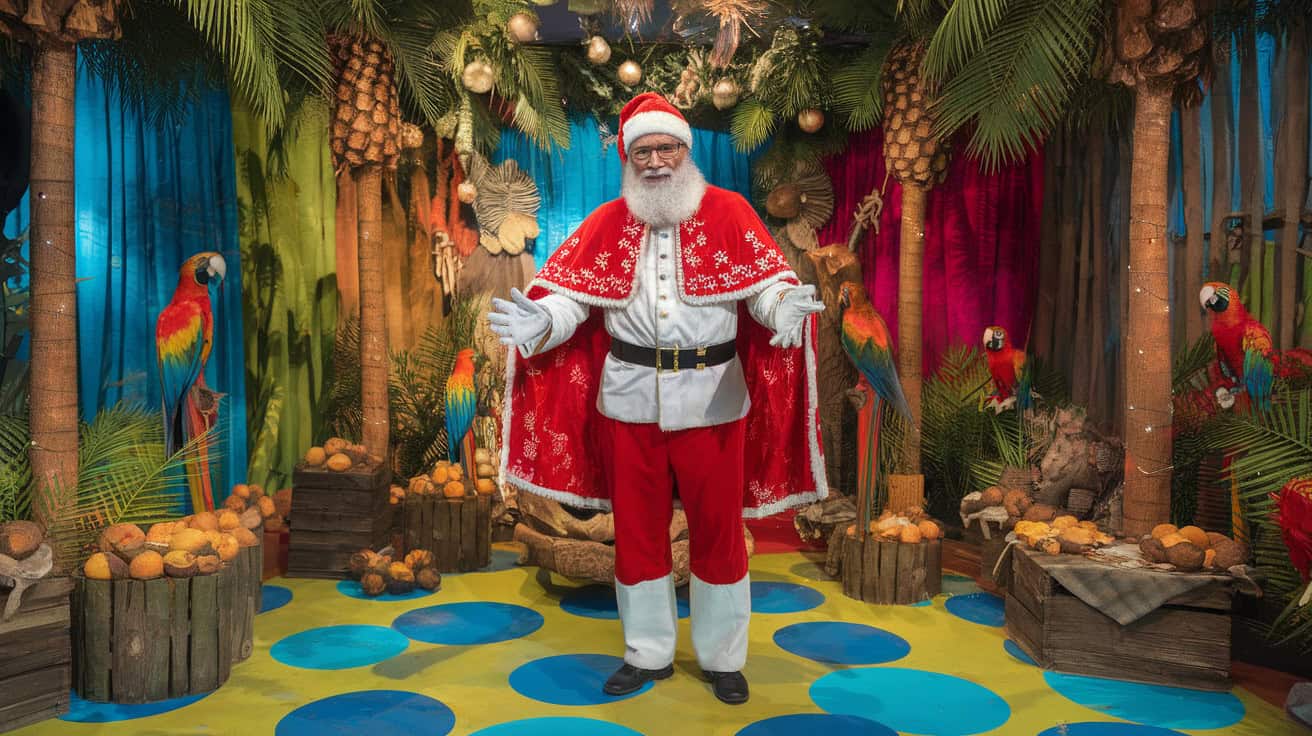
In Brazil, Papai Noel (Father Noel) brings the magic of Christmas to a tropical setting. Inspired by European traditions, Papai Noel embodies the familiar traits of Santa Claus but with a Brazilian twist.
He’s often depicted wearing the classic red suit, although lighter fabrics are sometimes used to suit Brazil’s warm December weather. Instead of sleighs gliding over snowy rooftops, Papai Noel is said to arrive by helicopter or boat in some regions, reflecting the country’s vibrant and diverse culture.
Papai Noel is especially beloved by children, who write letters to him just as they might in other parts of the world. Many cities and towns host events where children can meet Papai Noel, often set in elaborately decorated public spaces or shopping centers. His appearance brings joy and excitement; children eagerly await the gifts he leaves under their Christmas trees.
Brazil celebrates Christmas with a unique blend of European, African, and indigenous influences. Families gather on Noite Feliz (Happy Night or Christmas Eve) for a feast that often includes roasted turkey, ham, and local favorites like farofa (toasted cassava flour), pavê (layered dessert), and fresh tropical fruits. Midnight Mass, or Missa do Galo (Mass of the Rooster), is a cherished tradition, symbolizing the start of Christmas Day.
Holiday decorations in Brazil are dazzling, with nativity scenes (presépios) and brightly lit Christmas trees gracing homes and public spaces. Some cities, like Gramado in the south, host spectacular Christmas festivals featuring parades, light shows, and musical performances, where Papai Noel is often the main star of the show.
Deda Mraz

Deda Mraz (Grandfather Frost) is a cherished holiday figure in Serbia, Montenegro, and other Balkan countries that were once part of Yugoslavia.
Like Russia’s Ded Moroz, Deda Mraz brings gifts to children during the holiday season, but his role is uniquely tied to the region’s cultural and historical context. He is often seen as a bridge between Christmas and New Year’s traditions, reflecting the area’s blend of Orthodox Christian, secular, and socialist influences.
Deda Mraz is depicted as a kindly, bearded man dressed in a red or blue robe, trimmed with fur, and carrying a sack of presents. He traditionally arrives on New Year’s Eve, as the celebration of New Year’s became a central winter holiday during the socialist era of Yugoslavia, when religious holidays like Christmas were downplayed. Today, he is embraced across spiritual and secular traditions, making him a beloved figure for families of all backgrounds.
For children, Deda Mraz is a magical presence. Depending on local customs, they eagerly await his arrival on New Year’s Eve or sometimes Orthodox Christmas (January 7th). Festivities often include decorating the Badnjak (a traditional oak branch), sharing holiday meals, and singing carols. Gifts from Deda Mraz are typically placed under the tree or given during family gatherings, adding to the festive cheer.
Holiday meals in the Balkans are a feast of hearty and flavorful dishes, including sarma (cabbage rolls), roasted meats, and various breads. Desserts like vanilice (vanilla cookies) and baklava add sweetness to the celebration. Families also gather for lively toasts and storytelling, reflecting the importance of togetherness during this special time.
Saint Nick
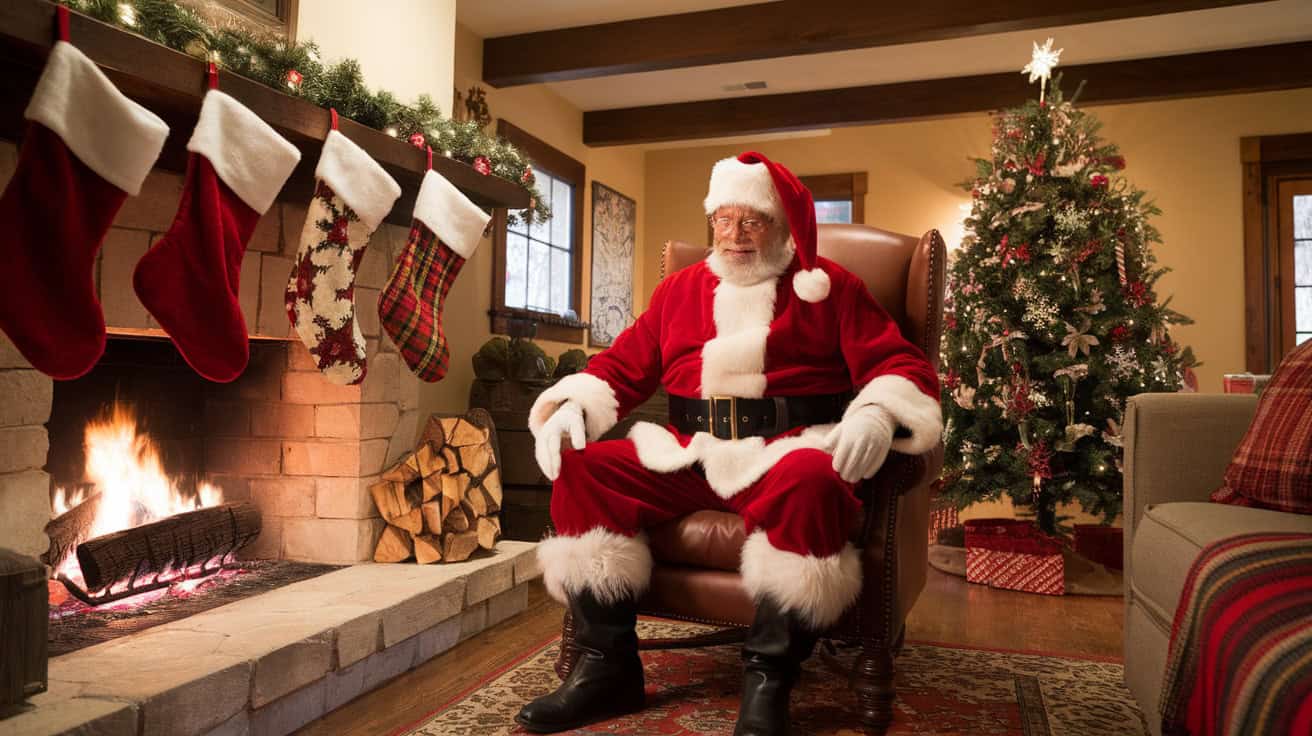
Saint Nicholas, or Saint Nick, is one of the most enduring figures of the Christmas season, celebrated as the kind-hearted bishop whose generosity and compassion inspired the modern Santa Claus. Born in the 3rd century in Patara, a city in modern-day Turkey, Saint Nicholas was known for his piety and acts of charity, becoming a beloved patron saint of children, sailors, and the poor.
One of the most famous stories about Saint Nicholas involves his secret gift-giving. According to legend, he saved three impoverished sisters from being sold into servitude by secretly dropping bags of gold down their chimney, which landed in their stockings drying by the fire. This tale reflects his generosity and became the foundation for the tradition of hanging stockings during Christmas.
Saint Nicholas is mainly celebrated on December 6th, his feast day, in many European countries. In the Netherlands and Belgium, he is known as Sinterklaas and arrives on a white horse with his helpers, bringing gifts and treats like chocolate letters and spiced cookies for well-behaved children. In Germany, he is Nikolaus, who fills children’s shoes with small gifts and sweets overnight. His influence is also felt in places like Austria, Switzerland, and Eastern Europe, where his presence blends with local folklore and customs.
For many, Saint Nick’s role extends beyond just the holiday season. He embodies the spirit of generosity and kindness, encouraging giving and goodwill throughout the year. While his image has evolved into the more commercial Santa Claus, Saint Nicholas remains a significant figure, particularly in Christian traditions.